
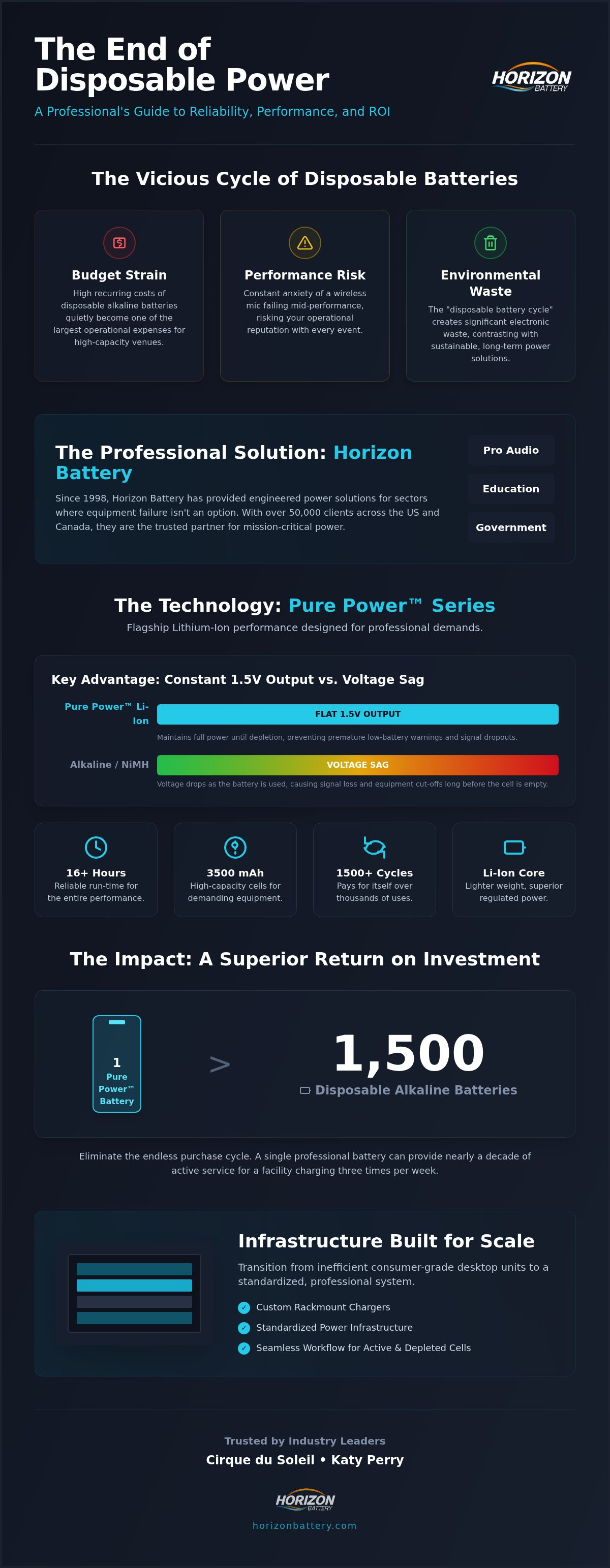
A lead technician at a high-capacity venue realizes that the cost of disposable alkaline batteries has quietly become one of their largest recurring expenses. Beyond the budget strain, the constant anxiety of a wireless microphone failing during a live performance is a burden no professional should carry. You likely understand the frustration of standard chargers failing in your equipment racks or batteries that lose voltage just when you need them most. This guide explains how frequent failures are more than just an inconvenience; they're a risk to your operational reputation.
We'll show you how professional-grade power solutions eliminate equipment downtime and provide a superior ROI for high-demand facilities. We'll explore the technical advantages of the Pure Power Series, which delivers consistent 1.5V power for over 16 hours of run-time. You will learn how custom rackmount hardware and high-capacity 3500 mAh cells create a standardized infrastructure that reduces electronic waste. By the end of this guide, you'll know how to transition your team to a reliable, industrial-strength power system that pays for itself over 1500 recharge cycles.
Key Takeaways
- Horizon Battery has served high-profile professional facilities since 1998, offering the specialized expertise needed to manage large-scale wireless audio and communication systems.
- The Pure Power Series provides a constant 1.5V output and 3500 mAh capacity, ensuring more than 16 hours of reliable run-time for mission-critical equipment.
- This Complete guide to Horizon Battery explains how custom rackmount chargers can standardize your power infrastructure and eliminate the inefficiency of consumer-grade desktop units.
- Switching to professional rechargeable solutions offers a significant ROI by replacing thousands of disposable alkaline batteries over 1500 recharge cycles.
- Implementing organized storage and charging protocols is essential for maintaining a seamless workflow between active and depleted cells in high-demand environments.
Who is Horizon Battery? A Legacy of Professional Power
Established in 1998, Horizon Battery has spent over a quarter-century refining its role as a specialized distributor of mobile energy products. They don't simply sell consumer electronics. Instead, they provide engineered power solutions for sectors where equipment failure isn't an option. This Complete guide to Horizon Battery explores why technical directors and procurement officers trust a veteran partner over generic retail brands. By focusing on professional-grade rechargeable batteries and custom charging hardware, the company has built a reputation for steady reliability and industrial-strength performance.
High-demand sectors require more than just a standard AA cell. These environments demand consistent energy delivery under pressure. Horizon Battery addresses this by offering specialized infrastructure that serves several critical areas:
- Professional Audio: Supporting touring bands and theaters that require zero-fail wireless performance.
- Education: Helping schools and universities manage large fleets of AV equipment efficiently.
- Government and House of Worship: Providing facilities with the tools to prioritize long-term ROI and reduced environmental waste.
Their approach combines high-capacity technology with specialized hardware to ensure that every wireless microphone and in-ear monitor stays powered through the final curtain call. They remain committed to eliminating the wasteful "disposable battery cycle" through superior rechargeable technology that outperforms traditional alkaline options in every professional metric.
The Horizon Battery Mission and Philosophy
The brand's philosophy is grounded in quiet confidence and established expertise. They act as an industry insider, guiding clients through the complexities of rechargeable technology. The "Pure Power" Series represents the pinnacle of this mission. It's more than a brand name; it's a promise of technical superiority. By providing a comprehensive resource for large-scale facilities, Horizon Battery ensures that even the most complex setups benefit from standardized charging and superior ROI. They prioritize longevity, with many of their solutions lasting up to 1500 recharge cycles. This focus helps organizations reduce electronic waste while maintaining peak operational efficiency.
Serving the United States and Canada
Serving over 50,000 clients across North America, Horizon Battery has developed national distribution capabilities that cater to bulk organizational needs. Their client list includes high-profile names like Cirque du Soleil and Katy Perry, proving their ability to support mission-critical wireless applications on the largest stages. This Complete guide to Horizon Battery highlights how their history of supporting technical directors across the continent makes them a primary source for mission-critical power. They offer free US shipping on all orders over $49, making it easy for teams to maintain their inventory of high-performance energy solutions without unnecessary overhead.
The Pure Power Series: Professional Lithium-Ion AA Performance
The Pure Power Series serves as the flagship lithium-ion solution in the Horizon Battery catalog. It represents a significant shift in how professional facilities manage mobile energy. Most consumer-grade rechargeables suffer from voltage sag, where the output gradually drops as the cell depletes. This Complete guide to Horizon Battery highlights the technical advantage of the Pure Power series: a constant 1.5V output maintained throughout the entire discharge cycle. This stability is achieved through integrated internal circuitry that regulates the lithium-ion core. Your equipment receives peak power until the cell is nearly empty.
Professional audio gear is particularly sensitive to voltage fluctuations. When voltage drops below a certain threshold, wireless transmitters often experience reduced range or signal dropouts. By providing a steady 1.5V, these cells eliminate the premature "low battery" warnings that often plague NiMH users. Regarding longevity, the 2026 lineup delivers 1500 recharge cycles. For a facility charging three times a week, this translates to nearly a decade of active service. It's an exceptional return on investment compared to the endless purchase of disposable alkaline cells.
Pure Power Series vs. Standard NiMH
The differences between these technologies become clear during a long production day. Pure Power cells are significantly lighter than high-capacity NiMH alternatives. This weight reduction minimizes fatigue for performers using handheld wireless transmitters over several hours. Charging speed also favors the lithium-ion chemistry, allowing for a rapid turnaround between back-to-back performances. While NiMH cells typically drop from 1.4V to 1.1V during use, the Pure Power discharge curve remains flat. Your devices operate at maximum efficiency without the performance degradation associated with traditional rechargeable types.
Applications for Pure Power Lithium-Ion
These batteries are specifically engineered for high-drain, mission-critical environments. They're the preferred choice for wireless microphones and In-Ear Monitor (IEM) systems, where they deliver over 16 hours of continuous run-time. High-end photography flash units and digital imaging gear also benefit from the rapid recycle times and consistent voltage. If you need to optimize your kit, you can explore the Pure Power Series: The Professional Guide to Lithium-Ion AA Batteries for deeper technical specifications. For teams ready to upgrade their infrastructure, browsing the available Pure Power Series bundles is a practical first step toward eliminating equipment downtime.
High-Capacity NiMH: The Industrial Workhorse
High-capacity Nickel Metal Hydride (NiMH) cells remain a staple for many professional AV departments. While lithium technology offers specific voltage advantages, NiMH provides a rugged and cost-effective solution for high-drain devices. This Complete guide to Horizon Battery identifies the Ansmann 2850 mAh as a primary example of this industrial workhorse. By partnering with world-class manufacturers like Ansmann, Horizon Battery ensures that facilities have access to cells that handle rapid discharge without internal damage. These cells are engineered for the rigors of daily professional use, providing a level of reliability that consumer-grade rechargeables simply cannot match.
The financial argument for NiMH is undeniable. A single high-capacity cell can replace hundreds of disposable alkaline batteries over its lifespan. Even with a conservative estimate of 500 charge cycles, the cost-per-use drops to pennies. For large teams managing dozens of wireless packs, this transition eliminates the logistical nightmare of purchasing and disposing of thousands of single-use units annually. It's a practical shift that prioritizes long-term ROI while maintaining the power density required for modern transmitters.
Solving the "Tight Slot" Problem
Standard rechargeable batteries are often slightly larger than their alkaline counterparts. This creates a "tight slot" problem in professional wireless packs from brands like Sennheiser or Shure. The Slimline AA design addresses this by adhering to precise physical dimensions. It's a critical detail because a battery that gets stuck in a transmitter can cause expensive hardware damage. Technical directors know that mAh ratings aren't the only metric that matters; physical compatibility is equally vital for a seamless workflow. Ensuring a smooth fit allows for rapid battery swaps during high-pressure events.
NiMH Maintenance for Large Facilities
Large facilities must implement strict maintenance protocols to protect their investment. Modern NiMH cells are less prone to the "memory effect" than older chemistries, but they still benefit from periodic conditioning. This Complete guide to Horizon Battery recommends using smart chargers, such as the Ansmann Comfort Smart Rackmount system, to refresh and condition batteries automatically. Identifying when cells have reached the end of their professional life is essential for preventing mid-show failures. Once a cell can no longer hold at least 80% of its rated capacity, it should be moved to non-critical applications or retired from the main rotation to ensure the integrity of your mission-critical gear.
Custom Rackmount Chargers: Infrastructure for Scale
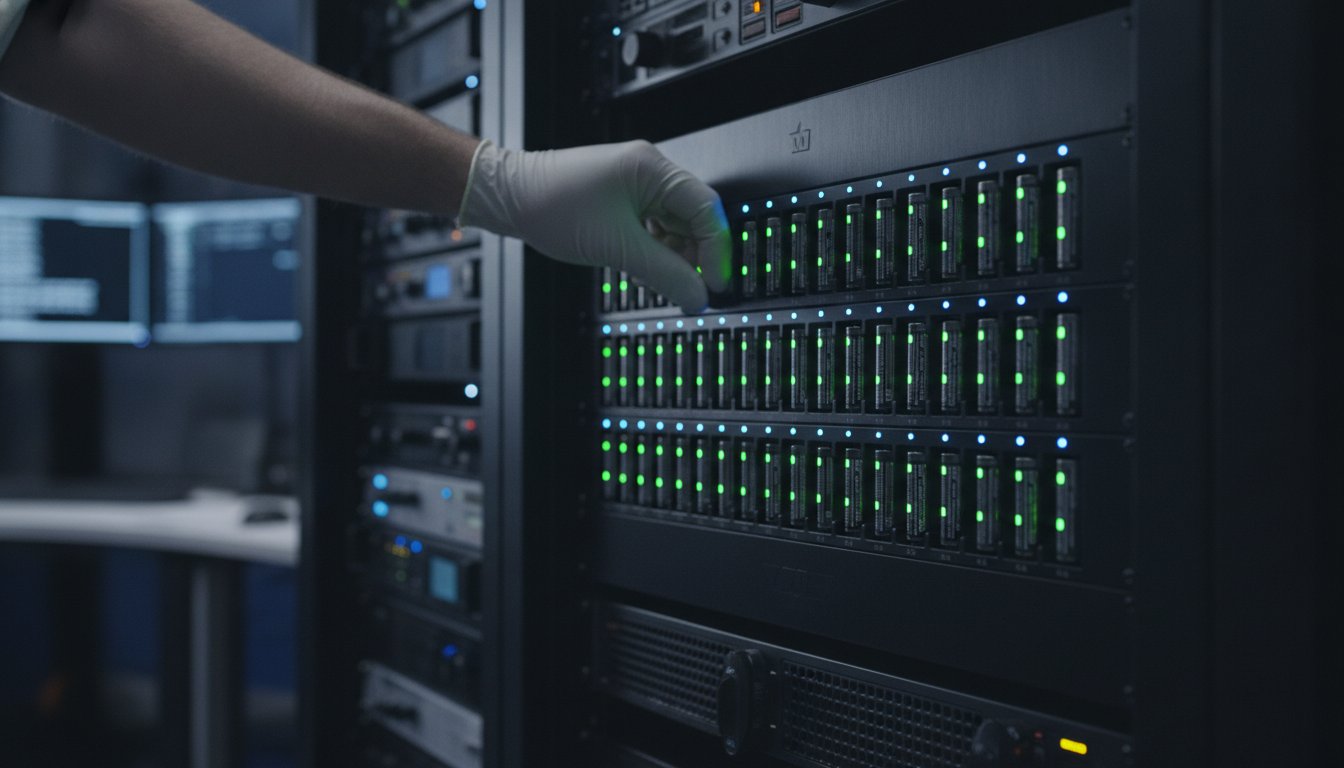
Managing a few handheld microphones is simple, but as a facility scales, desktop chargers quickly become a bottleneck. This Complete guide to Horizon Battery emphasizes the transition to integrated rackmount solutions as a necessity for modern AV and IT environments. Custom Rackmount Chargers consolidate power management into a single unit, fitting into standard 19-inch equipment racks. This centralized approach transforms how technical directors handle inventory management and asset tracking. Instead of hunting for loose chargers across multiple rooms, your entire battery fleet remains in one secure, organized location.
Safety is a primary concern when charging dozens of high-capacity cells simultaneously. Industrial-grade rackmount hardware includes sophisticated safety features that consumer units lack. Integrated thermal monitoring ensures that cells don't overheat during rapid charge cycles. Additionally, overcharge protection circuits prevent battery degradation, extending the life of your investment. These systems provide the steady reliability required for continuous daily use in high-pressure venues. By moving to a professional rack-based system, you eliminate the fire hazards and clutter associated with daisy-chained power strips and mismatched consumer adapters.
Benefits of Centralized Charging Infrastructure
An organized production office is a safer production office. Centralizing your power infrastructure reduces clutter and significantly lowers the risk of electrical mishaps. Status LEDs on the front panel provide quick-glance monitoring, allowing technicians to verify the readiness of an entire fleet at once. This visual feedback is particularly valuable for volunteer-led organizations, such as houses of worship. It standardizes the charging workflow, making it easy for anyone to identify which cells are ready for deployment and which are still in the cycle.
Selecting the Right Charger / Battery Bundle
Choosing the correct hardware requires a methodical approach to your facility's needs. You should follow these steps to ensure your infrastructure supports your team rather than creating logistical hurdles:
- Step 1: Audit your concurrent wireless channel count to understand peak demand.
- Step 2: Determine the necessary turnaround time between uses; back-to-back performances require faster charging.
- Step 3: Match charging capacity to your storage and deployment workflow.
For teams ready to upgrade their technical capabilities, you can browse available Charger / Battery Bundles designed to support professional-scale operations. This structured selection process ensures your equipment stays operational through every event.
Implementing a Horizon Battery Solution in Your Organization
Transitioning to a professional rechargeable system is a strategic operational shift that requires more than just new hardware. This Complete guide to Horizon Battery provides the roadmap needed to move away from the "disposable cycle" for good. Success begins with a clear audit of your current battery consumption and equipment needs. By standardizing your power infrastructure, you eliminate the unpredictability of mixed alkaline inventories and the high recurring costs associated with single-use cells. Over the long term, the financial impact is substantial, as one Pure Power cell can replace 1500 alkaline batteries.
Training staff and volunteers is a critical step in adopting the Pure Power Series ecosystem. Because these lithium-ion cells maintain a constant 1.5V output, users must understand that traditional "battery low" indicators on equipment behave differently than they do with NiMH or alkaline cells. Your team should be trained to follow specific swap schedules based on known run-times, such as the 16-hour window typical for wireless microphones. Clear protocols ensure that every technician knows how to handle the hardware and when to cycle cells to maintain zero-fail performances.
Asset Management and Storage
Effective organization separates professional facilities from amateur setups. You should use specialized battery storage cases to keep charged and depleted cells physically separate during transport and inventory checks. Implementing a "first-in, first-out" (FIFO) rotation ensures that all cells in your fleet receive equal use, which maximizes the overall lifespan of your inventory. Maintaining performance logs for high-use fleets helps identify cells that are nearing the end of their service life. This data-driven approach allows for proactive replacement before a failure occurs on stage.
Custom Solutions and Expert Consultation
Every facility has unique requirements, from small schools to massive houses of worship. Horizon Battery offers bulk purchasing and bundle options that make large-scale transitions more affordable for educational and religious institutions. If your facility requires a specific configuration for your equipment racks, you can engage with their technical team for custom-engineered rackmount solutions. This tailored approach ensures that your charging infrastructure matches your specific channel count and turnaround times perfectly. To start your transition, you can Contact Horizon Battery for a Professional Power Consultation and speak with a veteran expert who understands the demands of professional audio.
Optimizing Your Professional Power Infrastructure for 2026
Transitioning to a standardized power system is a decision that impacts both your technical reliability and your bottom line. By adopting the Pure Power Series, you ensure that your wireless equipment receives a consistent 1.5V output, which is essential for preventing signal dropouts in high-stakes environments. This Complete guide to Horizon Battery has shown how specialized, custom-engineered rackmount solutions for AV racks can transform a disorganized inventory into a streamlined, high-performance asset. You're no longer just buying batteries; you're investing in an engineered infrastructure designed for longevity.
Since 1998, Horizon Battery has specialized in high-capacity technology that meets the rigorous demands of touring professionals and large-scale facilities. Implementing these industrial-strength solutions allows your team to focus on the performance rather than the power source. You can move forward with the confidence that your gear is supported by veteran industry knowledge and a proven track record of reliable service. Take the next step toward a zero-fail environment today.
Browse the Full Horizon Battery Professional Inventory and secure the reliability your organization deserves.
Frequently Asked Questions
Is Horizon Battery related to the Horizon Zero Dawn video game?
No, Horizon Battery is not related to the Horizon Zero Dawn video game franchise. This company is a professional distributor of mobile energy solutions that has been operating since 1998. While the game is a fictional entertainment property, Horizon Battery focuses on industrial-grade power for high-demand sectors. They provide critical infrastructure for touring bands, educational institutions, and government facilities across North America.
What is the difference between the Pure Power Series and standard AA batteries?
The primary difference lies in the regulated voltage output and internal chemistry. Standard AA batteries, including NiMH and alkaline types, lose voltage as they drain, which can cause wireless equipment to fail prematurely. This Complete guide to Horizon Battery highlights that the Pure Power Series maintains a constant 1.5V output through integrated circuitry. Your devices receive peak power until the cell is nearly empty, preventing signal dropouts.
Can I use Pure Power Lithium-Ion batteries in any device?
You can use Pure Power Lithium-Ion batteries in most devices that accept standard AA cells, but they're specifically optimized for high-drain electronics. Their constant 1.5V output provides a significant advantage for wireless microphones, in-ear monitors, and photography flashes. While they work in low-drain devices like remote controls, their specialized circuitry is designed to solve the power sag problems common in mission-critical professional audio and imaging gear.
How long do Horizon Battery AA rechargeable batteries last?
These high-capacity batteries are engineered for long-term industrial performance. The Pure Power Series delivers 1500 recharge cycles, which can last up to 10 years if you charge them three times per week. On a single charge, these cells provide over 16 hours of continuous run-time in a standard wireless microphone. This durability ensures that your facility maintains reliable performance while significantly reducing the frequency of inventory replacements.
Why should my church or school switch to rackmount chargers?
Churches and schools benefit from rackmount chargers because they centralize power management and improve facility safety. These units fit into standard 19-inch equipment racks, eliminating the clutter and fire hazards of multiple desktop chargers and power strips. They feature status LEDs that allow volunteers to verify battery readiness at a glance. It's a standardized infrastructure that makes managing large fleets of wireless microphones much more efficient for non-technical staff.
Does Horizon Battery ship to Canada?
Yes, Horizon Battery serves clients throughout both the United States and Canada. They have been a primary source for professional power solutions in North America since 1998. This Complete guide to Horizon Battery notes that they offer free US shipping on orders over $49. Their distribution capabilities are designed to handle bulk orders for schools, theaters, and houses of worship, ensuring that high-performance energy solutions are accessible across the continent.
How do I calculate the ROI of switching to rechargeable batteries?
To calculate your ROI, compare the cost of one rechargeable cell and its share of the charger cost against the price of 1500 alkaline batteries. Because one Pure Power cell replaces 1500 disposables over its lifespan, the savings are substantial. Most organizations find the system pays for itself within the first year. You should also consider the hidden savings in labor and the logistics of purchasing and disposing of thousands of single-use units.
What is the best way to store high-capacity batteries when not in use?
The best way to store high-capacity batteries is in a cool, dry place using specialized battery storage cases. These cases keep terminals from touching, which prevents accidental short circuits and discharge. You should implement a "first-in, first-out" rotation to ensure all cells in your fleet receive equal use. Keeping charged and depleted cells in separate, marked containers prevents confusion during live events and ensures that your technicians always grab a fresh battery.