
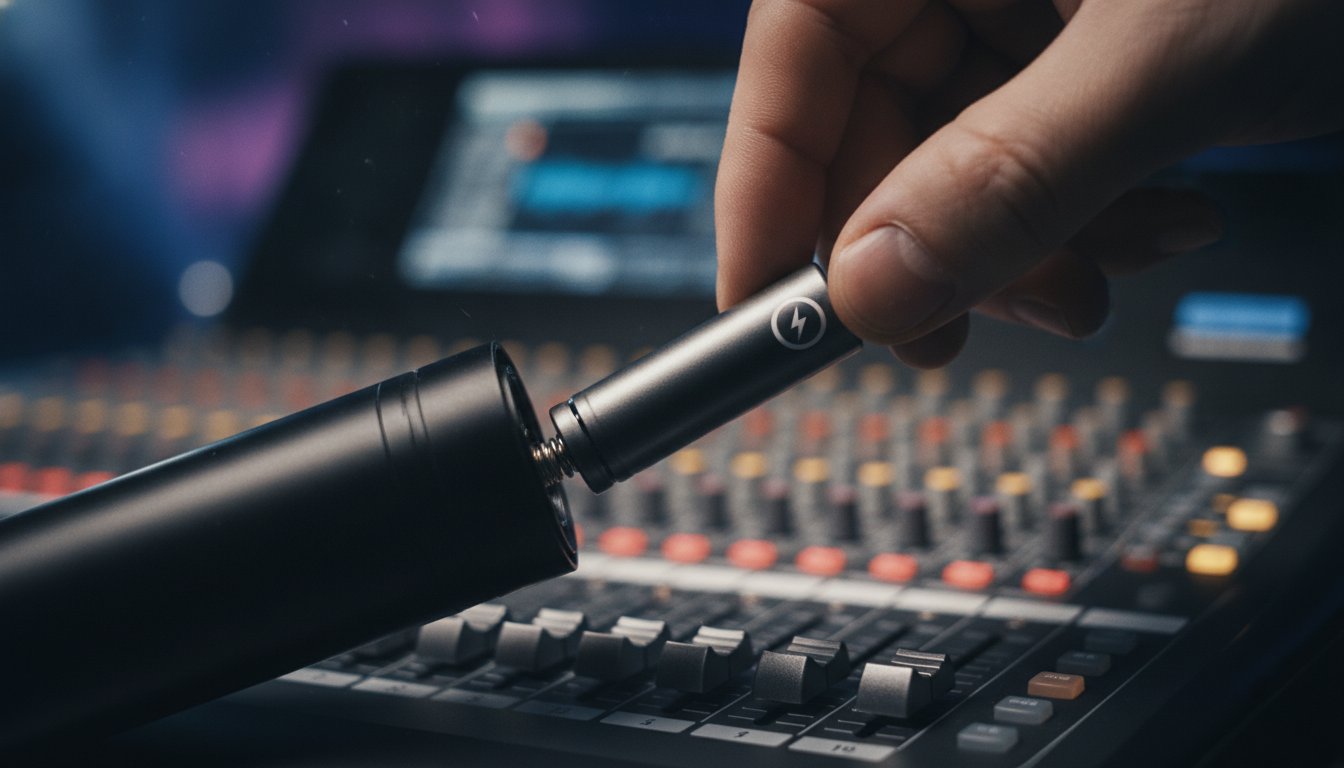
What if the most expensive wireless microphone in your rack is only as reliable as the consumer-grade battery powering it? For professionals in live sound and facility management, a minor voltage sag isn't just a technical glitch; it's a potential show-stopper. The Pure Power Series was developed to bridge this gap, offering a regulated power supply in an AA form factor that maintains a steady 1.5V until the cell is exhausted. Unlike standard batteries that gradually lose strength, these lithium-ion solutions provide the consistent performance required for mission-critical gear.
You probably already know the headache of NiMH cells that are slightly too large for tight battery compartments or the sheer waste of discarding hundreds of alkalines every month. It's a cycle of high costs and unpredictable failures that most industry veterans have simply accepted as part of the job. This guide will show you how the Pure Power Series provides the high-capacity reliability needed to eliminate audio dropouts and standardize power across your facility. We'll examine the technical advantages of constant voltage, the long-term ROI of rechargeable lithium, and why a specialized charging ecosystem is the final piece of the professional power puzzle.
Key Takeaways
- Discover how integrated circuit technology ensures a steady 1.5V output throughout the entire discharge cycle to eliminate voltage sag in sensitive gear.
- Compare the performance and weight advantages of lithium-ion cells against traditional NiMH batteries for professional handheld equipment.
- Learn how to transition your facility to the Pure Power Series to reduce operating costs and eliminate the waste of disposable alkaline cells.
- Identify the benefits of using specialized rackmount chargers and battery bundles to maintain long-term cell health and operational readiness.
What is the Pure Power Series? Redefining Professional Energy
The Pure Power Series represents a fundamental shift in how professional facilities manage mobile energy. For decades, production houses and houses of worship relied on alkaline disposables or Nickel-Metal Hydride (NiMH) rechargeables. While these were once the industry standard, they often fail to meet the rigorous demands of modern wireless systems. Horizon Battery, a veteran distributor operating since 1998, provides this series to solve specific issues of voltage instability and high operating costs. These high-capacity Lithium-ion cells are engineered for mission-critical hardware that requires a steady 1.5V output from start to finish.
Many technical teams are standardizing on Lithium-ion to avoid the "voltage sag" common in traditional chemistries. When an alkaline battery reaches 50 percent capacity, its voltage often drops below the threshold required for stable wireless transmission. This leads to dropouts or reduced range. By contrast, the Horizon Battery approach focuses on providing a regulated, consistent power source that acts more like a power supply than a traditional battery.
The Evolution from NiMH to Lithium-Ion
Traditional NiMH batteries often struggle with chemical instability and a high rate of self-discharge. If a technician leaves a charged NiMH cell in a drawer for a week, it might lose a significant portion of its capacity before it's even used. The Pure Power Series eliminates these frustrations by utilizing advanced Lithium-ion chemistry. This technology removes the "memory effect" that plagued older rechargeable cells, where repeated partial charging would reduce the battery's total capacity over time.
For professional organizations, the return on investment is found in the cycle life. A single Lithium-ion cell can replace hundreds of disposable alkalines. This transition doesn't just lower the cost per show; it simplifies inventory management across large facilities. It's a move toward a more predictable and sustainable operational model.
Why "Pure Power" Matters for AV
The Pure Power Series is a 1.5V regulated solution for professional electronics that maintains a steady output until the cell is fully depleted. In the world of professional audio, power stability is directly linked to signal integrity. Most wireless microphones are designed to operate optimally at 1.5V. As alkaline batteries drain, their voltage drops. This can lead to audible artifacts or sync issues between the transmitter and receiver.
Standardizing on this series helps organizations reduce technical debt. This refers to the hidden costs and logistical burdens of managing thousands of disposable batteries. By moving to a high-capacity rechargeable ecosystem, facilities can achieve better results:
- Eliminate the risk of audio dropouts caused by voltage sag.
- Reduce long-term operating expenses by cutting recurring alkaline purchases.
- Decrease the physical footprint of battery storage and waste.
- Ensure consistent performance across different gear brands and models.
This methodical approach to energy ensures that technical teams can focus on the production rather than worrying about the power indicator on a bodypack. It provides the quiet confidence that comes from using tools built for the professional environment.
The Engineering Behind Pure Power: How 1.5V Constant Voltage Works
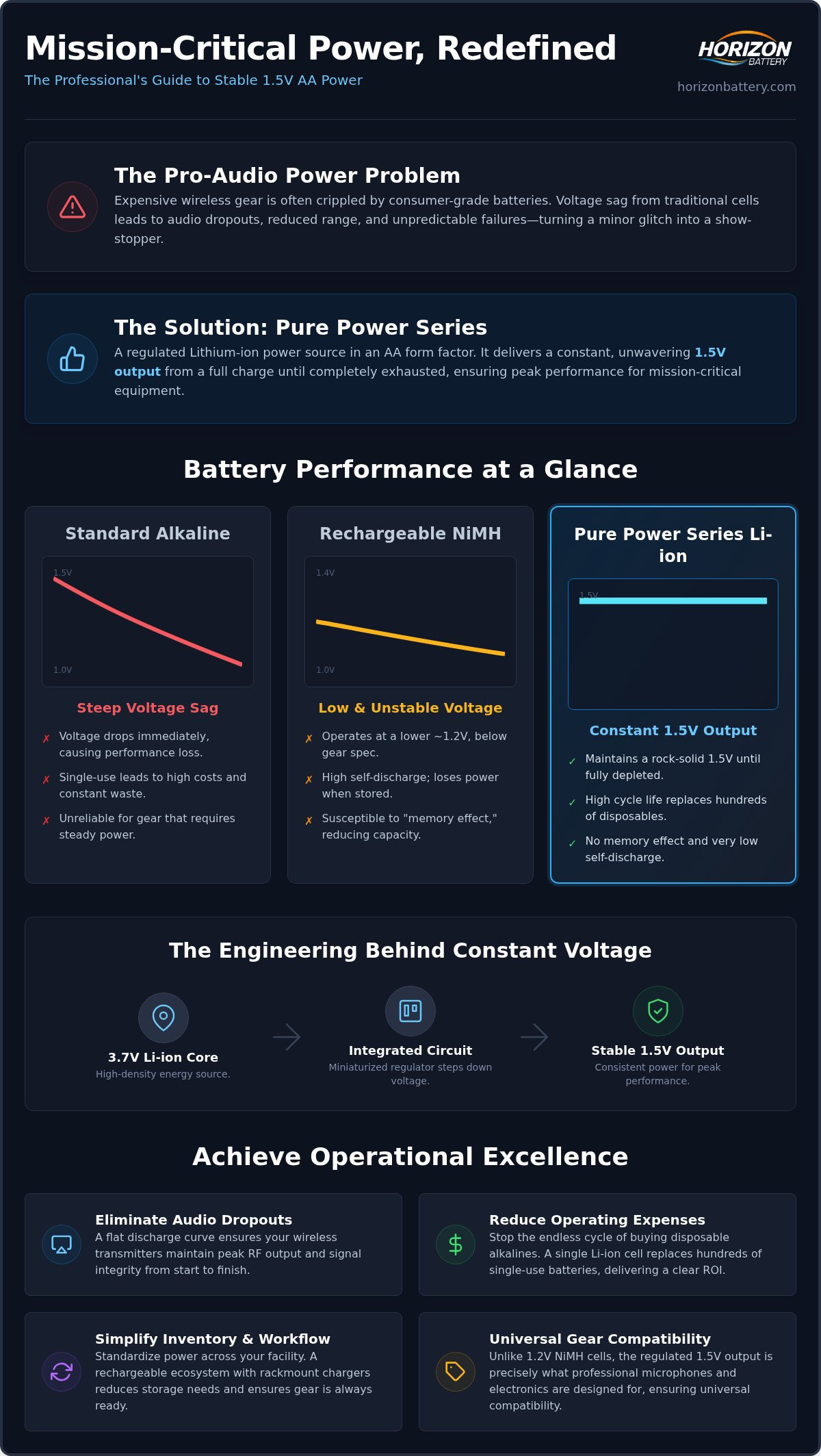
A common misconception in the AV industry is that all rechargeable AA batteries provide 1.2 volts. While this is true for Nickel-Metal Hydride (NiMH) cells, the Pure Power Series utilizes a more advanced architecture. At its core, each cell contains a lithium-ion core with a nominal voltage of 3.7V. To make this compatible with professional electronics, a miniaturized integrated circuit (IC) is built into the top of the battery. This hardware acts as a sophisticated regulator, stepping the voltage down to a precise 1.5V.
This internal regulation is what solves the "voltage sag" issue. Traditional alkaline batteries start at 1.5V but immediately begin a downward slide. By the time they reach 1.1V, many wireless transmitters lose their effective transmission range or shut down entirely. Professional wireless microphones require the full 1.5V to maintain peak RF output and signal-to-noise ratios. By providing a flat discharge curve, these cells ensure your gear performs exactly the same at minute one as it does at hour six. This stability is why many lead technicians choose to invest in Charger / Battery Bundles to standardize their entire rack.
The Internal Voltage Regulator
The integrated circuit does more than just step down the voltage. It manages the entire lifecycle of the discharge. Because Lithium-ion is a high-density chemistry, thermal management is critical. The Pure Power Series includes safety protocols that monitor for heat and prevent the cell from over-discharging, which can permanently damage the battery. This level of protection is essential when batteries are used in high-drain devices or enclosed bodypacks where heat can accumulate. The result is a predictable, steady flow of energy that protects both the cell and the expensive equipment it powers.
Capacity and Runtime Performance
When evaluating professional batteries, technicians often look at mAh ratings. However, mAh alone doesn't tell the full story if the voltage is dropping. A high-capacity alkaline might claim a high mAh, but much of that energy is delivered at a voltage too low for professional gear to use. Pure Power cells maintain 1.5V until the moment of depletion. This means every bit of stored energy is delivered at the required professional standard. In real-world applications, this often results in longer runtimes than "high-drain" disposables because the equipment stays in its optimal operating window longer. You get repeatable performance that allows for precise show scheduling without the guesswork of fluctuating battery indicators.
Pure Power Series vs. Traditional NiMH: A Professional Comparison
While NiMH has served as a reliable rechargeable option for years, the technical requirements of modern wireless gear have outpaced its capabilities. The Pure Power Series addresses the specific physical and chemical limitations that technicians face during long production days. One of the most immediate differences is weight. Lithium-ion cells are significantly lighter than their NiMH counterparts. In handheld microphones or bodypacks worn by performers for several hours, this reduction in mass prevents fatigue and improves the overall user experience.
Readiness is another critical factor for professional environments. Traditional NiMH batteries suffer from a high self-discharge rate, often losing a noticeable percentage of their charge while sitting in storage. If you prepare an emergency kit, you need to know the batteries will work three months from now. Lithium-ion technology maintains its charge for much longer periods. This makes the Pure Power Series a superior choice for backup systems and kits that aren't used daily. From a financial perspective, these cells are rated for over 500 charge cycles. When you calculate the cost-per-use, a single rechargeable cell effectively replaces 500 disposable alkalines, drastically reducing long-term procurement expenses.
Voltage Stability Comparison
The most significant technical divide is the operating voltage. NiMH cells provide a nominal 1.2V, which is already lower than the 1.5V standard most professional gear expects. As discussed previously, the Pure Power cells maintain a flat 1.5V curve. This impacts the "low battery" indicator on your equipment. With NiMH, the indicator might show "half full" for most of the show because the voltage is lower than an alkaline. With the Pure Power Series, the gear sees a full 1.5V until the battery is nearly empty. Technicians must adjust their monitoring habits, relying on timed swaps rather than fluctuating bars on a screen. This steady voltage also ensures that the wireless microphone's RF output remains at its maximum rated power, preventing the range from shrinking as the battery drains.
Operational Efficiency
Large-scale deployments require standardized workflows. Standardizing on a single chemistry allows facilities to predict charging times and manage inventory more effectively. There's also the issue of physical dimensions. Some high-capacity NiMH batteries are slightly oversized, making them difficult to insert or remove from tight battery compartments in high-end transmitters. The Pure Power design adheres strictly to AA specifications, ensuring a smooth fit in any professional gear.
- Standardized charging cycles reduce the need for slow "trickle" sessions.
- Slimline physical profiles ensure compatibility with narrow gear slots.
- Organizing assets is simplified through dedicated Battery Storage solutions.
This methodical approach to energy management eliminates the guesswork that often leads to technical failures during live productions. It provides a level of order and clarity that consumer-grade rechargeables simply cannot match.
Operational Excellence: Integrating Professional Li-ion into Your Workflow
Transitioning a large facility from alkaline disposables to the Pure Power Series requires a methodical approach to logistics. It's not merely a matter of swapping cells; it's about establishing a repeatable energy cycle. Start by auditing your high-drain devices to determine the exact number of active cells needed per shift. From there, implementing a "one-to-one" backup ratio ensures that a fresh set is always ready in the charger while the other is in the field. This structured rotation eliminates the panic of searching for spare batteries minutes before a performance.
Staff and volunteer training is the next pillar of operational success. Because these Lithium-ion cells behave differently than alkalines, your team needs to understand that the battery meter on a transmitter will stay "full" for the duration of the charge. Training should emphasize timed rotations rather than waiting for a low-battery warning. Proper handling is also vital. While the integrated circuitry provides safety, basic protocols like keeping contacts clean and avoiding extreme temperatures will maximize the lifespan of your investment. Using only dedicated chargers designed for the Pure Power Series is essential for maintaining the health of the internal regulation circuits.
Standardizing Large Facilities
In environments like churches or schools, managing hundreds of loose batteries can lead to significant asset loss. Utilizing dedicated Battery Storage solutions allows for a centralized check-out system. By organizing cells into specific bins or cases, technicians can easily track which sets have been used and which are ready for deployment. This level of organization reduces technical debt and ensures that no device is ever sent onto a stage with a partially depleted cell. Centralized stations also make it easier for volunteers to follow the established power workflow without confusion.
Professional Charging Infrastructure
For pro-touring and theater environments, loose desktop chargers are often insufficient for the scale of production. Integrating Custom Rackmount Chargers into your existing AV racks provides a more robust and permanent solution. These multi-channel systems allow for simultaneous monitoring of dozens of cells, giving the lead technician a clear overview of the entire facility's power status at a glance. A rack-integrated approach also protects the charging hardware during transport and minimizes the cable clutter that often plagues temporary setups.
To ensure your facility is equipped for zero-fail performance, explore our specialized Charger / Battery Bundles designed for seamless professional integration.
Why Horizon Battery is the Trusted Source for the Pure Power Series
Professional AV environments don't have room for trial and error. Horizon Battery has operated since 1998, positioning itself as a veteran distributor that understands the specific needs of the US market. While many retailers sell generic batteries, Horizon focuses on specialized energy ecosystems. This expertise led to the development of the Pure Power Series, a line of cells designed to meet the high-drain requirements of modern wireless hardware. We don't just supply products; we provide engineered solutions that include Custom Rackmount Chargers built to withstand the rigors of professional touring and theater.
Our legacy is built on steady reliability and a deep understanding of facility-scale power management. Whether you're managing a single stage or a multi-campus organization, our approach remains the same: provide high-capacity, dependable tools that eliminate technical failures. By choosing a partner with over 25 years of industry experience, you're gaining access to a knowledge base that spans the evolution of mobile energy technology.
The Horizon Difference
Working with Horizon Battery means you have direct access to technical experts who understand pro-audio challenges. We know that a church volunteer or a school technician needs a system that is intuitive and fail-safe. Our team provides streamlined procurement processes for government agencies and large venues, ensuring that your transition to the Pure Power Series is handled with precision. We prioritize high-capacity solutions because we know that "consumer-grade" isn't an option when the house lights go down. Our Charger / Battery Bundles are curated to provide a turnkey experience, matching the right cells with the exact charging hardware needed for optimal cell longevity.
Next Steps for Your Facility
Transitioning to a professional rechargeable system is a strategic investment that requires careful planning. It's a methodical process that begins with evaluating your current operational needs. To move forward, consider the following steps:
- Analyze your current spend: Calculate the monthly cost of disposable alkalines to determine your potential ROI.
- Audit your gear: Identify which wireless transmitters and receivers will benefit most from 1.5V constant voltage.
- Select your configuration: Choose between desktop charging kits or integrated rackmount systems based on your facility's infrastructure.
If you're ready to standardize your power and reduce long-term costs, contact our team for a custom rackmount charging consultation. We'll help you select the right configuration for your specific equipment and provide the technical support needed for a seamless deployment. You can explore our full range of professional energy solutions at horizonbattery.com to find the perfect fit for your organization.
Take Control of Your Professional Power Cycle
Eliminating technical failures starts with the energy source in your rack. Transitioning to the Pure Power Series provides your facility with the constant 1.5V output and high-capacity reliability that professional wireless gear demands. This shift doesn't just resolve the issue of audio dropouts; it standardizes your workflow and significantly reduces the logistical burden of managing thousands of disposable batteries. By moving to a regulated lithium solution, you ensure that your equipment stays in its optimal operating window from the first minute to the last.
Horizon Battery has supported professional AV teams since 1998, offering the expertise and custom rackmount charging solutions necessary for large-scale deployments. By choosing a system designed for longevity and performance, you ensure your equipment operates at its peak for every performance. It's time to move beyond the limitations of consumer-grade cells and embrace a power solution built for the rigors of the industry.
Upgrade your facility with the Pure Power Series at Horizon Battery and experience the confidence that comes with a truly professional energy ecosystem. We're ready to help you achieve a new level of technical excellence and operational peace of mind.
Frequently Asked Questions
Is the Pure Power Series compatible with standard NiMH chargers?
No, you shouldn't use standard NiMH chargers with these cells. Lithium-ion batteries require specific charging protocols to interact correctly with their internal regulation circuitry. Using an incompatible charger can damage the battery or fail to provide a full charge. It's best to use dedicated chargers designed specifically for these 5V input lithium-ion batteries to ensure safety and maintain the cell's long-term health.
How many times can a Pure Power Series Lithium-ion battery be recharged?
These professional cells are rated for over 500 full charge cycles. This longevity makes the Pure Power Series a cost-effective alternative to disposable alkalines, which are discarded after a single use. Even after hundreds of cycles, the battery maintains a high percentage of its original capacity. This predictable lifecycle allows technical directors to plan their inventory replenishment schedules with accuracy, ensuring the facility always has reliable power.
Do Pure Power Series batteries provide a full 1.5 volts?
Yes, these batteries deliver a constant 1.5V output from the start of the charge until the cell is depleted. Unlike NiMH rechargeables that typically provide 1.2V, the integrated circuit inside each cell regulates the power to match the requirements of professional audio gear. This ensures that your wireless transmitters maintain their full RF output and signal stability, preventing the performance issues often associated with traditional rechargeable options.
What is the best way to store Pure Power Series batteries when not in use?
Store your batteries in a cool, dry environment away from direct sunlight or extreme temperature fluctuations. For long-term storage, it's best to keep the cells at approximately 40 to 50 percent charge rather than leaving them fully depleted or fully charged for months. Using dedicated battery storage cases helps prevent the contacts from touching metallic objects, which avoids accidental discharge and keeps your inventory organized for the next event.
Can I use the Pure Power Series in wireless microphones and IEMs?
Yes, these cells are specifically engineered for high-drain professional devices like wireless microphones and In-Ear Monitor (IEM) bodypacks. The steady voltage prevents the audio artifacts and range reduction that occur when standard batteries begin to sag. Many production teams use them to standardize power across all handheld and belt-pack units. This creates a uniform workflow where every device performs predictably regardless of the brand or model.
How does the Pure Power Series perform in extreme temperatures?
Lithium-ion chemistry generally performs more reliably in cold environments than traditional alkaline or NiMH batteries. However, extreme heat can still impact the lifespan of any rechargeable cell. The internal safety circuits help manage thermal loads during operation, but you should avoid leaving gear in hot vehicles or under intense stage lighting for extended periods. Maintaining a stable operating temperature ensures the integrated regulator functions at peak efficiency throughout the show.
What is the difference between Pure Power Li-ion and standard alkaline batteries?
The primary difference lies in the discharge curve and sustainability. An alkaline battery’s voltage drops steadily as it's used, which can trigger "low battery" warnings prematurely on professional gear. In contrast, the Pure Power Series maintains a flat 1.5V line until it is empty. Additionally, the ability to recharge these cells hundreds of times eliminates the recurring cost and environmental impact of disposing of single-use batteries after every production.
Are there custom charging solutions for large-scale Pure Power deployments?
Yes, we offer specialized rackmount charging hardware designed to handle large-scale deployments efficiently. These custom solutions allow facilities to charge dozens of cells simultaneously within a standard AV rack. This centralized approach is ideal for touring rigs, theaters, and large houses of worship where organization is critical. It simplifies the management of high-capacity battery inventories and ensures that fresh power is always accessible to the technical crew.