
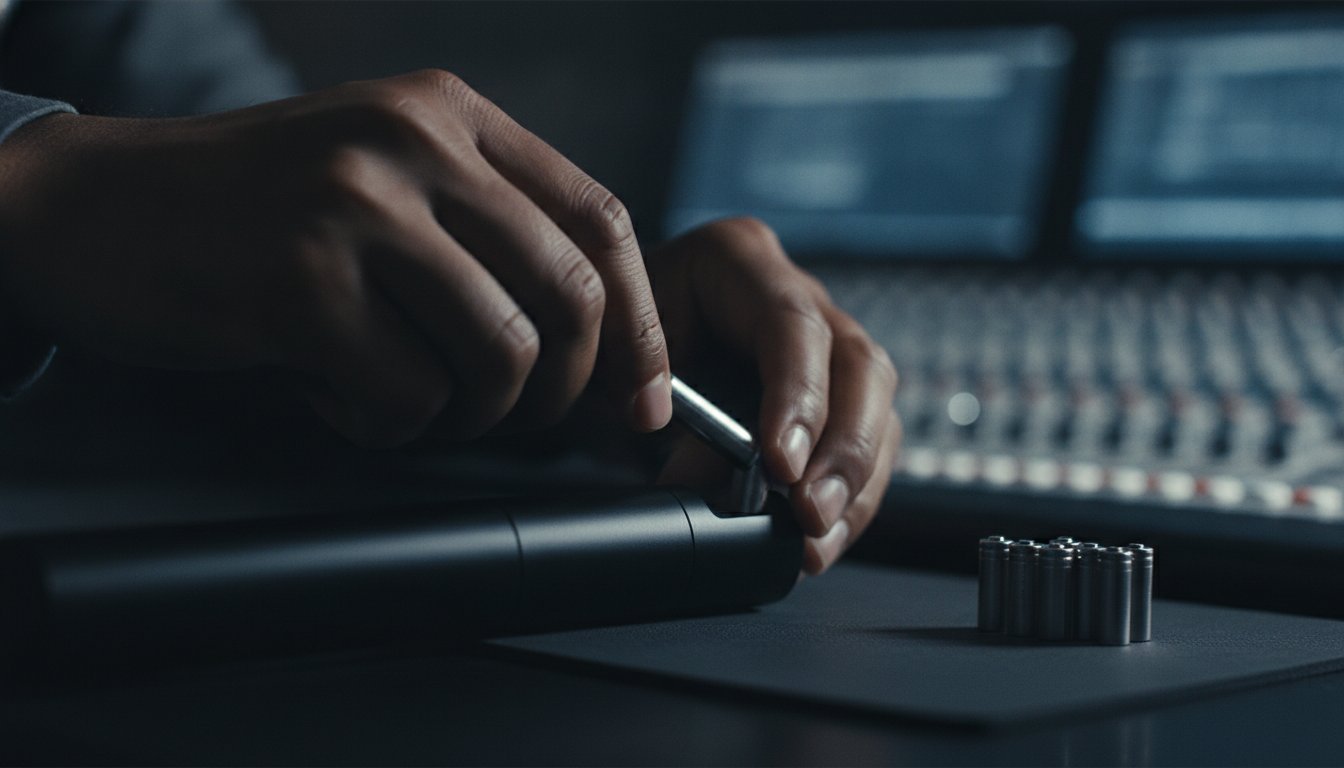
Why does a world-class wireless microphone system still fail because of a battery that lost its charge while sitting in a storage drawer? This hidden drain is a constant threat to live performances, often leading to the dreaded voltage sag that causes signal dropouts at critical moments. When comparing NiMH vs lithium-ion for professional audio, most technicians feel forced to choose between the high capacity of traditional NiMH and the steady voltage of lithium-ion. However, Ansmann hybrid technology eliminates this compromise by combining the best of both worlds into a single, reliable standard for 2026.
You need equipment that works the moment you pull it from the rack. We understand the frustration of standard NiMH cells jamming in tight battery compartments or discovering that your standby power has evaporated during storage. This guide will show you how the Ansmann 2850 mAh Slimline and the Pure Power Series provide a definitive solution to these technical failures. You'll discover how to reduce environmental waste and standardize your facility on a power platform that retains 85% of its charge even after twelve months of standby. We will examine the specific technical advantages of these cells and how they simplify asset management for large-scale professional environments.
Key Takeaways
- Understand how Ansmann Hybrid technology combines high-capacity NiMH performance with an alkaline-like shelf life that retains 85% of its charge after one year in storage.
- Compare the technical trade-offs of NiMH vs lithium-ion for professional audio to balance constant voltage requirements against long-term return on investment.
- Discover the benefits of the Ansmann 2850 mAh Slimline architecture, which ensures high-capacity cells fit perfectly into wireless transmitters without jamming.
- Identify strategic enterprise use cases for "Ready to Use" cells in low-drain devices and emergency standby applications across schools, churches, and corporate facilities.
- Learn how to standardize your facility's power management by pairing professional-grade cells with custom rackmount chargers and pre-configured battery bundles.
Defining Ansmann Hybrid Technology: More Than Just NiMH
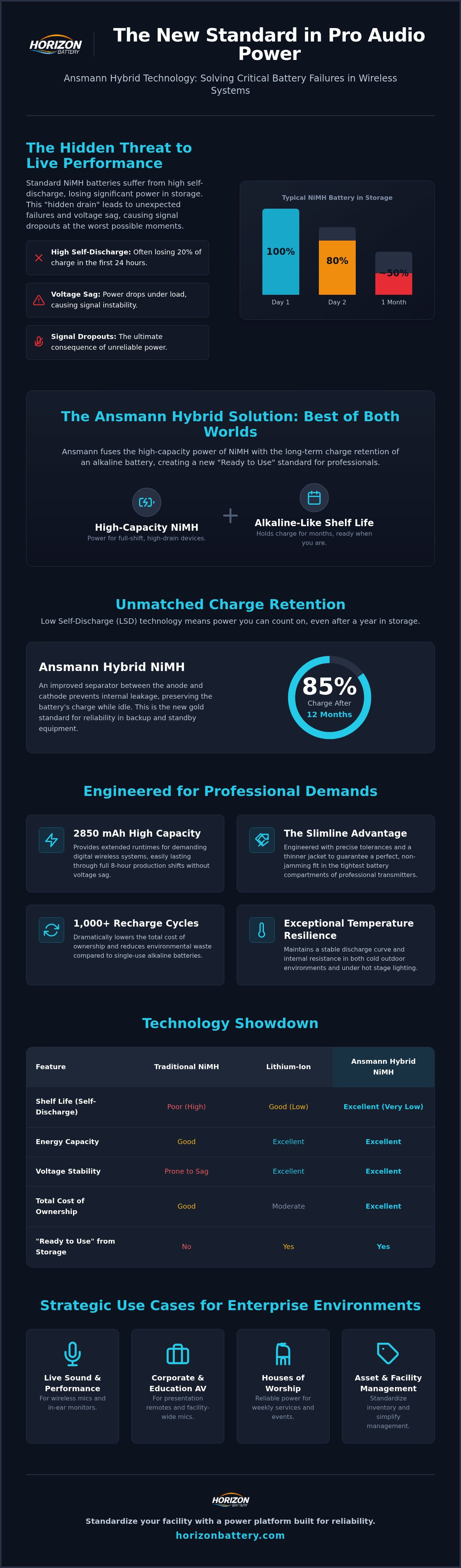
Ansmann hybrid technology isn't just another rechargeable cell; it's a specific chemical engineering solution designed to eliminate the weaknesses of traditional nickel-metal hydride batteries. For years, the debate over NiMH vs lithium-ion for professional audio centered on the trade-off between energy density and shelf life. Traditional NiMH cells suffered from high self-discharge rates, meaning they were often flat when needed most. Hybrid technology solves this by fusing the high-capacity power of NiMH with the long-term charge retention of an alkaline battery. This "Ready to Use" (RTU) capability means you can pull a cell from storage and rely on it immediately without a pre-show charge cycle.
In 2026, professional sectors are moving away from disposable power due to environmental mandates and the logistical headache of waste management. Ansmann achieves a high-capacity density that powers demanding wireless transmitters for full shifts while maintaining a stable physical footprint. This engineering provides:
- Consistent performance in high-drain digital wireless systems.
- A reduction in the physical volume of battery inventory.
- Predictable runtimes that align with standard production schedules.
The Evolution of Low Self-Discharge (LSD)
Early versions of nickel-metal hydride battery technology were notoriously unreliable for standby use, often losing up to 20% of their charge within the first 24 hours. Hybrid technology utilizes an improved separator material between the anode and cathode. This barrier prevents the internal chemical leakage that causes power to drain while the battery sits idle. Because these cells retain 85% of their charge after twelve months, charge retention is now the primary metric for emergency kits and backup audio rigs.
The Professional Gold Standard for Reliability
Professional users require the reliability of a disposable alkaline battery without the constant expense. Hybrid cells provide this by offering over 1,000 recharge cycles, significantly lowering the total cost of ownership. Hybrid technology serves as the essential bridge between the convenience of disposable cells and the sustainability of high-end rechargeable systems. By standardizing on this platform, enterprise facilities eliminate the hidden costs of alkalines, such as the labor required for frequent recycling and the risk of battery leakage in expensive equipment. This stability makes it a strategic asset for large-scale AV deployments where reliability is the only acceptable outcome.
Engineering Performance: Capacity and the Slimline Advantage
Professional audio gear in 2026 demands more than just raw power; it requires precision in energy delivery. The Ansmann 2850 mAh Slimline represents the high-water mark for NiMH capacity, offering the extended runtimes needed for full eight-hour production shifts. While the debate regarding NiMH vs lithium-ion for professional audio often focuses on nominal voltage, the chemical stability of these high-capacity cells is equally vital. Ansmann engineering prevents the voltage sag that typically occurs during high-drain operation, ensuring your signal remains clear until the very end of the cell's discharge cycle. This stability is paired with exceptional temperature resilience. Whether you're operating in cold outdoor environments or under the intense heat of stage lighting, these cells maintain their internal resistance and discharge curves without the performance drops seen in consumer-grade alternatives.
Ansmann 2850 mAh Slimline: Solving the Fit Issue
A common frustration for audio technicians is the physical size of high-capacity rechargeable batteries. Many standard cells are manufactured with slightly larger diameters to accommodate more active material, causing them to jam in the tight battery compartments of wireless transmitters. The Ansmann 2850 mAh Slimline is specifically engineered with a thinner jacket and precise tolerances to ensure a perfect fit in all professional gear. This design choice is critical for Rechargeable Batteries for Wireless Microphones, where even a fraction of a millimeter can lead to equipment damage or failed swaps mid-show. For a deeper look at these specifications and how they impact your workflow, consult our Ansmann High Capacity Batteries: 2026 Professional Guide.
Cycle Life vs. Capacity Trade-offs
There is a well-documented inverse relationship between a battery's absolute capacity and its total cycle life. While some consumer batteries claim mAh ratings above 3000, they often suffer from structural instability and fail after only 200 or 300 recharges. Ansmann has identified 2850 mAh as the "sweet spot" for professional use. This capacity provides ample runtime while still maintaining a rating of up to 1,000 recharge cycles. To maximize this longevity, we recommend using intelligent charging protocols that monitor individual cell health to prevent overheating. Transitioning your facility to these robust cells is easier when you utilize pre-configured charger and battery bundles designed for enterprise-level asset management. By prioritizing this balance of capacity and durability, facilities can reduce their long-term overhead while ensuring their gear always has the power it needs for high-stakes performances.
Performance Benchmarks: Hybrid NiMH vs. Pure Power Lithium-Ion
Choosing between NiMH vs lithium-ion for professional audio requires an understanding of how different voltage curves affect your equipment. Ansmann Hybrid cells operate at a nominal 1.2V; they start at a higher potential and gradually decline as the battery depletes. In contrast, the Pure Power Series utilizes lithium-ion chemistry to provide a constant 1.5V output from start to finish. This difference dictates how your hardware behaves during a performance. Lithium-ion cells offer a significant weight advantage, making them the preferred choice for handheld transmitters where reduced fatigue is a priority. However, Hybrid NiMH cells often provide a better return on investment for fixed installations or high-volume facilities where cost-per-cycle and legacy compatibility are the primary concerns.
The "End of Life" behavior of these two chemistries is a critical factor for live sound engineers. NiMH cells exhibit a gradual fade, which allows most wireless systems to provide a low-battery warning. Lithium-ion cells provide peak performance until the internal protection circuit reaches its threshold, resulting in a sudden cutoff. To decide which is best for your application, consider these factors:
- Prioritize Ansmann Hybrid if you rely on receiver-side battery telemetry or need to manage a massive inventory on a budget.
- Prioritize Pure Power Lithium-Ion for sensitive digital gear that requires a steady 1.5V or for handheld mics where every gram of weight matters.
- Use Hybrid for standby devices like facility clocks or remote controls that may sit idle for months.
Voltage Stability and Signal Integrity
Voltage stability is the foundation of clear audio. When voltage sags, the signal-to-noise ratio in wireless transmitters can suffer, leading to audible artifacts or increased interference. While the Pure Power Series maintains its peak voltage until the very end, Ansmann Hybrid cells are often preferred for gear with legacy battery telemetry indicators. These older systems rely on the gradual voltage drop of NiMH to display accurate battery bars on the receiver. If you need to understand the technical nuances of these power curves, read our guide on Professional Lithium-Ion Voltage: Busting the 1.5V vs. 3.7V Myths for 2026. This distinction is vital for technicians who need a predictable warning before a microphone goes dark.
The ROI of Hybrid vs. Lithium-Ion
The decision to standardize on one chemistry involves balancing initial acquisition costs against long-term operational benefits. Hybrid NiMH cells are more affordable upfront and work seamlessly with existing charging infrastructure, making them the workhorse of many large-scale AV departments. Lithium-ion cells offer up to 1,500 recharge cycles and double the energy density, though they require specific chargers. We provide a detailed breakdown of these financial considerations in our article on Ansmann Technology vs. Pure Power Series: The Professional Choice for 2026. Matching your battery chemistry to your specific application ensures maximum efficiency while protecting your equipment investment over the long term.
Strategic Use Cases for Enterprise AV Environments
Ansmann Hybrid technology excels in environments where batteries spend more time in storage than in active use. In many enterprise settings, low-drain applications like TV remotes, wireless keyboards, and facility clocks are often overlooked until they fail. Hybrid cells provide a "set and forget" solution for these devices, as well as for emergency backup kits. Because they retain 85% of their charge after a full year, they eliminate the need for constant maintenance cycles. Shifting away from disposable power also has a massive environmental impact. A single facility can displace thousands of alkaline batteries annually by switching to a rechargeable standard. This transition simplifies logistics and removes the burden of managing hazardous waste programs. When evaluating NiMH vs lithium-ion for professional audio in large facilities, the decision often comes down to standby reliability and the total cost of ownership across hundreds of devices.
Standardizing Power for House of Worship AV
Volunteer-led production teams in churches often face the issue of "drawer death." This occurs when batteries are used for a service, placed back in a drawer, and found flat the following week. Hybrid technology ensures that microphones remain ready for use even if a charging cycle was missed between rehearsals. It provides a safety net that traditional NiMH cells simply cannot offer. When selecting the Best Rechargeable Batteries for Shure Wireless Mics (2026), the ability to maintain a charge during idle periods is just as important as active runtime. This reliability helps volunteer teams feel confident that their equipment will perform without technical failures during critical moments of a service.
Educational and Corporate Facility Management
Managing massive battery inventories across multiple departments requires a methodical approach. In schools, batteries often sit idle during summer breaks or long holiday weekends. The 12-month charge retention of Ansmann Hybrid cells ensures that equipment is operational the moment classes resume without requiring a massive recharging effort. Corporate environments benefit from this same stability for quarterly events or board meetings where gear is pulled from storage after months of inactivity. Standardizing on a single, reliable cell type reduces the complexity of asset management. It allows facility managers to focus on high-level production rather than troubleshooting power failures. To simplify this transition for your organization, consider our pre-configured battery and charger bundles which are designed to support large-scale enterprise deployments and streamline equipment distribution.
Standardizing Your Facility with Horizon Battery Solutions
Standardizing a professional facility requires more than just selecting the right chemistry. While the technical debate over NiMH vs lithium-ion for professional audio helps define your power needs, the actual execution depends on your charging infrastructure. Horizon Battery serves as a veteran guide for this transition, providing the specialized hardware needed to maintain Ansmann professional-grade cells. We offer pre-configured charger and battery bundles that take the guesswork out of moving from disposable alkalines to a professional rechargeable system. As a US-based partner with expertise dating back to 1998, we provide the technical support and inventory consistency required for enterprise-level operations.
A cell is only as reliable as the hardware used to charge it. Our custom rackmount chargers and battery bundles are designed to simplify asset management for schools, churches, and corporate campuses. By centralizing your power needs, you reduce the risk of technical failure and ensure that every department has access to high-capacity, ready-to-use power. This methodical approach to power ensures that your investment in Ansmann technology pays dividends through years of consistent performance.
Integrating Custom Rackmount Charging
Transitioning to a professional workflow means moving away from cluttered desktop chargers that are easily lost or damaged. Our custom rackmount chargers are proprietary designs that integrate directly into your existing AV racks. These units don't just organize your space; they protect your investment through advanced thermal management. By regulating charge currents and monitoring individual cell temperatures, they prevent the overheating that can degrade cell longevity. For a comprehensive look at these systems, see our Enterprise Battery Charging Solutions: The 2026 Professional Buying Guide.
Asset Management and Storage
Successful power management relies on a First-In, First-Out (FIFO) rotation system. This ensures that no single set of batteries is overused while others sit idle. Utilizing dedicated battery storage solutions helps maintain this order and prevents the accidental mixing of charged and depleted cells. You can learn the specifics of implementing this process in our guide on How to Implement a Professional Battery Storage and Management System. Ultimately, Ansmann Hybrid technology remains the cornerstone of professional reliability because it bridges the gap between high-capacity performance and long-term standby readiness. By pairing these cells with industrial-grade hardware from Horizon Battery, your facility gains a power solution that is both sustainable and fail-safe.
Securing Your Professional Audio Power Strategy
Selecting the right power source is a strategic decision that impacts the reliability of every performance. We've explored how Ansmann hybrid technology provides a unique middle ground; it offers the high capacity of traditional rechargeable cells with the long-term standby readiness of an alkaline battery. When evaluating NiMH vs lithium-ion for professional audio, the best choice depends on whether you prioritize the constant voltage of the Pure Power Series or the high-cycle ROI and legacy compatibility of the Ansmann 2850 mAh Slimline. Standardizing your facility on these professional-grade cells eliminates the technical failures caused by voltage sag and battery drain.
Horizon Battery is a veteran US distributor that has served the industry since 1998. We specialize in providing authorized Ansmann professional series cells alongside our proprietary custom rackmount charging solutions to protect your long-term investment. By matching the right chemistry with intelligent hardware, you can reduce environmental waste and simplify your facility's asset management. Your equipment deserves power as professional as your performance.
Shop Ansmann Hybrid Batteries and Custom Charging Bundles to ensure your team is always ready for the next event.
Frequently Asked Questions
What exactly is "Hybrid" in Ansmann hybrid technology?
Hybrid technology refers to a specific Low Self-Discharge (LSD) nickel-metal hydride chemistry. It combines the high-energy capacity of rechargeable NiMH with the long-term charge retention typically associated with alkaline batteries. Unlike traditional rechargeables that lose power while sitting idle, these cells arrive "Ready to Use" out of the package. This makes them an ideal choice when comparing NiMH vs lithium-ion for professional audio, as they provide immediate power without a pre-show charge cycle.
Do Ansmann hybrid batteries require a special charger?
No, these batteries are compatible with all standard NiMH charging hardware. However, utilizing an intelligent charger is highly recommended to maximize the 1,000-cycle lifespan of the cells. Horizon Battery provides specialized custom rackmount chargers that monitor individual cell temperatures and voltage curves. These professional-grade systems prevent the overheating and overcharging that often occur with consumer-grade desktop units, ensuring your inventory remains reliable for years of heavy daily use.
How long do Ansmann hybrid batteries hold their charge in storage?
Ansmann Hybrid cells are engineered to retain approximately 85% of their total charge after twelve months of storage. This is a massive improvement over older NiMH technology, which could lose a significant portion of its capacity in just a few weeks. This long-term retention makes them the perfect "set and forget" solution for emergency kits, facility clocks, and backup microphones that may sit in a drawer between seasonal events or quarterly board meetings.
Can I use Ansmann 2850 mAh batteries in any AA-powered device?
Yes, the Ansmann 2850 mAh Slimline is designed to be physically compatible with any device that accepts standard AA batteries. Many high-capacity rechargeable cells are slightly oversized, which causes them to jam in the tight compartments of wireless transmitters. The Slimline architecture uses a thinner jacket and precise tolerances to ensure a smooth fit. This makes them suitable for everything from handheld microphones and belt packs to digital cameras and portable recorders.
What is the difference between Ansmann Hybrid and standard NiMH?
The primary difference lies in the self-discharge rate and the internal separator material. Standard NiMH batteries can lose up to 20% of their charge within the first 24 hours after being removed from the charger. Hybrid batteries use a specialized barrier that prevents this internal chemical leakage. This shift in NiMH vs lithium-ion for professional audio discussions highlights how Hybrid tech provides the standby reliability of lithium while maintaining the cost-effectiveness of traditional NiMH systems.
Are Ansmann hybrid batteries better than alkaline for wireless mics?
Yes, they are significantly better for professional environments due to their higher capacity and rechargeability. A single Ansmann cell can replace over 1,000 disposable alkalines over its lifetime, which drastically reduces environmental waste and long-term procurement costs. They provide a more stable voltage curve during high-drain operation, which helps prevent the signal dropouts or artifacts that often occur when alkaline batteries begin to sag under the load of digital wireless systems.
How many times can Ansmann hybrid batteries be recharged?
These professional-grade cells are rated for up to 1,000 recharge cycles under normal operating conditions. To reach this full potential, it's important to use chargers that feature individual cell monitoring and automatic shut-off. This longevity ensures that a single investment in a battery and charger bundle can power a facility for several years. This durability is why many schools and churches choose Ansmann as their primary power standard for high-turnover microphone environments.
Do Ansmann hybrid batteries suffer from memory effect?
No, modern Ansmann NiMH chemistry doesn't suffer from the "memory effect" that plagued older nickel-cadmium batteries. You don't need to fully discharge the cells before placing them back on the charger. In fact, modern charging protocols are designed to top off these batteries at any time without damaging their capacity or lifespan. This flexibility allows production teams to charge their gear after every use, ensuring that microphones are always at peak capacity for the next performance.