

Imagine the house lights go down, the cue is called, and your lead wireless microphone cuts out because a supposedly fresh battery failed ten minutes into the performance. It's a scenario that keeps production managers and AV technicians awake at night, usually caused by a lack of oversight in how power cells are maintained. You've likely dealt with the frustration of disorganized inventory or high cell failure rates that compromise your professional workflow. Maintaining a large inventory of power cells shouldn't feel like a gamble, yet without a dedicated Battery Storage strategy, reliability is never guaranteed.
Implementing a professional management system is the only way to ensure your equipment remains reliable for high-stakes environments while maximizing your long-term return on investment. You'll learn the technical requirements for temperature control, the procedural steps for inventory rotation, and the safety protocols needed to protect your facility. This guide provides a methodical look at organizing professional-grade rechargeable batteries, including the Pure Power Series, to create a streamlined, audit-ready system that eliminates technical failures due to dead cells. By following these industry-standard steps, you can transform your battery inventory from a liability into a dependable asset.
Key Takeaways
- Understand the critical difference between utility-scale concepts and the enterprise asset management required for high-stakes production environments.
- Discover the optimal temperature ranges and State of Charge (SoC) protocols that prevent cell failure and significantly extend battery lifespan.
- Compare storage infrastructure options, ranging from partitioned cases to custom rackmount chargers, to determine the best fit for your facility's scale.
- Learn to build a professional Battery Storage workflow utilizing First-In, First-Out (FIFO) rotation and labeling protocols for total inventory reliability.
- Transition from disorganized "drawer storage" to an audit-ready management system that eliminates production delays and maximizes equipment ROI.
Understanding Battery Storage: From Grid Concepts to Enterprise Realities
The term "Battery Storage" often evokes images of massive shipping containers filled with lithium-ion cells used to stabilize the power grid. While a Battery Energy Storage System (BESS) is vital for utility-scale energy management, professional AV and industrial organizations face a different reality. For these sectors, storage isn't about feeding power back into a grid; it's about enterprise asset management. It involves the physical organization, environmental regulation, and lifecycle tracking of thousands of individual high-capacity cells.
Moving beyond the "drawer storage" method is the first step toward industrial professionalism. Tossing high-capacity rechargeable batteries into a communal bin leads to terminal shorting, physical casing damage, and rapid self-discharge. A professional system treats each cell as a precision tool. This approach focuses on three core pillars: climate-controlled environments, partitioned organization, and digital or physical tracking. When these components work together, the impact on the total cost of ownership is significant. Organizations reduce "infant mortality" rates in their battery stock and avoid the expensive emergency replacement of entire batches.
The Distinction Between BESS and Hardware Storage
Grid-scale storage focuses on capacity and discharge rates for municipal use. In contrast, professional hardware storage focuses on readiness and reliability. An industrial facility or a large church production team doesn't need to balance a power grid, but they do need to ensure that 200 wireless transmitters function perfectly for six hours. Transitioning from consumer-grade habits to professional standards means recognizing that how you store a battery directly affects its internal chemistry and future performance. It's the difference between a reactive hobbyist and a seasoned distributor's approach to inventory longevity.
Why Proper Storage is a Business Necessity
In high-stakes environments like live broadcasting or medical device operation, the cost of cell degradation is measured in more than just dollars. A single failed battery can cause production delays that cost thousands of dollars per hour. There are also critical safety implications. Improperly stored bulk lithium-ion batteries can pose thermal runaway risks if terminals aren't protected. Integrating your storage strategy with specialized enterprise battery charging solutions creates a closed-loop system. This ensures cells move from a controlled storage environment to a precision charger and back again without unnecessary stress on the chemistry. This methodical flow is what separates a seasoned operation from one that is constantly reacting to power failures.
How to Store Rechargeable Batteries to Maximize Lifespan
Maximizing the return on investment for professional rechargeable cells requires strict adherence to environmental and chemical standards. The chemistry inside a battery is constantly active, even when the cell isn't in use. To slow down the degradation of these chemical components, you must maintain an optimal temperature range between 59°F and 77°F. High temperatures are the primary enemy of longevity; they accelerate internal chemical reactions that lead to permanent capacity loss. Conversely, extreme cold can increase internal resistance, making the cell appear "dead" even if it still holds a charge.
Every battery experiences a phenomenon known as self-discharge. This is the natural loss of energy that occurs while a cell sits idle. Professional-grade NiMH batteries generally have a higher self-discharge rate than lithium-ion cells, though low-self-discharge (LSD) varieties have improved this significantly. If storage conditions are too warm, this discharge rate accelerates. The danger here is "deep discharge," where the voltage drops so low that the battery's internal protection circuit trips or the chemistry becomes unstable. Once a cell enters a deep discharge state, it often cannot be revived by standard chargers, leading to avoidable inventory waste.
Environmental Control Protocols
Humidity is a frequently overlooked factor in professional inventory management. High moisture levels lead to terminal oxidation, which creates a layer of resistance between the battery and your equipment. This resistance generates heat during use and can cause intermittent power failures. Keeping your assets in a cool, dry environment is a technical requirement for maintaining peak performance. For high-value Pure Power Series lithium-ion cells, climate-controlled cabinets or dedicated equipment rooms are standard. These environments prevent the corrosive effects of condensation and ensure the physical casing of the cell remains intact over hundreds of cycles.
State of Charge (SoC) Management
Preparing batteries for long-term storage isn't as simple as charging them to 100%. In fact, storing lithium-ion cells at a full charge for extended periods puts unnecessary stress on the chemistry and can lead to swelling. For professional management, follow these State of Charge protocols:
- NiMH Cells: For short-term storage (under 3 months), store them at 50% to 80% charge. For long-term storage (up to 12 months), a higher charge of 80% is safer to account for self-discharge.
- Lithium-ion Cells: These should ideally be stored at approximately 40% to 50% SoC. This "storage voltage" is the most stable state for the lithium ions and prevents the electrolyte from breaking down.
- Maintenance Schedule: Establish a "top-up" routine every 3 to 6 months. Use a multimeter or a smart charger to verify that voltages haven't dropped below critical levels.
Developing a standardized environment for your Battery Storage needs ensures that every cell is ready for immediate deployment. This methodical approach to maintenance prevents the common technical failures that plague disorganized production facilities.
Comparing Battery Storage Solutions: Cases, Racks, and Infrastructure
Professional Battery Storage is as much about physical engineering as it is about chemical preservation. Once you've established the environmental protocols for temperature and humidity, you must select the hardware that will house your assets. The choice between bulk containers, individual partitions, and rackmount systems depends on your facility's scale and how often you deploy your equipment. A well-designed system doesn't just hold batteries; it protects them from physical impact, prevents terminal shorting, and facilitates a logical workflow between charging and deployment zones.
Organizations should categorize their inventory into two distinct areas: Ready-to-Use (RTU) zones and Long-term storage zones. RTU zones hold cells that are fully conditioned and ready for immediate field use. Long-term zones are reserved for backup stock maintained at the storage voltages discussed previously. In both areas, the material of the storage container matters. Professional-grade cases should be constructed from anti-static and fire-retardant materials. These materials provide a critical layer of safety by preventing static discharge from affecting sensitive protection circuits and containing potential thermal events in high-density environments.
Individual Cell Protection vs. Bulk Storage
Using loose bins for battery inventory is a significant liability for any professional organization. When batteries are stored loosely, their terminals can touch, leading to short circuits that cause rapid heating or permanent cell failure. Individual partitioning ensures that each cell remains isolated and protected from physical jarring. For mobile teams and field technicians, choosing the right Ansmann high capacity batteries cases is essential. These specialized cases keep cells organized by pair or set, ensuring that your high-value assets don't suffer from terminal oxidation or casing damage during transport.
Rackmount Charging and Storage Integration
For large-scale facilities like churches, theaters, and broadcast studios, rackmount infrastructure is the gold standard for efficiency. Integrating storage directly into your equipment racks reduces your technical footprint and centralizes power management. Custom rackmount chargers allow you to combine the storage and charging phases into a single, organized location. This setup simplifies cable management and allows for superior thermal ventilation compared to tabletop chargers. By housing your Battery Storage within a ventilated rack, you ensure that heat generated during the charging cycle is quickly dissipated, protecting the long-term health of your high-capacity cells.
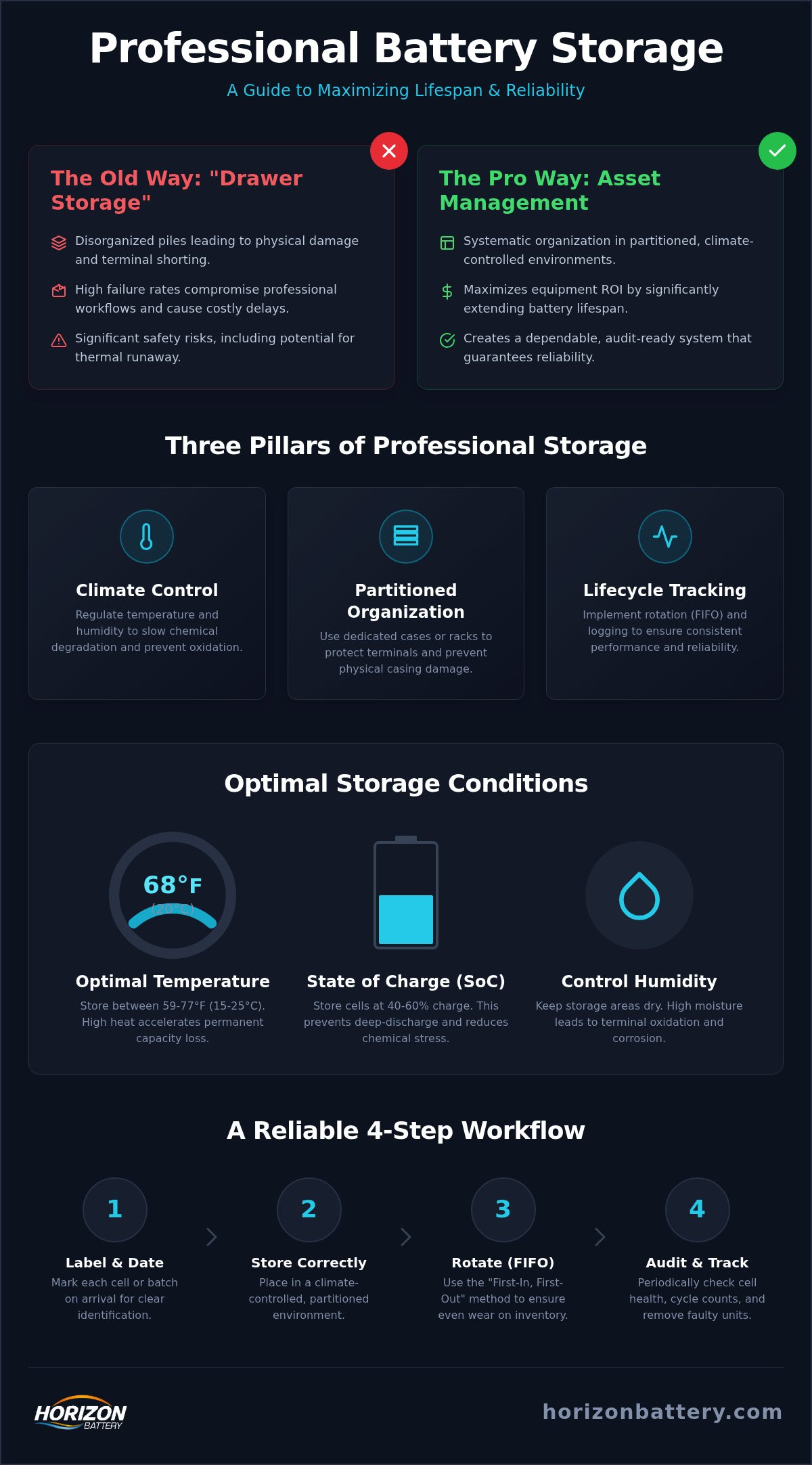
How to Build a Battery Asset Management Workflow
Establishing a methodical workflow turns a collection of hardware into a reliable power system. A structured approach ensures that your Battery Storage isn't just a physical location but a proactive asset management strategy. The first step is implementing a "First-In, First-Out" (FIFO) rotation system. This prevents older batches of cells from sitting at the back of a shelf until they reach a state of deep discharge. Pair this rotation with a strict labeling protocol that tracks the purchase date and estimated cycle counts. When you know the history of every cell, you can predict performance and schedule replacements before a failure occurs during a high-stakes production.
Defining "End of Life" (EOL) criteria is essential for maintaining a high-performance inventory. Most professional organizations decommission cells when they drop below 80% of their original capacity or show a significant spike in internal resistance. To maintain this standard, conduct monthly voltage spot-checks on your stored inventory to identify cells that are discharging faster than the rest of the batch. Documenting these storage conditions and maintenance logs provides more than just internal clarity. It creates an audit trail that is often required for facility insurance and safety compliance protocols.
Inventory Tracking and Rotation
Color-coded labels provide an immediate visual cue for your team. Use green for "Fully Charged," red for "Used/Needs Charging," and yellow for "Storage State." While a basic spreadsheet can work for smaller kits, dedicated asset management software is recommended for facilities handling hundreds of cells. This level of organization is particularly vital when switching to rechargeable batteries for business. Transitioning from disposable to rechargeable systems requires a shift in staff habits, and a clear digital or physical tracking system facilitates that change without production delays.
Safety Audits and Compliance
Regular safety audits are your primary defense against facility hazards. Train your staff to identify early signs of cell swelling, leakage, or terminal corrosion during their routine checks. For large-scale lithium-ion storage, establish fire safety protocols that include the use of fire-retardant containers and clearly marked emergency exits. Proactive safety management ensures that your facility remains compliant with local regulations while protecting your high-value equipment. If you need help designing a custom charging and storage setup for your facility, contact the experts at Horizon Battery today to discuss professional-grade solutions.
Professional Storage Solutions with Horizon Battery
Since 1998, Horizon Battery has focused on the practical utility of high-capacity power systems across the US and Canada. We understand that professional-grade Battery Storage requires more than just a shelf. It demands a synergy between advanced cell chemistry and the hardware designed to protect it. Our solutions are engineered to meet the rigorous demands of churches, production facilities, and industrial environments where equipment failure isn't an option. We provide the steady reliability needed to manage thousands of cycles without compromising performance.
Professional organizations trust our expertise because we prioritize asset longevity and steady performance. We don't just sell hardware; we act as a knowledgeable guide for enterprise-scale organization. You can consult with our team for a custom energy storage audit to identify gaps in your current workflow and implement a system that maximizes your ROI. Whether you're managing a small mobile kit or a large-scale facility, our decades of experience ensure you have the right tools for the job.
Pure Power Series: Designed for Reliability
The Pure Power Series represents our commitment to specialized lithium-ion solutions. These cells are designed with high-stakes environments in mind, offering superior voltage stability even during extended periods of inactivity. While standard consumer cells might suffer from rapid self-discharge, Pure Power assets maintain their readiness for mission-critical gear. When you pair these cells with dedicated storage infrastructure, you ensure that your inventory is always audit-ready and protected from the environmental stressors that typically shorten battery life.
Custom Rackmount Solutions
Managing an inventory of 100 or more cells requires a centralized approach to avoid the delays caused by disorganized kits. Our custom rackmount chargers are engineered to fit seamlessly into standard 19-inch equipment racks, turning wasted space into a high-density power hub. This integrated power management system streamlines your facility by combining charging and storage into a single, ventilated location. It's a methodical way to reduce your technical footprint while ensuring every cell is accounted for and maintained at the correct storage voltage. High-density charging eliminates the clutter of multiple tabletop units and provides a professional, streamlined appearance for your technical racks.
Secure Your Power Infrastructure for the Long Term
Professional power management is a proactive investment in your organization's operational continuity. By implementing strict environmental controls and a methodical asset management workflow, you eliminate the risks of unexpected cell failure and premature degradation. Transitioning to a structured Battery Storage system allows you to maintain high-performance standards across your entire inventory. This ensures that every cell is ready for immediate deployment when the house lights go down.
Horizon Battery has supported the professional AV and industrial sectors since 1998 with specialized power solutions. We provide the expertise needed to design custom rackmount charging infrastructure and integrate Pure Power Series high-performance cell technology into your facility. Don't leave your equipment's reliability to chance. Explore Professional Battery Storage and Charging Solutions to streamline your inventory and protect your technical assets. With the right systems in place, you can focus on your production with the confidence that your power supply is secure.
Frequently Asked Questions
What is the best temperature for storing professional rechargeable batteries?
The optimal temperature range for professional battery storage is between 59°F and 77°F. Maintaining this stable environment prevents the chemical degradation that occurs at higher temperatures. While cold storage can slow self-discharge, it often introduces moisture risks that can damage internal protection circuits. Consistent climate control ensures your inventory remains reliable and ready for immediate deployment in high-stakes production environments where equipment failure is not an option.
Can I store NiMH and Lithium-ion batteries together in the same case?
You can store different chemistries in the same physical case if they are kept in individual partitions. It's critical to prevent terminals from touching, as this causes short circuits. However, you must manage their State of Charge (SoC) differently. NiMH cells generally require a higher storage charge than lithium-ion cells. Using partitioned Battery Storage cases helps keep these assets organized while ensuring that each chemistry is maintained according to its specific technical requirements.
How often should I check the voltage of batteries in long-term storage?
You should conduct voltage spot-checks on your stored inventory every three to six months. This routine allows you to identify cells that are discharging faster than the rest of the batch. Regular monitoring prevents batteries from entering a state of deep discharge, which can lead to permanent capacity loss. Documenting these checks as part of your asset management workflow ensures your facility remains audit-ready and your power cells stay healthy for future use.
Is it safe to store batteries in a standard refrigerator?
Storing batteries in a standard refrigerator is generally not recommended for professional organizations. While cold temperatures can slow chemical reactions, the high humidity levels in a fridge lead to terminal oxidation and condensation. When you move a cold battery into a warm room, moisture can form inside the casing and damage sensitive electronics. It's much safer to use a dedicated climate-controlled cabinet that maintains a dry, stable Battery Storage environment.
Why do my batteries lose charge even when they are not being used?
All rechargeable batteries experience self-discharge, which is a natural chemical reaction that occurs while the cell sits idle. The rate of this energy loss depends on the battery chemistry and the ambient storage temperature. High-capacity NiMH cells often lose charge faster than lithium-ion variants. Keeping your inventory in a cool environment slows this process. Using high-performance cells like the Pure Power Series can also help maintain voltage stability during periods of inactivity.
What are the fire safety requirements for storing large quantities of Li-ion batteries?
Large-scale lithium-ion storage requires fire-retardant containers and well-ventilated areas to mitigate thermal runaway risks. You should establish clear emergency procedures and ensure that storage zones are kept away from flammable materials. Professional facilities often use custom rackmount chargers that provide superior ventilation compared to tabletop units. Training your staff to recognize signs of cell swelling or physical damage is also a vital component of a comprehensive fire safety protocol for your facility.
How do I know when a battery in storage has reached its end of life?
A battery has reached its end of life when its capacity drops below 80% of the original rating or when it shows a significant increase in internal resistance. You can identify these cells during routine maintenance by tracking their performance cycles and discharge rates. If a cell consistently fails to hold a charge or runs hot during use, it should be decommissioned. Establishing clear EOL criteria helps maintain the overall reliability of your professional power system.
Should I store batteries with the terminals covered?
You should always store batteries in a way that prevents the terminals from coming into contact with other cells or metal objects. Covering terminals or using individual partitioning is the best way to prevent accidental short circuits. Shorting can lead to rapid heating, physical leaking, or even fire in high-density storage areas. Using specialized cases or rackmount systems ensures that each battery remains isolated and protected from physical damage while in your storage area.