
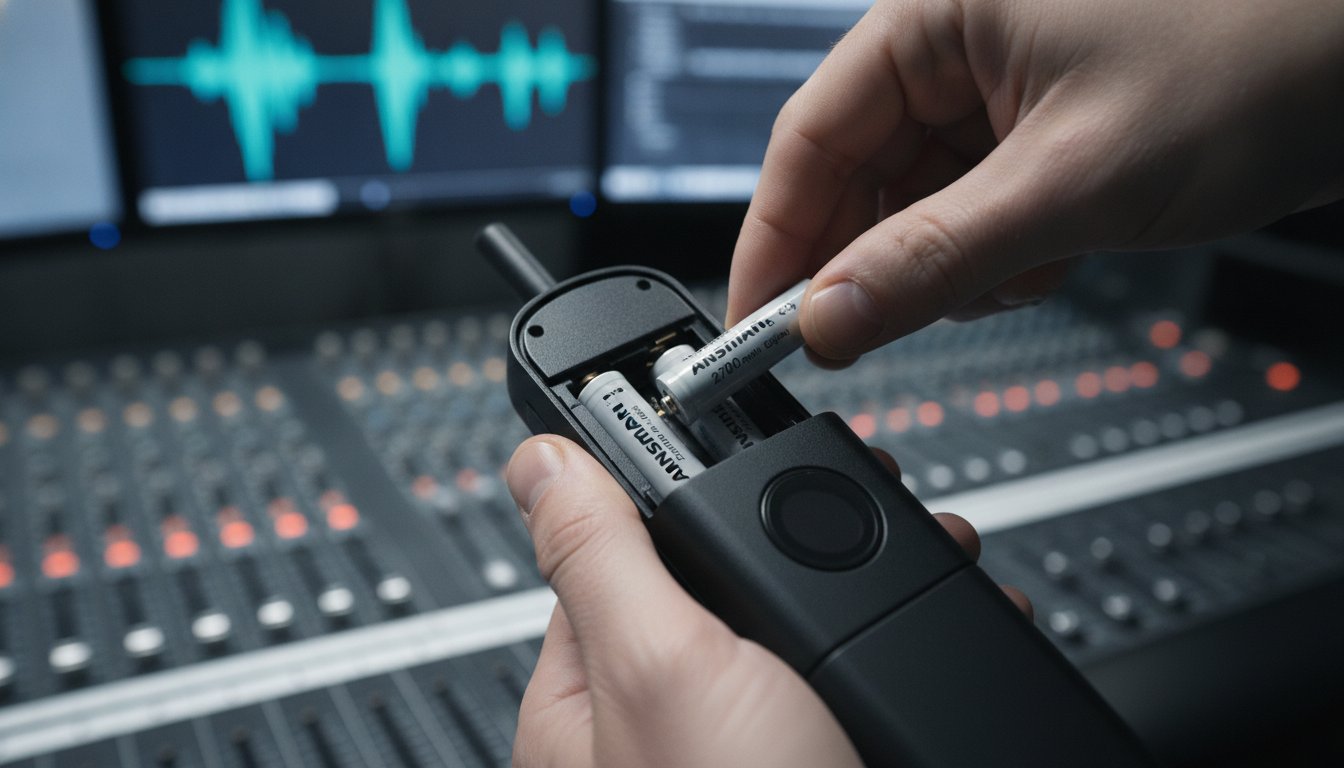
Imagine a lead presenter is mid-sentence during a high-stakes broadcast when the audio suddenly cuts to static. You check the battery indicator and it shows half-full, yet a sudden voltage sag has already killed the signal. This is the common reality of using generic cells instead of Ansmann high capacity batteries in professional high-drain gear. It's frustrating to invest in premium hardware only to have it undermined by a power source that cannot maintain a steady discharge. Many professionals struggle with batteries that lose their charge while sitting in storage or cells that are physically too thick for tight equipment slots.
This 2026 guide explains how these specialized cells solve technical failures through superior engineering. You'll learn how to select the right solutions to eliminate gear dropouts and significantly reduce your annual spend on disposable batteries. We will examine the latest performance metrics for NiMH and Pure Power Li-Ion technologies, focusing on low self-discharge rates and specialized slimline designs. By standardizing your power across your organization, you can ensure that every device is ready for the field the moment it's pulled from a drawer.
Key Takeaways
- Understand how mAh serves as the capacity fuel tank for your devices and why modern engineering prevents the rapid self-discharge seen in older cell generations.
- Learn how Ansmann high capacity batteries utilizing Hybrid technology retain up to 95% of their charge over a month of storage for immediate reliability.
- Identify the specific advantages of using slimline cell designs to prevent physical fitment issues and voltage sag in professional wireless microphone packs.
- Discover how to maximize your return on investment by pairing high-capacity cells with microprocessor-controlled charging infrastructure to reach up to 1,000 cycles.
- Establish a clear framework for choosing between NiMH Hybrid cells and the Pure Power Li-Ion series based on your equipment's specific voltage and runtime requirements.
Understanding High-Capacity NiMH: More Than Just Milliamps
Capacity is often the first metric professionals look for, usually measured in milliamp-hours (mAh). Think of mAh as the fuel tank of your battery. A higher number suggests a longer runtime, but in the professional world, the size of the tank is only half the story. Historically, high-capacity cells suffered from a frustrating technical trade-off. As manufacturers pushed for more energy density, the batteries became prone to rapid self-discharge. They would lose their power while sitting in a kit bag, leaving technicians with dead cells exactly when they needed them most.
Ansmann high capacity batteries represent a departure from this consumer-grade limitation. While a cheap supermarket battery might boast high numbers, it often lacks the internal architecture to sustain that power under load. Professional engineering focuses on balancing that raw capacity with stability. The 2850 mAh NiMH cell is widely considered the "Goldilocks" zone for professional use. It provides enough "fuel" for long event days without compromising the battery's ability to hold its charge over time.
The Science of Energy Density in AA Cells
Packing more active material into a standard AA form factor is a precision exercise. Ansmann achieves this through high-purity chemical compositions and thinner separators. This allows for more energy-storing surface area within the same physical dimensions. However, higher density can increase internal resistance. If internal resistance is too high, the battery heats up and voltage drops. Professional-grade Ansmann high capacity batteries are designed to keep internal resistance low, ensuring that the energy is available for high-drain devices like digital wireless systems rather than being wasted as heat.
Voltage Stability and Device Runtime
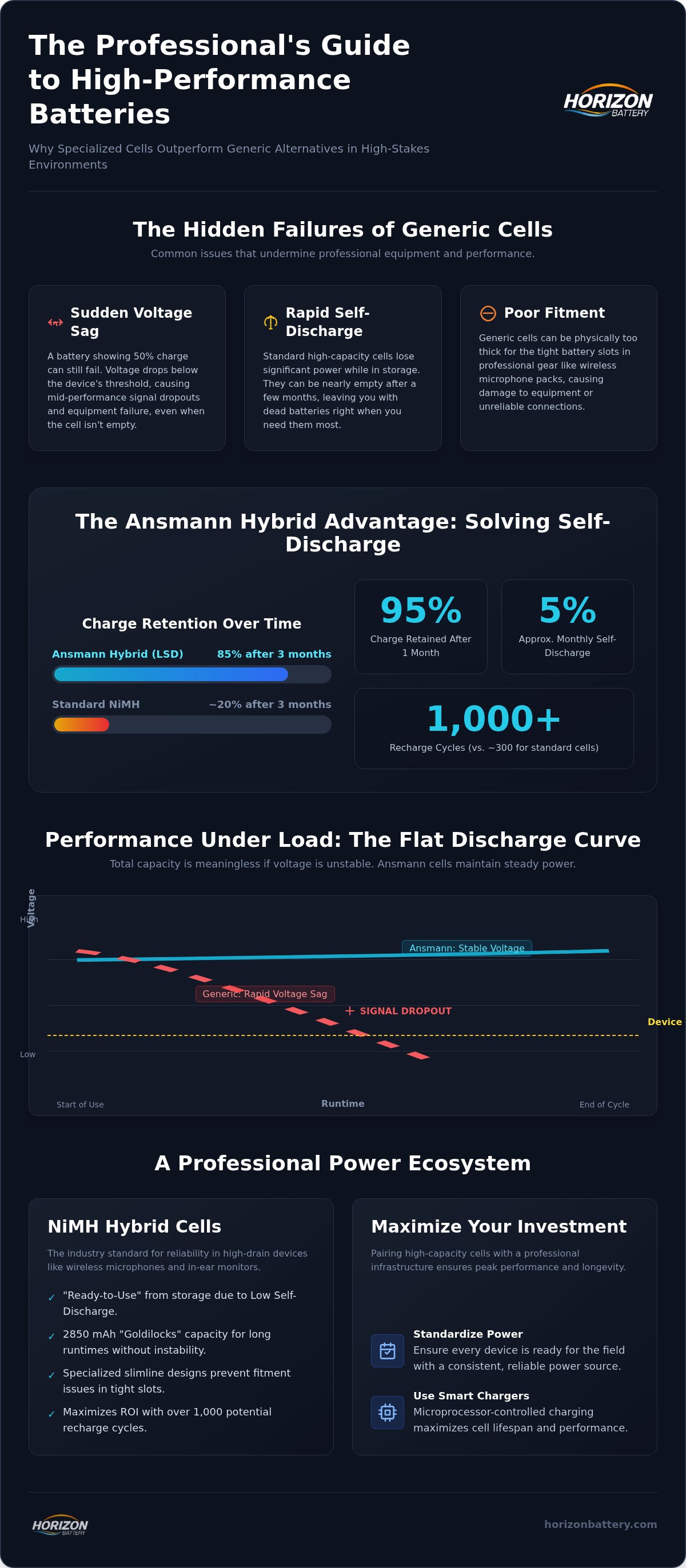
Total capacity matters less than voltage stability during a performance. Most professional wireless microphones require a consistent voltage to maintain their RF signal. When a battery "sags," the voltage drops below the device's operating threshold, even if there is still energy left in the cell. This causes the dreaded mid-show dropout. Ansmann cells are engineered with a flat discharge curve. This means they maintain a steady voltage for the vast majority of their cycle. You get predictable performance and can trust your battery telemetry. This reliability is why these cells have become a standard in broadcast and live sound environments.
Ansmann Hybrid Technology: Solving the Self-Discharge Problem
Standard high-capacity NiMH batteries often fail professional users before they even leave the kit bag. This is due to a phenomenon called self-discharge, where the battery loses its stored energy even when it isn't connected to a device. Traditional cells can lose a significant portion of their charge in just a few weeks. Ansmann Hybrid technology, also known as Low Self-Discharge (LSD), was developed specifically to counter this flaw. It combines the high energy density of NiMH with the shelf-life stability of alkaline cells.
The performance gap is stark. While a standard high-capacity cell might be nearly empty after sitting in a drawer for three months, Ansmann high capacity batteries utilizing Hybrid technology retain approximately 85% of their charge after the same period. This "Ready-to-Use" advantage means you can pull a set from storage and go straight to work without a last-minute scramble for the charger. Beyond convenience, this technology improves the overall lifespan of the cell. These batteries are rated for up to 1,000 recharge cycles, which is more than triple the 300 cycles typically seen in standard high-capacity alternatives.
The 5% Monthly Discharge Benchmark
The secret to this stability lies in a specialized chemical separator that prevents internal electrical leakage between the anode and cathode. Hybrid Low Self-Discharge (LSD) technology is a specialized battery architecture that uses advanced separator materials to drastically reduce internal energy leakage during storage. Because these cells only lose about 5% of their charge per month, they are the ideal choice for emergency backup kits and standby equipment. You don't have to worry about your critical gear failing because of a "phantom" drain during the off-season. For facilities looking to standardize their inventory, these charger and battery bundles provide a turnkey solution for maintaining a large fleet of ready cells.
The Slimline Factor: Fitment in Professional Gear
A common frustration with high-capacity rechargeable cells is their physical size. To achieve higher mAh ratings, many manufacturers increase the thickness of the battery casing. This often results in batteries that get stuck in wireless beltpacks or cause the battery compartment doors to snap under pressure. Ansmann solves this through a "Slimline" design approach. The Ansmann 2850 mAh cell maintains standard AA dimensions despite its high energy density. It fits perfectly into tight gear slots from major manufacturers like Shure and Sennheiser, ensuring you never have to pry a battery out with a screwdriver or deal with damaged equipment.
Critical Applications: Where High-Capacity Ansmann Cells Shine
Professional equipment demands a power source that matches its technical specifications. While consumer electronics can tolerate minor fluctuations, professional tools require steady discharge curves to function as intended. Ansmann high capacity batteries are the industry standard for high-drain applications because they handle the intense current draw of modern digital wireless systems without overheating or dropping voltage prematurely. They offer the reliability required when failures aren't an option.
In professional audio, every second of a recording or live broadcast is critical. Wireless microphones and In-Ear Monitors (IEMs) are notorious for their high power consumption. Digital transmitters require a stable voltage to maintain a locked RF signal. Using high-capacity NiMH cells ensures that technicians can complete a four-hour show or a long day of field recording on a single set of batteries. It provides peace of mind for the crew and the talent.
Standardizing Power for Church AV Teams
Large-scale weekly productions often face what technicians call the "alkaline tax." Purchasing boxes of disposable batteries for every service is a recurring expense that drains annual budgets. By switching to a rotation system with professional rechargeables, facilities can standardize their power across multiple rooms and teams. It ensures zero-fail performance for lead vocalists and keynote speakers. Implementing a managed rotation ensures every mic pack has a fresh cell at the start of every service. This eliminates the uncertainty of half-used disposables and provides a professional environment for critical communication.
Fitness and Group Exercise Instruction
The studio environment is a brutal testing ground for battery technology. Heat and moisture from high-intensity classes can cause standard batteries to fail or leak inside expensive transmitters. Ansmann cells are built to withstand these harsh conditions while powering headset mics for multi-hour continuous use. Many eco-conscious fitness brands prioritize sustainability; high-capacity rechargeables align perfectly with those values. They provide the necessary runtime for back-to-back classes without creating the waste of hundreds of single-use cells every month.
In the medical and industrial sectors, these batteries power handheld diagnostic tools and barcode scanners that must remain operational throughout an entire shift. Similarly, photographers rely on the fast recycling times these cells provide for high-speed external flashes. When a camera flash needs to fire repeatedly during a wedding or sporting event, the low internal resistance of Ansmann high capacity batteries ensures the flash is ready for the next shot almost instantly. This performance is vital for capturing split-second moments in fast-paced environments.
Maximizing ROI: Maintenance and Professional Charging Infrastructure
Investing in Ansmann high capacity batteries is a strategic move to lower operational costs, but the return on that investment depends heavily on how you treat the cells. Using a basic consumer-grade charger is often the fastest way to ruin a professional battery. These inexpensive units often lack the sophisticated sensors required to detect when a high-capacity cell is full, leading to overcharging and permanent heat damage. Professional charging infrastructure is mandatory to reach the 1,000-cycle potential of these cells.
Calculating the long-term value is straightforward. Over a two-year period, a single set of four Ansmann rechargeables can replace thousands of alkaline batteries if used frequently. Even with the initial cost of a professional charger, the savings are substantial. Large facilities like theaters and schools see the quickest ROI by eliminating the constant purchase and disposal of single-use cells. To start standardizing your facility, you can explore our charger and battery bundles designed for professional scale.
The Importance of Smart Charging
Microprocessor-controlled chargers use a method called Delta-V detection to monitor the voltage of each individual cell. As a battery reaches full capacity, its voltage slightly dips; the charger detects this "peak" and immediately switches to a trickle charge. This prevents the internal chemical breakdown caused by excess heat. For large organizations, Custom Rackmount Chargers streamline facility management by centralizing power in a single, organized location. These units also offer refreshing and conditioning cycles. This process deep-discharges and recharges older cells to break down crystalline formations, effectively restoring their peak capacity and extending their service life.
Storage and Environmental Considerations
Proper storage is just as critical as charging. High-capacity Ansmann batteries should be kept in a cool, dry environment, ideally between 15°C and 25°C. Extreme heat accelerates self-discharge and can degrade the internal separators. To maintain safety and organization, always use dedicated battery storage cases. These prevent the terminals from touching metallic objects, which could cause a short-circuit or fire. If you are transporting large quantities of cells, these cases ensure you comply with safety protocols while keeping your inventory ready for immediate deployment. For a complete power management solution, view our full range of professional charging systems today.
Professional Power Ecosystems: Choosing Your Ansmann Solution
Selecting the correct power ecosystem involves more than just picking the highest mAh rating. It requires a strategic look at how your equipment consumes energy and how your team manages inventory. For most organizations, the choice comes down to the established reliability of NiMH Hybrid cells or the advanced performance of the Lithium-Ion Pure Power Series. Both systems offer distinct advantages depending on whether you prioritize raw capacity or voltage consistency.
Standardizing with Ansmann high capacity batteries across your entire organization simplifies training and maintenance. When every department uses the same high-quality cells and charging protocols, the risk of technical failure due to improper battery choice drops to nearly zero. This unified approach is the most effective way to eliminate the "battery sag" issues discussed earlier in this guide.
Ansmann NiMH vs. Pure Power Lithium-Ion
The fundamental difference between these two chemistries lies in the discharge curve. NiMH cells typically provide a nominal 1.2V output that gradually tapers as the battery drains. This is perfectly suitable for most wireless transmitters and handheld tools. However, some high-end digital microphones and precision instruments perform better with a constant 1.5V output. The Pure Power Series utilizes Lithium-Ion technology to deliver this steady voltage until the cell is nearly exhausted.
Weight is another critical factor for portable and head-worn gear. Lithium-Ion cells are significantly lighter than their NiMH counterparts. For a fitness instructor wearing a headset for four hours or a theater performer in a complex costume, reducing the weight of the beltpack can improve comfort and prevent equipment shifting. You can find a deeper technical breakdown in our Pure Power Series Guide.
Outfitting Your Organization
Transitioning a large facility to a rechargeable system is a logistical undertaking that benefits from expert guidance. Horizon Battery has acted as a veteran distributor and industry insider since 1998, helping schools, theaters, and corporate campuses move away from the waste of disposables. We don't just sell individual cells; we provide customized solutions including specialized charger and battery bundles that ensure your equipment is always operational.
If you're managing a large-scale facility and want to optimize your power requirements, our team offers professional facility audits. We can analyze your current equipment list and provide a tailored recommendation for the most efficient power ecosystem for your specific needs. Taking this step ensures that your switch to professional rechargeables is seamless and delivers the maximum possible ROI. This methodical approach turns battery management from a recurring headache into a reliable, background process for your technical staff.
Securing Your Professional Power Infrastructure
Transitioning to a professional battery system is a strategic investment in both operational reliability and long-term sustainability. By implementing Ansmann high capacity batteries, you eliminate the technical risks associated with voltage sag and rapid self-discharge that often plague generic alternatives. These cells provide a steady discharge curve and industry-leading 1000-cycle durability, ensuring your gear performs exactly when it matters most. Standardizing your power source is the most effective way to reduce annual overhead while simultaneously improving the consistency of your technical output across large organizations.
Horizon Battery has served as an authorized distributor since 1998, specializing in tailored solutions for professional AV environments and church power needs. We understand the unique pressures of live performance and facility management. Our veteran team is ready to help you optimize your energy infrastructure with specialized bundles and expert technical guidance. Shop Ansmann High Capacity Battery Bundles at Horizon Battery to secure your equipment's performance for the years ahead. Professional reliability starts with a dependable cell; take the first step toward a more efficient power ecosystem today.
Frequently Asked Questions
Are Ansmann 2850 mAh batteries compatible with all AA chargers?
While physically compatible with any AA charging slot, Ansmann high capacity batteries require a smart charger equipped with Delta-V detection for safe operation. Basic chargers often lack the microprocessor control needed to prevent overcharging. This can lead to excessive heat, which degrades the internal chemistry of a high-capacity cell. Using a professional-grade charger ensures the batteries reach their full cycle life and maintain their capacity over years of frequent use.
How many times can I actually recharge an Ansmann high-capacity battery?
Ansmann high-capacity NiMH batteries are rated for up to 1000 recharge cycles. This is significantly higher than the 300 cycles typically found in standard consumer-grade high-capacity cells. If you choose the Pure Power Li-Ion series, that durability increases to approximately 1500 cycles. Achieving these numbers depends on using proper charging infrastructure and avoiding deep discharge, which can stress the battery's internal components and reduce its total service life over time.
What is the difference between Ansmann Hybrid and standard NiMH batteries?
The primary difference is the self-discharge rate during storage. Standard NiMH batteries lose their charge quickly when not in use, often becoming empty within weeks. Ansmann Hybrid technology utilizes a specialized separator that reduces this loss to just 5% per month. This allows you to pull a battery from a drawer and use it immediately. Hybrid cells combine the high capacity needed for professional gear with the shelf-life stability usually associated with alkaline batteries.
Why do some high-capacity batteries not fit in my wireless microphone?
Many manufacturers increase the physical diameter of high-capacity cells to fit more active material inside. This extra thickness can cause batteries to get stuck in tight compartments. Ansmann high capacity batteries are engineered with a specialized slimline design to avoid this issue. This ensures they maintain standard AA dimensions, allowing them to slide in and out of professional audio gear without damaging battery doors or requiring tools for removal during a show.
Can I use Ansmann high-capacity batteries in cold weather environments?
NiMH batteries can operate in cold weather, but their chemical reactions slow down, leading to a temporary drop in effective capacity. If your work involves consistent sub-zero temperatures, the Pure Power Li-Ion series is a more reliable choice. Lithium-ion chemistry is naturally more resilient to extreme temperatures. It maintains a more stable voltage and provides a longer runtime in winter conditions compared to traditional NiMH cells, which may sag under heavy current loads.
Is it worth upgrading to the Pure Power Series from NiMH?
Upgrading is worth it for applications requiring a constant 1.5V output and reduced weight. While NiMH cells are excellent workhorses, the Pure Power Series offers twice the energy density and a flat discharge curve. This is ideal for head-worn microphones where every gram matters for comfort. Additionally, the 1500-cycle life provides a better long-term return on investment for organizations that use their battery inventory daily and require the highest level of reliability.
How should I store my Ansmann batteries when they aren't in use?
You should store your batteries in a cool, dry environment between 15°C and 25°C. Avoid keeping them in flight cases or vehicles where temperatures can fluctuate wildly. It's best to use dedicated plastic storage cases to prevent the terminals from touching metallic objects, which can cause a short circuit. For long-term storage, ensure the batteries have at least a 40% charge to maintain the health of the internal chemical structure and prevent deep discharge.
Do Ansmann batteries come pre-charged from the factory?
Yes, Ansmann Hybrid and Pure Power batteries come pre-charged and are ready to use straight out of the packaging. This is a significant advantage of Low Self-Discharge technology. Unlike older NiMH cells that required a full charging cycle before their first use, these modern cells retain their factory charge for months. However, for critical professional applications, we always recommend a top-off charge to ensure you have the maximum possible runtime for your first deployment.