
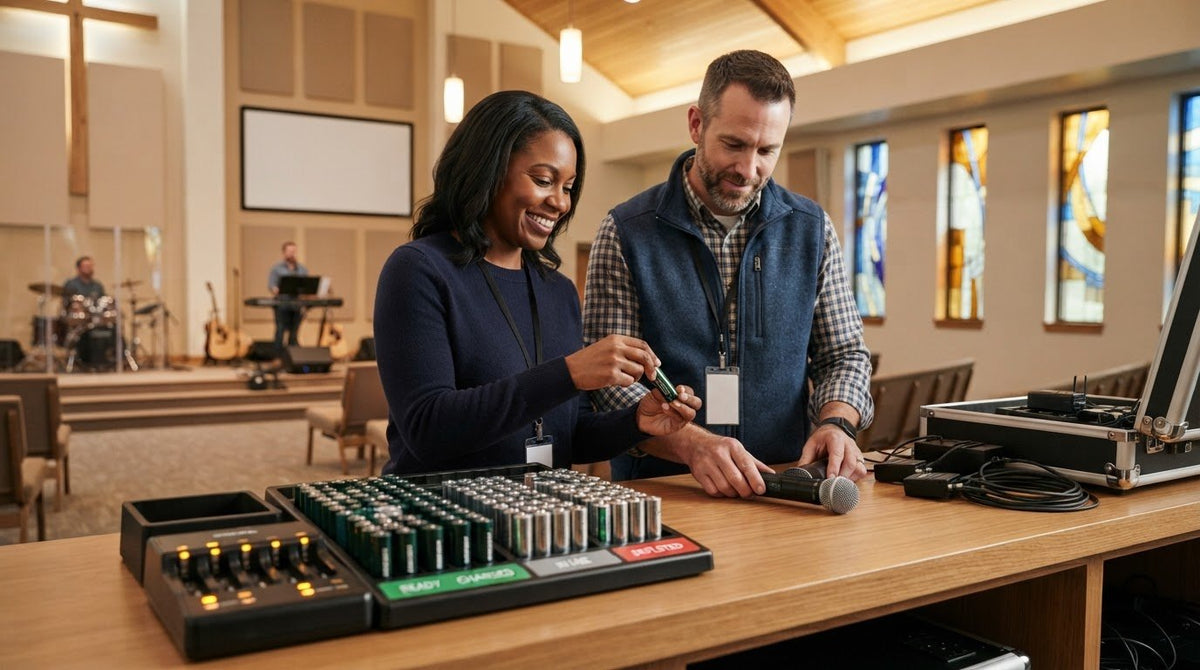
What if dependable service audio depends less on buying more batteries and more on making every handoff predictable? Rechargeable AA battery kits for houses of worship should do more than fill a drawer: they should help volunteers know which cells are charged, in use, or ready for charging. A microphone losing power mid-service is disruptive, and mixed battery types or unclear charger compatibility can make preparation harder than it needs to be.
It makes sense to want a reliable supply without asking volunteers to troubleshoot a different process each week. A practical setup starts with equipment compatibility and service schedules, then pairs suitable AA batteries with charging and storage options that support a clear rotation.
This guide explains how to choose rechargeable batteries, estimate the quantity your equipment requires, and organize charging and handoffs. You’ll also learn how to label charged and depleted cells, keep partially used batteries out of ready stock, and establish a routine volunteers can follow. The goal is a kit sized to your needs, supported by a repeatable process for dependable worship-service audio.
Key Takeaways
- Use equipment manuals to check battery size, chemistry, and charger compatibility before choosing batteries.
- Plan rechargeable AA battery kits for houses of worship around your equipment inventory, service schedule, and charging intervals.
- Use a simple worksheet to estimate battery needs without relying on unsupported runtime assumptions.
- Set up clear storage labels and a volunteer handoff routine to keep battery status easy to identify.
- Compare suppliers by product documentation, charger matching, and storage options, then confirm current components for your setup.
Why Houses of Worship Need a Reliable Rechargeable AA Battery Kit
Services depend on equipment being ready before the first microphone is switched on. If a wireless microphone’s batteries are depleted, partially used, or missing, volunteers may lose time searching for replacements just as the service begins. A reliable setup reduces that uncertainty by bringing batteries, compatible charging, clear storage, and a repeatable handoff process into one workflow.
A worship battery kit is a coordinated supply and management system for AA-powered equipment. It’s more than a stock of cells: volunteers need to know which batteries are charged, which are in use, and which need charging. Rechargeable AA cells can be used again after charging with compatible equipment, while disposable alkaline cells are replaced when depleted. Neither type is right for every device, so follow the manufacturer’s requirements rather than assuming one chemistry will suit all your gear.
Which worship and event equipment uses AA batteries?
Start with wireless microphones, then check other equipment only after confirming its power requirements. Consult each device’s manual or manufacturer documentation for battery size, accepted chemistry, and operating requirements. Build an inventory that records the equipment model and the recommended battery type. Mark devices used during every service separately from equipment brought out only for rehearsals or occasional events. That distinction helps the team plan readiness around actual use.
Rechargeable AA cells include Nickel-Metal Hydride (NiMH) batteries, which have a nominal voltage of 1.2 volts. That value alone doesn’t establish compatibility; the device documentation remains the guide. Keep batteries and chargers matched to the approved type, and confirm compatibility before adding cells to the rotation.
What operational problems can a managed kit prevent?
A managed kit can make common preparation problems easier to avoid. Volunteers shouldn’t have to search several drawers for batteries or guess whether a cell was charged after the last event. Labeled compartments for charged, in-use, and depleted cells give each battery a clear status and make handoffs easier to repeat, even when a different volunteer handles setup.
Agree on a simple routine: collect used cells, charge them according to the battery and charger instructions, check their status, and return ready cells to labeled storage. Keep the routine visible where batteries are handled. It won’t guarantee uninterrupted audio, but it gives the team a practical process for supporting service continuity and spotting shortages before equipment is needed. With rechargeable AA battery kits for houses of worship, the workflow matters as much as the supply itself.
Matching AA Batteries and Chargers to Worship Gear
Battery selection starts with the equipment, not a capacity label or a general recommendation. Check each device’s manual for the required AA size, approved chemistry, voltage, and other operating instructions. Rechargeable cells can be used again with a compatible charger; disposable alkaline cells are replaced when depleted. The choice depends on the device’s requirements and the team’s use and charging routine.
Capacity figures alone can’t predict runtime across different devices. Actual use depends on the equipment and operating conditions, so don’t treat a higher mAh rating as a guarantee of longer service in every microphone or other device. For rechargeable AA battery kits for houses of worship, match both the cells and charger to documented equipment requirements.
How should a church check battery compatibility?
Record each equipment model and consult its manufacturer documentation before choosing cells. Check whether the device supports the selected rechargeable chemistry and voltage, rather than assuming every AA battery is interchangeable. If the manual is unclear, confirm the requirements with the equipment manufacturer or battery supplier before buying or combining cells.
What should a compatible charger support?
Choose a charger designed for the exact battery chemistry and size in your rotation. Compare its charging capacity with the number of cells that need recharging between services, then review its indicators, instructions, and product-specific limitations. A coordinated battery-and-charger setup makes it easier to establish a consistent routine, but compatibility still needs to be confirmed for the specific products.
| Device requirement | Battery type | Charger compatibility | Verification needed |
|---|---|---|---|
| Manual identifies a rechargeable chemistry | AA rechargeable cells of the specified chemistry | Charger must support that chemistry and AA size | Confirm voltage and any model-specific restrictions |
| Manual specifies disposable alkaline cells | Disposable alkaline AA cells, unless alternatives are explicitly approved | No charger for disposable cells; use only approved rechargeables in a charger | Check whether the manufacturer permits rechargeable alternatives |
| Manual gives a size but leaves chemistry unclear | Don’t assume a rechargeable or disposable type is suitable | Hold selection until the cell type is established | Ask the equipment manufacturer or battery supplier |
Keep separate battery types clearly identified so volunteers don’t mix cells with different requirements. For used household batteries, consult the U.S. Environmental Protection Agency’s guidance on safe battery handling and recycling, and follow applicable local instructions.
Horizon Battery sells high-capacity rechargeable AA batteries, charger and battery bundles, and battery storage. Review its rechargeable batteries and charging options as you compare components, and confirm current chemistry, charger compatibility, and suitability for your equipment before purchasing.
How to Size a Rechargeable AA Kit for Services, Rehearsals, and Events
Kit size depends on device count, use pattern, and recharge turnaround. A useful estimate begins with your equipment and calendar, not a generic battery-per-person rule. Shure’s overview of battery use in wireless microphones can help AV teams consider how battery choice relates to microphone use, but your equipment documentation should guide the final selection.
Use this planning method to estimate the supply you need:
- Inventory AA-powered equipment. Record each device model, how many cells it uses at once, and whether it’s essential for services or used occasionally.
- Map the schedule. Note regular services, rehearsals, seasonal services, and other events. Record which devices are active for each, including overlapping events that may draw on the same battery pool.
- Track the battery cycle. Record when cells are installed, removed, charged, and returned to storage. Use charger instructions and your actual schedule to establish how much time is available to recharge before the next use.
- Set a reserve based on experience. Identify how many cells must be ready for the next scheduled use, then set a separate reserve for observed demand or delays. Adjust it as usage records accumulate, rather than applying an arbitrary percentage.
- Review the estimate. Ask the AV lead to compare the plan with actual operating experience and documented device requirements. Update it when equipment or schedules change.
How can a worship team estimate its battery inventory?
A simple worksheet makes the estimate visible to volunteers. Include equipment model, device category, cells required per device, frequency of use, next scheduled use, and the number of cells currently charged, in use, or awaiting charging. Add fields for the date cells were removed and returned to storage. These records help distinguish a real shortage from batteries that are simply in another stage of the rotation.
| Device or model | Cells required | Use schedule | Next use | Charged | In use | Awaiting charge |
|---|---|---|---|---|---|---|
| [Enter equipment] | [From manual] | [Service, rehearsal, or event] | [Date or schedule] | [Record count] | [Record count] | [Record count] |
How should teams plan for busy schedules?
Compare an ordinary week with periods that add rehearsals, seasonal services, or larger events. Work out how many cells must be ready before each scheduled use, including occasions when equipment is needed again before the previous cells can be recharged and returned. Keep reserve needs distinct from regular demand, then revise them using recorded usage and the charger’s documented instructions. This gives rechargeable AA battery kits for houses of worship a practical size grounded in your own schedule.
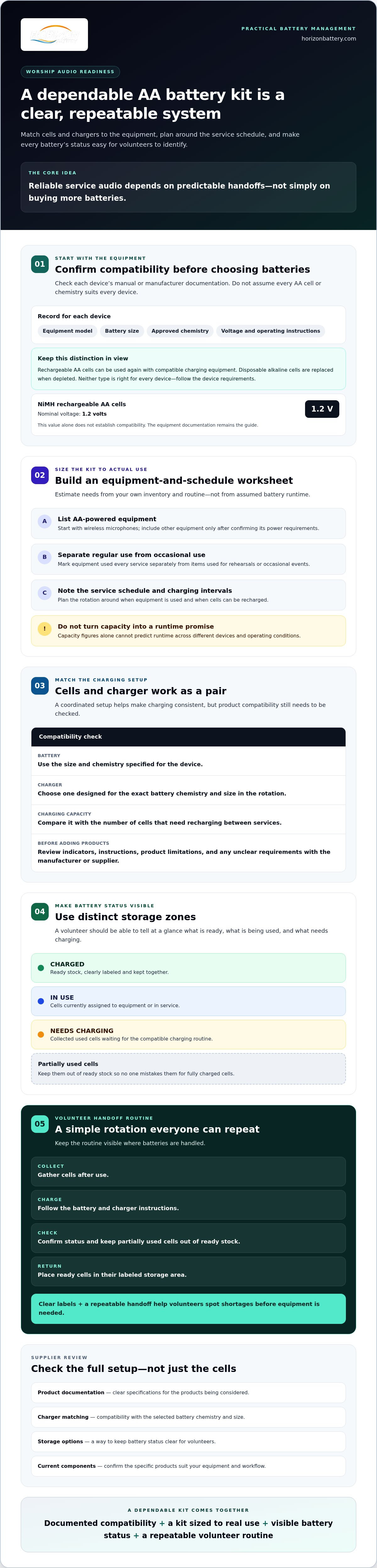
How to Organize Charging, Storage, and Volunteer Handoffs
A consistent battery routine makes it easier for volunteers to see what needs attention and return cells to the right place. Set one handoff point near the equipment area, then use clearly labeled compartments for Charged, In Use, and Depleted batteries. Keep each status physically separate so a cell awaiting charging can’t be mistaken for one ready for a microphone.
Follow the same sequence after each service or event:
- Collect: Gather used cells at the designated handoff point. Don’t return them directly to the charged compartment.
- Charge: Use a charger compatible with the battery type, following both manufacturers’ instructions for charging and operating conditions.
- Check: Review charger indicators and product instructions to determine when cells are ready. If a status is unclear, keep the cells separate until it’s resolved.
- Return: Place ready cells in labeled storage and record any recurring charging or equipment issues for the AV lead to review.
What charging routine can volunteers follow?
Assign post-service collection to a named role or shift, rather than leaving the task to whoever notices the batteries. A short checklist beside the charger can guide the handoff: collect, sort, charge, check, record, and return. Volunteers should rely on the charger’s indicators and its instructions, not an informal estimate of charging time. Note repeated issues, such as cells regularly returning depleted sooner than expected, for follow-up by the AV lead.
How can a team avoid mixing battery statuses?
Make each storage location easy to distinguish with words, not color alone. Keep one return point for all used cells, and explain the labels and process to new volunteers before they handle service equipment. Don’t let unverified or partially used cells drift back into ready storage. A clear routine gives each volunteer the same handoff steps, even when the people managing setup change.
Storage and charging conditions should follow the instructions supplied with the specific batteries and charger. Avoid creating local rules that conflict with that documentation. For broader inventory practices, see Horizon Battery’s guide to professional battery storage and management.
Rechargeable AA battery kits for houses of worship work best when storage supports the charging routine, not as a separate task. To compare battery storage and charging options for your setup, review Horizon Battery’s battery and charging products and confirm compatibility and suitable components before purchasing.
Choosing a Rechargeable AA Kit Supplier and Getting Started
A suitable supplier should help you verify the match between your equipment, batteries, and charging setup, not leave the team to guess from capacity labels alone. Before comparing options, gather the device models, manufacturer-stated battery requirements, expected use schedule, and the number of cells that need to be ready between services or events. These details provide a practical basis for evaluating rechargeable AA battery kits for houses of worship.
What should a buyer confirm before requesting a kit?
Share your equipment list and intended workflow with the supplier. Ask which battery chemistry and cells are compatible with each device, which chargers support those cells, and what product documentation confirms the match. Also describe your storage needs and charging intervals so you can check whether the available options fit your operation. Confirm current specifications and availability before making a purchasing decision.
- Compatibility: Do the battery type and voltage meet the device manufacturer’s requirements?
- Charger match: Is the charger designed for the exact cell chemistry and size?
- Storage: Are there storage options suited to your inventory and status-labeling process?
- Documentation: Can you review product instructions and specifications for the batteries and charger?
Horizon Battery sells high-capacity rechargeable AA batteries, charger and battery bundles, and battery storage. Product details and compatibility should be confirmed for your equipment and intended use. For broader planning considerations, see the business guide to switching to rechargeable batteries.
How can a worship team put its kit into service?
Assign one owner to maintain the inventory and charging instructions, with clear backup responsibility for volunteer handoffs. Before relying on the setup during a service, test the documented process with the actual equipment: charge cells according to product instructions, confirm their status, install them as directed, and make sure volunteers can return used cells to the correct location. Note any questions or workflow gaps and resolve them before adding the routine to service preparation.
Keep the instructions brief and accessible where batteries are stored. Include the charging steps, status labels, handoff point, and who reviews recurring issues. Revisit the process when equipment, schedules, or product choices change. A coordinated setup is most useful when volunteers can follow it consistently.
To review current rechargeable AA battery options or discuss your equipment list and usage requirements with Horizon Battery, start with the details your team has gathered. Confirm suitable battery, charger, and storage components before purchase.
Put a Dependable Battery Routine in Place
Reliable worship audio starts with a system your team can repeat. Match battery chemistry and chargers to each device’s documentation, size your supply around actual equipment use and charging intervals, and keep charged, in-use, and depleted cells clearly separated. These steps make rechargeable AA battery kits for houses of worship easier for volunteers to manage from one service to the next.
Horizon Battery has operated since 1998 and sells rechargeable AA batteries, charger and battery bundles, and storage solutions. Professional charging hardware options include custom rackmount chargers. Confirm current product details and compatibility with your equipment before choosing components.
Review rechargeable AA battery options for your equipment and use your device models, battery requirements, and service schedule to guide your next steps. With a clearly assigned process and suitable components, your team can build a steady routine that supports confident preparation for each service.
Frequently Asked Questions
Are rechargeable AA batteries suitable for wireless microphones in houses of worship?
Yes, rechargeable AA batteries can suit wireless microphones when the microphone manufacturer approves the battery type and the team follows a compatible charging routine. Check the manual for accepted chemistry and operating requirements before selecting cells. Then make sure the charger supports that exact battery type. Track how the batteries perform in your actual equipment and schedule, since runtime depends on the device and conditions of use.
How many rechargeable AA batteries does a church need?
There isn’t one correct quantity for every church. List each AA-powered device, how many cells it uses, and how often it’s used for services, rehearsals, and events. Then account for cells being charged or in use when the next equipment setup is due. Set a reserve based on observed usage and charging turnaround, and revise the estimate as your equipment or schedule changes.
Can rechargeable AA batteries be used in every wireless microphone?
No. Wireless microphones can have different battery requirements, so don’t assume any rechargeable AA cell will work in every model. Check the equipment manual for approved size, chemistry, voltage, and other operating requirements. If the instructions are unclear, confirm compatibility with the microphone manufacturer or battery supplier before use. Keep cells for different equipment clearly identified if their requirements don’t match.
What should a rechargeable AA battery kit for a church include?
A practical kit should include AA cells that meet the equipment requirements, a charger compatible with those cells, and clearly labeled storage for charged, in-use, and depleted batteries. Plan the inventory around device count, event schedule, and time available for recharging, with a reserve based on actual use. Check the listed contents and product documentation before buying, since kit components and compatibility vary.
How should a church charge and store rechargeable AA batteries?
Use a charger designed for the exact battery chemistry and size, and follow the instructions provided for both products. After use, collect cells at one handoff point, charge them as directed, check the charger’s status indicators, and return ready batteries to their labeled compartment. Keep depleted or uncertain-status cells separate. Follow manufacturer guidance for charging and storage conditions, and make the routine clear to volunteers.
Are rechargeable AA batteries more cost-effective than disposable batteries for worship services?
They may be more cost-effective when equipment uses AA batteries regularly, but the result depends on usage, battery life, and the cost of compatible charging equipment. Compare the expected replacement needs for disposable cells with the cost and documented recharge life of the specific rechargeable batteries and charger. Avoid relying on a general savings estimate. Tracking purchases and battery use over time can help your team assess its actual costs.
How can volunteers tell which rechargeable AA batteries are ready to use?
Use clearly labeled, separate compartments for charged, in-use, and depleted cells, and return batteries through one designated handoff point. Volunteers should check the charger’s indicator and follow its instructions before moving cells into ready storage. Don’t judge readiness by appearance or mix cells with uncertain status into the charged supply. A short written checklist helps each volunteer follow the same process before equipment is prepared.