

For a professional production or facility, a lithium-ion battery isn't just a consumable. It's a high-stakes asset that demands more than a desk drawer or a plastic bin for a home. Implementing a rigorous system for lithium ion battery storage is the difference between a decade of reliable service and a catastrophic thermal event that could compromise your entire facility. You've likely invested heavily in high-capacity power, and it's frustrating to see that ROI vanish because of improper handling or disorganized inventory.
We understand the pressure of managing a large-scale battery fleet where one dead cell can stall an entire event. This guide will teach you to master the science of preserving high-capacity cells through professional storage protocols and asset management strategies. You'll learn how to maintain the ideal state of charge, implement safe environmental controls, and use dedicated storage cases to eliminate the risk of thermal runaway. By the end, you'll have a streamlined charging and deployment workflow that guarantees zero safety incidents and maximum battery longevity.
Key Takeaways
- Identify why storing cells at full capacity leads to premature degradation and how to maintain the ideal state of charge for long-term preservation.
- Implement professional lithium ion battery storage protocols using specialized cases and terminal isolation to eliminate the risk of short circuits.
- Move beyond disorganized inventory by adopting a First-In, First-Out (FIFO) system and batch tracking for your high-capacity cell fleet.
- Protect your investment in Pure Power Series batteries by controlling environmental factors like temperature that dictate the rate of chemical aging.
- Optimize your facility's efficiency by pairing custom rackmount chargers with dedicated storage solutions for a seamless deployment workflow.
Understanding the Essentials of Lithium Ion Battery Storage
Professional lithium ion battery storage is far more than a logistical afterthought. It represents a disciplined approach to managing high-energy density cells within a strictly controlled environment. While many people are accustomed to the consumer "junk drawer" habit of tossing loose batteries together, this practice is both dangerous and destructive in a commercial setting. High-capacity cells are active chemical systems that require stability to remain viable and safe. Professional battery storage is the intersection of safety and performance preservation.
In modern enterprise and AV environments, high-capacity AA lithium-ion batteries like the Pure Power Series have replaced traditional alkaline alternatives. These cells provide the consistent, high-current output needed for wireless microphones, digital transmitters, and critical telemetry devices. Because these batteries pack significant energy into a small footprint, their management is a specialized field. For those seeking a comprehensive overview of lithium-ion batteries, the science clearly shows that environmental factors dictate how long a cell remains productive and reliable.
The Performance Benefits of Proper Storage
Correct storage protocols ensure that your battery fleet remains ready for deployment at a moment's notice. Maintaining voltage stability is essential for equipment that relies on a flat discharge curve, such as professional audio gear. When batteries are stored improperly, internal resistance begins to build up within the chemistry. This resistance generates heat during use and reduces the effective capacity of the cell. By implementing standardized environmental controls, you prevent this degradation and extend the overall cycle life of your assets. This proactive management significantly lowers the total cost of ownership over the lifespan of a Pure Power Series fleet.
Safety Standards for Large-Scale Battery Inventories
Managing a large inventory of rechargeable cells requires a deep understanding of hazard mitigation. The primary risks include electrolyte leakage and thermal runaway, which is a self-sustaining heating cycle that can lead to fire. Professional facilities must adhere to strict safety standards, such as keeping bulk storage areas away from high-traffic zones and emergency exits. It's vital to use dedicated storage cases that provide terminal isolation. This prevents accidental short circuits caused by metal-to-metal contact between loose cells. Organized lithium ion battery storage isn't just about neatness; it's a critical safety barrier for your facility and your personnel.
The Science of Cell Preservation: Temperature and State of Charge
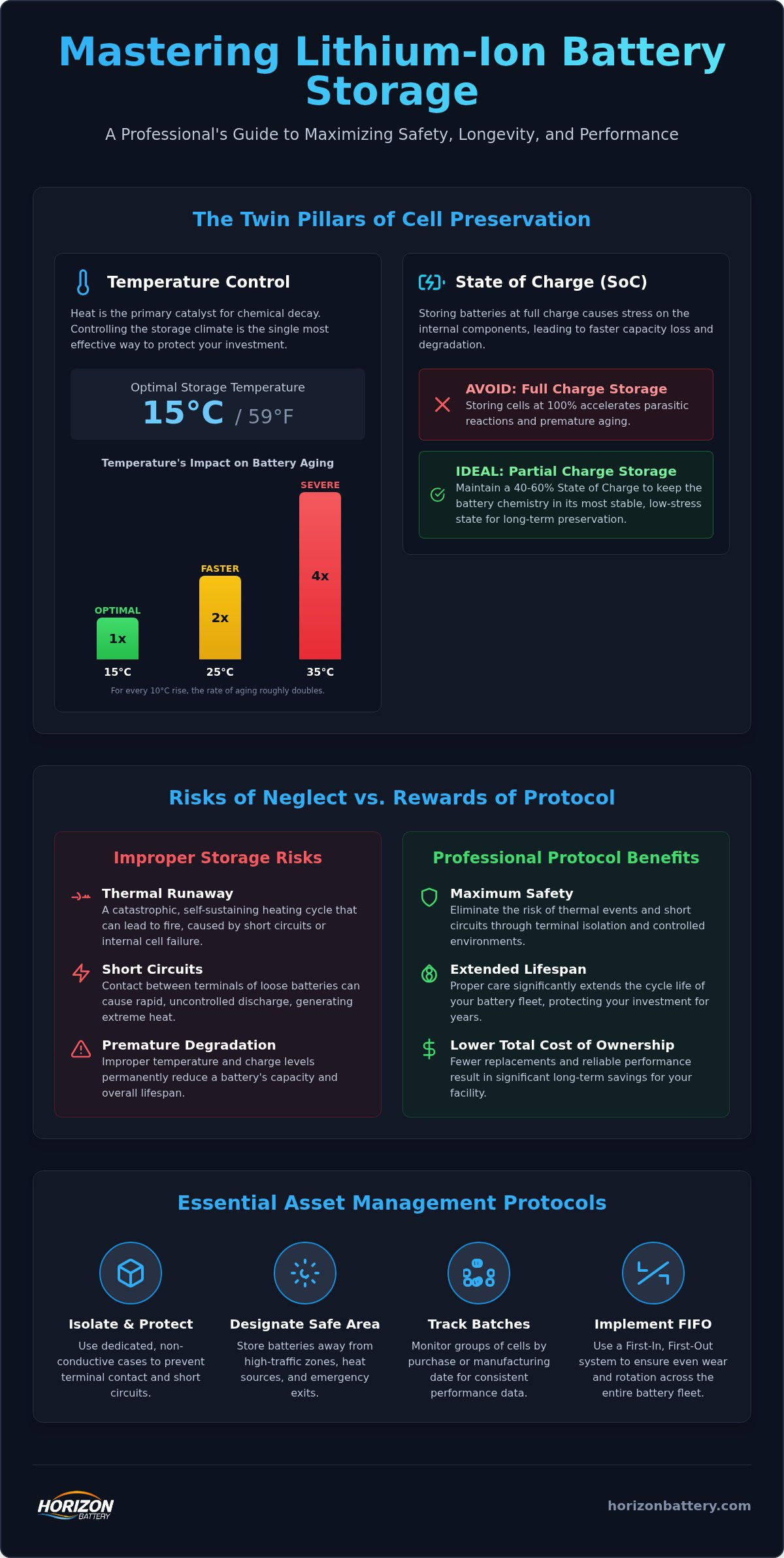
Temperature serves as the primary catalyst for chemical decay in high-capacity lithium-ion cells. When managing a fleet of Pure Power Series batteries, heat is your most persistent enemy. For every 10-degree Celsius rise in ambient storage temperature, the rate of battery aging effectively doubles. This accelerated degradation occurs because elevated temperatures trigger parasitic side reactions within the electrolyte and break down the protective layers on the electrodes. By controlling the climate of your storage area, you're directly protecting the chemical integrity of your power assets.
Managing the self-discharge rate is another critical component of preservation. While high-capacity AA lithium-ion batteries have a much lower self-discharge rate than nickel-metal hydride (NiMH) alternatives, they still lose energy over time. This loss is not just a reduction in runtime; it can lead to permanent chemical shifts if the voltage drops too low. Professional lithium ion battery storage requires a balance between environmental cooling and precise energy management to keep cells within their "sweet spot" of stability.
The Ideal Storage Environment
To achieve maximum longevity, you must move beyond general climate control. The optimal temperature for storing lithium-ion cells is 15°C (59°F). This specific range is cool enough to significantly slow down ion migration and chemical activity without reaching the freezing point of the electrolyte. Humidity must also be strictly monitored. Excessive moisture leads to terminal corrosion and creates paths for parasitic drain across the battery casing. If your facility utilizes large-scale storage racks, ensure there is active ventilation to prevent the accumulation of heat pockets. According to the University of Michigan energy storage factsheet, environmental stability is a cornerstone of maintaining high energy density over multiple years of service.
Managing State of Charge (SoC) for Longevity
The "State of Charge" (SoC) dilemma is a common point of confusion for many technicians. While it's tempting to store batteries at 100% to ensure they're ready for immediate deployment, this practice is detrimental for long-term storage. High voltage stress at 100% charge causes the internal components to degrade much faster. For short-term storage under 30 days, a full charge is acceptable for convenience. However, for long-term preservation, storing cells at 40-50% SoC is the industry gold standard. This level provides the most stable environment for the lithium ions. You must also avoid the risk of "deep discharge." If a cell hits 0% and stays there, the voltage can drop below a critical threshold, leading to permanent capacity loss or safety circuit failure. Utilizing high-performance Pure Power Series cells helps simplify this management by providing more predictable discharge characteristics during downtime.
Implementing Professional Storage Protocols
Transitioning from the chemical theory of preservation to practical daily operations requires a shift in how you physically handle your inventory. Standard cardboard packaging is designed for shipping, not for the rigors of professional lithium ion battery storage. While these containers might survive a trip from the factory, they offer no protection against moisture and provide zero terminal isolation for long-term use. In a high-traffic production environment, batteries often end up loose in equipment bags or drawers. This creates a significant risk of short-circuiting if terminals contact metal objects like coins, keys, or even other batteries. To maintain a safe and efficient workspace, you should implement a professional battery storage and management system that replaces temporary packaging with permanent, durable solutions.
Choosing the right containers is the first line of defense. While basic plastic cases are excellent for organization and preventing terminal contact, specialized fire-resistant cases offer an additional layer of security for high-capacity cells. The goal is to move beyond a "junk drawer" mentality and toward a structured environment where every cell has a designated, protected space. This discipline reduces the likelihood of accidental damage and ensures your power assets remain in peak condition for years.
Terminal Protection and Organization
Loose cells are a liability in any professional kit. Dedicated lithium ion battery storage cases are engineered to keep cells upright and physically separated from one another. This design prevents the "coin-cell" contact risk, where a stray piece of metal creates a bridge between terminals and triggers a rapid discharge. For technicians in the field, a simple color-coding system is the most effective way to manage inventory on the fly. Using green cases for "Charged" batteries and red cases for "Depleted" units prevents the frustration of reaching for a dead cell during a critical production moment. This organizational layer ensures that every battery in your kit is accounted for and ready for its specific role.
Fire Mitigation in Professional Settings
For facilities managing bulk inventory, fire-rated cabinets are a necessary investment. These cabinets provide a secondary containment layer that can withstand high temperatures if a cell fails. Strategic placement is equally important; batteries should be stored away from flammable materials and clear of emergency exits. Technicians must be trained to recognize the early warning signs of failure. If a battery begins to hiss, swell, or emit a sweet, metallic odor, it's failing and must be isolated immediately using fire-resistant containers. Having a clear emergency protocol reduces panic and prevents a single cell failure from escalating into a facility-wide incident.
Professional Asset Management and Inventory Rotation
Professional organizations often treat batteries as a commodity rather than a critical asset. This "grab and go" mentality leads to uneven wear across a fleet, where some cells are overused while others sit idle. Transitioning to a First-In, First-Out (FIFO) system is essential for maintaining a high-performance inventory. This methodology ensures that the oldest batteries in the "charged" pool are used first. It prevents certain cells from sitting in a state of high charge for too long, which can lead to chemical stagnation. Consistent rotation is the only way to avoid "lazy cells" and ensure that every unit in your kit delivers peak performance during high-stakes events. Without a rotation plan, your most reliable cells may be the ones you accidentally leave in the charger for months.
Batch tracking is a cornerstone of this process, especially when managing high-capacity AA batteries. By grouping cells into specific batches, you can monitor their performance over time and identify trends in degradation. For more information on optimizing these specific cell types, consult our Pure Power Series Guide. This level of oversight turns lithium ion battery storage from a passive shelf-space requirement into an active asset management strategy.
Developing a FIFO Rotation System
Implementing a FIFO system starts with clear labeling and a structured physical layout. This ensures that no single battery is overworked while others degrade from disuse. Key steps for a professional workflow include:
- Marking battery batches with purchase or "in-service" dates for easy identification at a glance.
- Utilizing custom rackmount charging stations to create a logical "in-and-out" workflow for technicians.
- Establishing a "charge-in, pull-out" sequence that eliminates guesswork during busy production days.
- Monitoring cycle counts to retire cells before they reach the end of their reliable lifespan.
Freshly charged batteries should enter the rack on one side and be pulled for use from the opposite end. Knowing when a cell has reached its expected lifespan allows you to retire it proactively before it fails on stage or in the middle of a critical broadcast. This discipline maintains the integrity of your power pool and reduces the chance of unexpected equipment failure.
Testing and Maintenance Schedules
A robust asset management plan includes a regular schedule for testing and validation. Enterprise-level battery fleets, such as those used in large churches or schools, benefit from quarterly capacity testing. This process involves a controlled discharge to verify that each cell still meets its rated capacity. It's the most effective way to identify "weak links" in a bundle. If one battery in a set of four is underperforming, it will drag down the runtime of the entire device. Organizations with thousands of cells often utilize software-based tracking to manage these schedules and ensure compliance with safety protocols for lithium ion battery storage. To streamline your facility's energy management, explore our specialized battery storage solutions designed for professional environments.
Selecting Storage Solutions for Professional Facilities
Selecting the correct hardware is the final step in establishing a professional lithium ion battery storage system. You must evaluate solutions based on three core pillars: capacity, durability, and terminal protection. A high-density environment requires a storage strategy that scales seamlessly. This applies whether you are managing a dozen cells for a mobile production kit or thousands for an enterprise-level battery room. By choosing purpose-built hardware, you ensure that your assets remain organized and protected from physical damage. Terminal isolation is not negotiable. It is the primary safeguard against accidental electrical contact in crowded storage environments.
Professional facilities often struggle with disorganized charging areas that lead to lost inventory and safety hazards. Transitioning to a structured storage environment requires a move away from generic plastic bins. High-capacity cells represent a significant financial investment. Protecting that investment means using hardware that facilitates the FIFO rotation and batch tracking protocols discussed earlier in this guide. When your storage hardware matches the quality of your cells, you create a workflow that prioritizes both safety and operational speed.
Storage Cases vs. Rackmount Infrastructure
Mobile production teams require portable storage cases that can withstand the rigors of travel. These cases should feature precision-cut inserts that keep cells upright. This design prevents movement that could lead to terminal friction or casing wear during transit. For fixed facilities like broadcast centers or large houses of worship, the strategy shifts toward rackmount infrastructure. Integrating charging and storage into a single rackmount workflow eliminates the clutter of individual chargers and loose cables. This synergy allows technicians to move cells directly from a custom rackmount charger into an adjacent storage rack with minimal handling. Custom-engineered solutions for high-density environments provide the most efficient use of space. They also maintain the ventilation standards required for safety and chemical stability.
The Horizon Battery Advantage
Horizon Battery serves as a primary source for specialized hardware designed to meet these industrial requirements. Our Pure Power Series batteries are specifically engineered to integrate with professional lithium ion battery storage systems. They provide the high-capacity performance that modern AV and telemetry demands. We leverage Ansmann engineering to ensure long-term cell stability. This gives you the confidence that your inventory will perform exactly as expected every time it's deployed. This commitment to quality extends from our high-capacity cells to our custom charging hardware. A reliable partner understands that storage is just one part of the wider energy lifecycle. To optimize your facility's energy management and secure your investment, Explore our professional Battery Storage solutions today.
Secure Your Power Assets for the Long Term
Transitioning to a professional management system ensures that your high-capacity cells remain a reliable resource rather than a hidden liability. By mastering environmental controls and implementing a strict FIFO rotation, you protect the chemical integrity and longevity of your entire fleet. Proper lithium ion battery storage is more than a safety requirement; it's a strategic investment in your organization's operational readiness and long-term ROI.
Horizon Battery has served as a veteran distributor since 1998, specializing in the high-capacity Pure Power Series cells that professional AV and telemetry technicians trust. We provide comprehensive national shipping across the US and Canada to ensure your facility has immediate access to industry-grade hardware. Our expert team understands that your production relies on consistent, predictable energy.
Upgrade your facility with professional Battery Storage solutions from Horizon Battery and take control of your energy lifecycle today. Your production deserves the steady reliability that only seasoned expertise and professional-grade assets can provide.
Frequently Asked Questions
Is it safe to store lithium-ion batteries in a refrigerator?
Storing lithium-ion batteries in a refrigerator is discouraged because of the risk of condensation. While cool temperatures are helpful, moisture inside a fridge can lead to terminal corrosion and internal short circuits. A dedicated, climate-controlled room maintained at 15°C (59°F) provides the ideal environment without the moisture hazards of kitchen appliances. Always prioritize a dry atmosphere to maintain the safety and integrity of your lithium ion battery storage area.
How long can I store lithium-ion batteries at 100% charge?
You shouldn't store lithium-ion batteries at 100% charge for more than 30 days. Keeping cells at maximum voltage puts significant stress on the internal chemistry, which accelerates capacity loss and shortens the overall cycle life. If your production schedule requires immediate readiness, try to charge your batteries just before use rather than keeping them fully topped off during extended periods of inactivity. This discipline preserves the long-term health of your Pure Power Series assets.
What is the best state of charge for long-term battery storage?
The industry standard for long-term lithium ion battery storage is a 40% to 50% state of charge (SoC). At this level, the lithium ions are in their most stable configuration, which minimizes chemical degradation and parasitic reactions. This specific range provides enough energy to prevent the battery from falling into a "deep discharge" state over time while avoiding the high-voltage stress of a full charge. It's the optimal balance for preserving cell health.
Can lithium-ion batteries be stored together in a single container?
Lithium-ion batteries should never be stored loose in a single container where their terminals can touch. If unprotected terminals contact each other or metal objects like paperclips, it can cause a short circuit and potential fire. Professional facilities use dedicated storage cases that keep each cell physically separated and upright. This organization is a fundamental safety protocol that prevents accidental discharge and maintains the physical condition of your high-capacity battery fleet.
What should I do if a lithium-ion battery feels hot during storage?
If a battery feels hot during storage, you must isolate it immediately in a fire-resistant container. Excessive heat is a primary indicator of internal failure or the beginning of a thermal runaway event. Move the cell away from flammable materials and other batteries to prevent a chain reaction. Don't attempt to use or charge the battery again. Professional asset management requires clear emergency protocols to handle such failures quickly and safely before they escalate.
How often should I check the voltage of stored lithium-ion batteries?
You should check the voltage of your stored lithium-ion batteries every 3 to 6 months. Even when not in use, cells experience a slow rate of self-discharge. Periodic monitoring ensures that the voltage hasn't dropped below the critical threshold of approximately 2.5V to 3.0V per cell. If the charge has dipped significantly, a brief maintenance charge back to the 40-50% range will prevent permanent capacity loss and keep your inventory ready for future deployment.
Do high-capacity AA lithium-ion batteries require special storage cases?
High-capacity AA lithium-ion batteries, such as the Pure Power Series, definitely benefit from specialized storage cases. These cases provide essential terminal protection and help you implement a First-In, First-Out (FIFO) rotation system. Using dedicated hardware prevents physical damage to the battery casing and ensures that your cells aren't subjected to the risks of loose storage. Professional-grade cases are a core component of any robust asset management strategy for high-density facilities.