
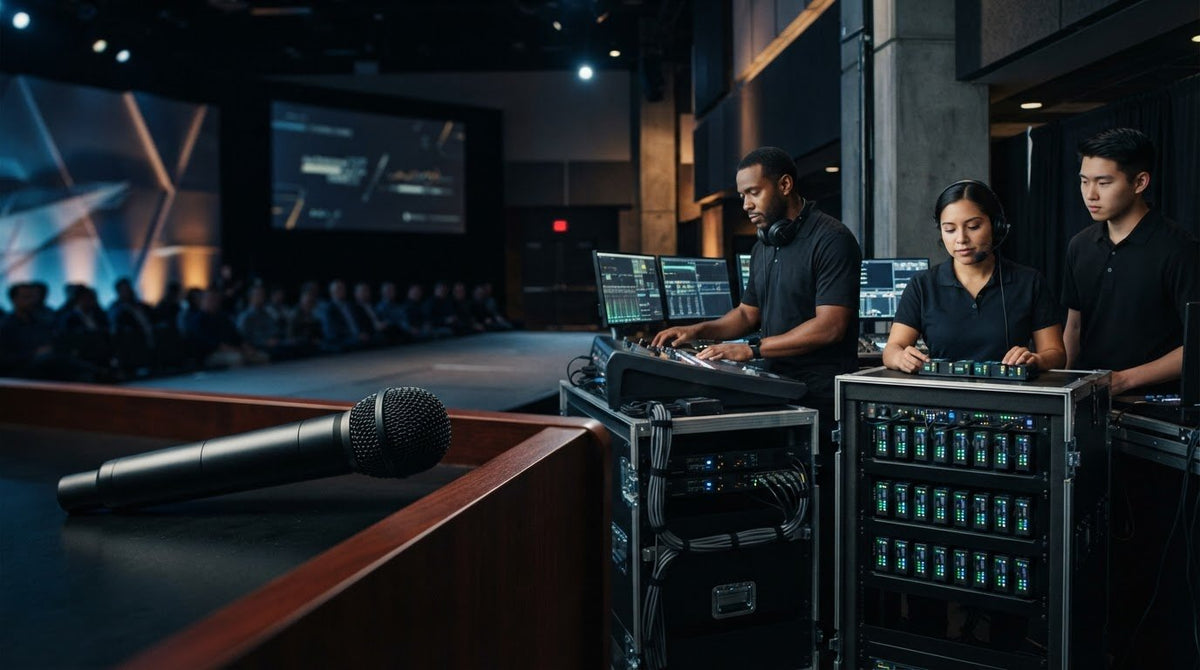
Relying on single-use alkaline cells during high-stakes presentations is the single biggest liability in modern corporate staging. Every production manager knows the dread of an executive microphone cutting out mid-keynote, followed by a chaotic scramble through loose, half-used disposables backstage. Adopting dedicated corporate event AV rechargeable battery systems eliminates that vulnerability, replacing frantic guesswork with predictable, enterprise-grade power.
We agree that managing stage power shouldn't feel like a high-wire act. Discarding crates of single-use cells each week inflates operating expenses, creates unnecessary environmental waste, and leaves technicians second-guessing wireless receiver telemetry in fast-paced control rooms. Your team needs complete confidence that every transmitter will perform cleanly from opening remarks to the final panel.
This guide reveals how to select, deploy, and manage professional-grade rechargeable battery systems engineered specifically for mission-critical audiovisual productions. Ahead, we will examine the critical performance differences between 1.5V lithium and high-capacity NiMH chemistries, explore streamlined rackmount charging workflows, and outline standardized rotation protocols designed to ensure zero audio dropouts across multi-day events.
Key Takeaways
- Explore how professional corporate event AV rechargeable battery systems eliminate mission-critical audio failures while significantly reducing disposable waste and recurring expenses.
- Compare the technical trade-offs between proven NiMH cells and high-performance 1.5V lithium-ion options like the Pure Power Series to match your digital wireless receiver telemetry.
- Discover how integrating custom rackmount chargers directly into standard 19-inch road cases eliminates backstage clutter and streamlines high-density charging workflows.
- Learn proven battery storage protocols and standardized cycle-tracking methods to keep fresh and depleted cells strictly segregated during high-pressure events.
- Identify how turnkey charger and battery bundles simplify fleet procurement and establish dependable power standards across enterprise corporate campuses.
Evaluating Corporate Event AV Rechargeable Battery Systems: Operational Requirements
High-stakes corporate staging leaves no margin for power failure. Wireless handhelds, bodypack transmitters, in-ear monitors (IEMs), and wireless intercom belts require uninterrupted energy from the opening gavel to the concluding address. While consumer gear might tolerate a brief hiccup, corporate general sessions cannot afford voltage sag that drops audio mid-sentence. Securing reliable performance across multi-channel environments requires purpose-built corporate event AV rechargeable battery systems rather than improvised, off-the-shelf consumer power packs.
A dependable power infrastructure relies on three core components working together: stable, high-capacity cells, multi-channel charging hardware, and organized storage systems. When paired with standardized stage management protocols, this integrated setup ensures every technician knows exactly which cells are fresh, which are conditioning, and which are ready for deployment.
The High Cost and Operational Risks of Single-Use Alkalines
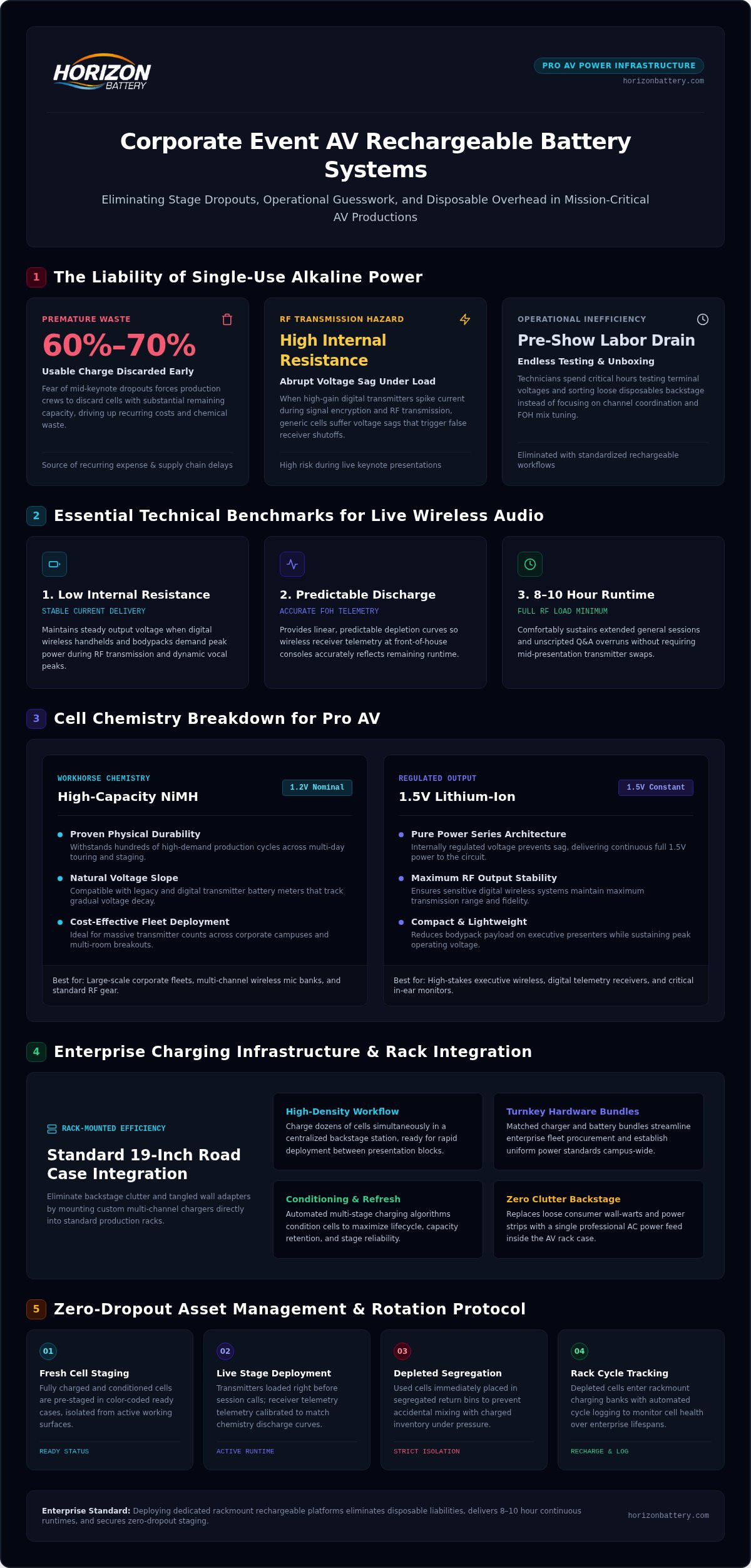
Relying on disposable batteries creates hidden operational overhead that drags down production efficiency. Technicians spend valuable pre-show hours unboxing cells, testing terminal voltages, and loading transmitters, only to repeat the process during every session break. Fear of dropouts leads crews to discard alkalines that still retain 60% or 70% of their charge. That practice burns through production budgets and generates bins of hazardous chemical waste each week.
Enterprise sustainability initiatives increasingly demand zero-waste protocols across corporate technical operations. Reviewing an operational breakdown on switching to rechargeable batteries for business reveals how quickly dedicated power platforms pay for themselves while eliminating discarded packaging from control rooms. Migrating to an enterprise-grade rechargeable battery platform satisfies strict environmental mandates while eliminating recurring supply chain delays.
Essential Performance Benchmarks for Live Wireless Audio
Professional wireless systems impose harsh demands on internal power sources. Modern digital transmitters consume continuous current for signal processing, encryption, and RF amplification. To maintain link stability, cells must satisfy specific technical benchmarks:
- Low Internal Resistance: Generic consumer cells often suffer from elevated internal resistance. When high-power transmitters spike current during RF transmission, high-resistance cells suffer abrupt voltage drops that trigger false low-battery shutoffs on receivers.
- Predictable Discharge Curves: Digital wireless telemetry depends on consistent voltage to report accurate remaining runtimes to front-of-house consoles. Cells must deliver steady voltage throughout their discharge cycle rather than experiencing steep, unexpected drops.
- Sustained Runtime Minimums: Executive keynotes and unscripted Q&A blocks frequently run overtime. Event battery systems must comfortably deliver 8 to 10 hours of continuous runtime under full RF load, eliminating the need to interrupt high-profile presenters for battery swaps.
Cell Chemistry: NiMH vs. 1.5V Lithium-Ion for Pro AV
Choosing the correct cell chemistry dictates how wireless transmitters calculate remaining runtime, handle high-gain RF spikes, and physically seat inside battery compartments. Modern corporate event AV rechargeable battery systems rely primarily on two established platforms: robust nickel-metal hydride (NiMH) and internally regulated 1.5-volt lithium-ion cells. Understanding how their discharge behaviors interact with transmitter electronics prevents telemetry errors and mid-show power losses.
Engineering Benefits of High-Capacity NiMH Cells
Professional NiMH cells deliver unmatched physical durability and predictable voltage curves across hundreds of production cycles. High-capacity options like Ansmann high capacity batteries feature slimline cell housing profiles designed specifically to prevent mechanical sticking in tight wireless microphone handles and beltpacks. Their low self-discharge chemistry ensures transmitters hold operational power during extended standby periods in warehouse storage. Because NiMH displays a gradual, sloped voltage decline as it drains, standard wireless receivers accurately read remaining operating hours on their front-panel telemetry displays.
The Advantages of Pure Power Series 1.5V Lithium-Ion
Regulated lithium-ion represents a significant leap forward for high-drain digital wireless gear. Technologies like the Pure Power Series use internal micro-circuitry to output a constant, steady 1.5-volt rail until the cell is exhausted. This flat curve prevents the premature low-battery warnings that 1.2V NiMH cells occasionally trigger in voltage-sensitive transmitters. Lithium cells also offer substantial weight savings, reducing physical fatigue for executives wearing bodypack transmitters and lavaliers during marathon stage presentations. Because the voltage rail stays fixed at 1.5V, production crews track operational lifespan through show schedules and timed rotations rather than relying on voltage-based receiver meters.
Matching Battery Selection to Specific AV Equipment
Different pieces of stage equipment draw power at distinct rates. Aligning device demands with the proper battery chemistry ensures optimal efficiency across your technical inventory:
- Handheld Wireless Microphones: High RF output stages benefit from the constant, non-sagging rail of 1.5V regulated lithium, especially when transmitters must overcome dense RF interference.
- In-Ear Monitor (IEM) Receivers: Continuous headphone amplifier draw is well-suited to high-capacity NiMH, which provides forgiving low-voltage warnings that give stage engineers adequate notice before a swap. Implementing proper charging guidelines for maximizing rechargeable battery lifespan ensures these cells maintain their deep runtime across multi-day events.
- Presenter Clickers and Intercom Belts: Lower-drain devices run reliably on high-capacity NiMH, maintaining standby readiness over long rehearsal periods without needing frequent top-ups.
Production teams looking to eliminate chemistry guesswork across mixed fleets can consult the technical specialists at Horizon Battery to configure matched cell inventories for their specific wireless hardware.
Charging Infrastructure: Integrating Custom Rackmount Chargers into AV Racks
Backstage disorganization poses an immediate threat to show flow. Stringing together consumer desktop chargers across folding tables creates tangled AC wiring, consumes valuable surface space, and introduces real fire hazards in cramped control rooms. Production road cases require consolidated, road-ready power distribution. Integrating dedicated Custom Rackmount Chargers directly into standard 19-inch racks transforms loose power management into a streamlined, high-density infrastructure built for demanding tour dates and multi-day conferences.
Centralized charging keeps hundreds of cells organized within a single footprint. Instead of hunting through production trunks for wall adapters, stage technicians manage their entire operational cycle right from the rack face. Modern microprocessor-driven systems actively monitor each cell individually, terminating charge cycles precisely to eliminate overheating risks in sealed road cases.
Design Features of Professional Custom Rackmount Chargers
Tour-grade charging systems differ substantially from domestic multi-bay units. Custom Rackmount Chargers mount flush within standard 19-inch equipment racks, featuring durable steel chassis engineered to survive continuous transit. High-density front-panel bays grant technicians immediate physical access during tight intermission turnarounds. Individual multi-color LED indicators deliver at-a-glance status updates for every channel, confirming whether a cell is charging, fully conditioned, or rejecting a faulty contact.
Crucially, these units use isolated charge circuits rather than ganged or paired bays. Grouped circuits charge batteries based on an average reading, which often undercharges or cooks mismatched cells. Independent bay monitoring regulates the exact current delivered to every battery. Internal thermal management utilizes quiet cooling fans and channeled heatsinks, ensuring safe overnight turnaround between sessions even inside tightly packed flight cases. Technical directors evaluating system architectures can explore enterprise battery charging solutions to align rack layouts with standard production footprints.
Desktop Multi-Bay Stations for Breakout Rooms and Tech Desks
While centralized rackmount chassis anchor the primary audio control room, decentralized meeting spaces require flexible secondary power. Breakout rooms, satellite executive boardrooms, and isolated video control desks often lack full 19-inch equipment racks. Compact multi-bay desktop charging stations solve this problem by providing localized replenishment without sprawling clutter.
These compact units must employ the same microprocessor-controlled safety protocols as primary rack hardware. Fast-charging cycles are carefully governed by thermal sensors and automatic cut-offs to prevent cell degradation caused by excessive heat. Clean power distribution cables and weighted non-slip bases keep mobile tech desks orderly, giving on-site technicians immediate access to reliable backups without running across the venue to the main stage rack.
Asset Management: Battery Storage, Rotation Protocols, and Cycle Tracking
High-tier corporate productions fail when loose operational discipline allows depleted cells to slip back into live gear. Handing an executive a handheld transmitter loaded with half-drained batteries instantly shatters stage trust. Dependable corporate event AV rechargeable battery systems require structured inventory handling just as much as premium hardware. Professional AV departments maintain operational reliability through strict physical containment, disciplined rotation schedules, and quantitative health tracking.
Treating batteries as serialized technical assets rather than loose consumables protects production investments. Establishing clear physical workflows backstage prevents accidental mix-ups between fresh inventory and depleted show returns, ensuring the entire audio crew operates with absolute certainty.
Implementing Professional Battery Storage and Transportation Systems
Tossing loose batteries into road case utility drawers invites terminal contact, short circuits, and physical casing damage during transit. Production managers should mandate dedicated, terminal-isolated cases designed for high-capacity AA and 9V cells. Custom high-density foam inserts within tour trunks hold cells securely in individual slots, absorbing physical shock during truck transport while keeping contacts separated.
Standardizing physical backstage zones keeps crews aligned under pressure. A best-practice staging setup establishes two distinct physical tables: a "Depleted Returns" drop zone next to the charging rack and a separate "Show-Ready" staging area. Color-coded cases or marked caddies immediately signal charge status to fast-moving stagehands. Reviewing the complete guide to Battery Storage provides scalable blueprint workflows for setting up touring cases and warehouse inventory systems.
Lifecycle Management and Routine Cell Decommissioning
Cells degrade over continuous use, gradually losing total capacity and developing higher internal resistance. Corporate AV teams must catch this degradation before it triggers voltage dropouts on stage. Managing battery lifecycle requires three specific operational procedures:
- Batch Marking: Purchase cells in matched batches and label them with colored bands or laser-etched deployment dates. Rotate entire groups together so cells undergo identical charge-discharge cycles.
- Impedance Testing: Technicians should perform periodic resistance checks using dedicated battery analyzers. If a cell exhibits an abnormal spike in internal resistance, remove it from the master batch immediately.
- Strategic Reassignment: Rather than discarding cells that no longer meet executive keynote runtime standards, reassign them to secondary utility gear, such as non-critical intercom stations or presentation clickers.
To upgrade your backstage operations with tour-grade transport cases and organized storage accessories, explore the battery storage solutions at Horizon Battery.
Procuring Enterprise Battery Solutions: Turnkey Bundles and Custom Deployments
Transitioning an organization from ad-hoc consumable purchases to standardized power infrastructure requires coordinated procurement. Rolling out corporate event AV rechargeable battery systems across multi-room convention centers or corporate campuses involves matching high-drain wireless inventories with appropriate charging volume. Standardizing your hardware fleet ensures every meeting room, ballroom, and broadcast studio operates with interchangeable power assets, drastically reducing operating budgets while eliminating technical friction backstage.
Working directly with experienced power distributors prevents expensive mismatch errors. Rather than treating charging units and cells as disconnected accessories, enterprise procurement treats mobile power as an integrated hardware asset designed to support multi-year production schedules.
Selecting Pre-Configured Charger and Battery Bundles
Pre-configured Charger / Battery Bundles simplify deployment for staging companies and corporate AV teams. These turnkey packages combine high-capacity AA rechargeable batteries with dedicated intelligent chargers calibrated to their specific chemistry. This pairing eliminates the internal cell damage and incomplete charge cycles that occur when crews mix third-party retail cells with incompatible charging cradles.
Calculating inventory requirements depends on peak channel counts. A proven corporate staging formula maintains a 3:1 cell-to-channel ratio across all active wireless systems. A facility operating 16 channels of wireless microphones and IEMs requires 48 matched cells: 16 active in transmitters, 16 conditioned and show-ready in reserve cases, and 16 cycling through charging bays. Supplying breakout rooms and ballroom stages with pre-cased bundles ensures technicians maintain this rotation discipline without leaving their designated spaces.
Partnering with Horizon Battery for National Enterprise Power
Navigating commercial power infrastructure requires an experienced supplier who understands live production demands. Operating nationally since 1998, Horizon Battery provides specialized distribution of professional high-capacity cells, including Ansmann NiMH lines and the Pure Power Series. By developing Custom Rackmount Chargers engineered specifically to integrate with standard 19-inch AV road cases, Horizon Battery helps corporate production teams eliminate loose cable clutter and protect their mobile power investments.
Technical directors can begin standardizing their power infrastructure by conducting a complete equipment audit. Document your active wireless channel counts, assess transmitter voltage requirements, and evaluate your backstage charging footprints. Replacing disposable alkaline waste with enterprise-grade rechargeable bundles delivers reliable, zero-dropout power to every corporate keynote.
Standardize Your Live Production Power Infrastructure
Eliminating audio failures during mission-critical corporate presentations comes down to deliberate preparation. Modernizing your workflow with standardized corporate event AV rechargeable battery systems replaces single-use waste with dependable performance, keeping executive keynotes clear and control rooms organized. Matching wireless gear with the proper cell chemistry, deploying rack-integrated charging bays, and maintaining disciplined rotation protocols ensures your audio crew never has to second-guess battery health backstage.
Since 1998, Horizon Battery has served corporate production teams and institutional staging departments nationwide. As an authorized distributor of advanced Ansmann high-capacity cells and Pure Power Series lithium solutions, we supply engineered mobile power designed to eliminate stage dropouts. From independent multi-bay monitoring to specialized custom rackmount charging systems engineered for standard 19-inch road cases, your technical crew gains the tools needed to power multi-day events with total confidence. Ready to modernize your fleet? Explore professional rechargeable battery systems and custom rackmount chargers at Horizon Battery to power your next production season.
Frequently Asked Questions
Can corporate AV teams use consumer rechargeable AA batteries in wireless microphones?
Consumer rechargeables aren't recommended for mission-critical corporate wireless microphones. Retail cells often feature thicker outer labels that get stuck inside tight transmitter compartments. Standard consumer cells also carry higher internal resistance and lack stable voltage regulation under high-drain RF loads. Professional corporate event AV rechargeable battery systems use industrial-grade cells engineered specifically for continuous, stable output, preventing voltage sag that triggers premature transmitter shutoffs during live keynote presentations.
How many rechargeable batteries should an event team stock per wireless audio channel?
Production teams should stock a minimum 3:1 ratio of rechargeable cells per active wireless channel. For an event running 10 wireless microphones requiring two AA cells each, the team needs 60 batteries total. Twenty cells remain active in the transmitters on stage, twenty sit fully charged in reserve storage as immediate stage backups, and twenty cycle through rackmount chargers. This rotation formula ensures non-stop coverage across multi-day corporate sessions without downtime.
What is the runtime difference between 1.5V lithium-ion and high-capacity NiMH batteries?
Both chemistries deliver dependable performance, but their discharge behavior differs significantly. Regulated 1.5V lithium-ion cells maintain a constant 1.5-volt output across their entire run, delivering up to 10 to 12 hours of uninterrupted runtime in modern digital transmitters. High-capacity NiMH cells generally deliver 8 to 10 hours under load. While NiMH exhibits a gradual, measurable voltage drop, regulated lithium stays perfectly flat until the internal protection circuit cuts power.
Why do wireless microphone battery meters sometimes display inaccurate levels with rechargeables?
Transmitter telemetry meters are traditionally calibrated around the declining voltage curve of 1.5V alkaline or 1.2V NiMH cells. When using regulated 1.5V lithium-ion, the internal circuit maintains a steady 1.5 volts until depletion. As a result, receiver meters show full power for the entire session before shutting off abruptly. Technicians using 1.5V lithium manage show readiness through timed operational runtimes and scheduled swap intervals rather than relying solely on receiver voltage meters.
How do custom rackmount battery chargers improve corporate event production workflows?
Integrating Custom Rackmount Chargers consolidates mobile power directly into standard 19-inch road cases. This eliminates the loose wall warts, power strips, and table clutter that plague backstage control tables. With multi-channel independent bay monitoring, technicians charge dozens of batteries simultaneously overnight while tracking status via front-panel LEDs. Streamlined rack infrastructure speeds up tear-down, protects hardware during transit, and establishes reliable corporate event AV rechargeable battery systems for touring production crews.
What is the best way to prevent mixing up charged and discharged batteries backstage?
Strict physical segregation paired with specialized battery storage cases is the most effective approach. Establish two dedicated work zones: a "Depleted Returns" drop table by the charging rack and a separate "Show-Ready" staging area. AV crews should also use color-coded storage caddies, such as green cases for ready units and red bins for spent cells. Batch-labeling cells with matching color bands ensures batteries are cycled together evenly.
When should a professional corporate event production team retire rechargeable battery cells?
Teams should retire cells when their capacity drops below 80% of original rating or when impedance tests show elevated internal resistance. Tracking charging cycles by batch ensures groups are retired before reaching cycle limits. Suspect cells showing thermal warning flags or inconsistent runtimes during rehearsal should be pulled immediately from stage duty. AV managers typically demote aging cells to low-stakes warehouse or utility gear rather than risking keynote dropouts.