
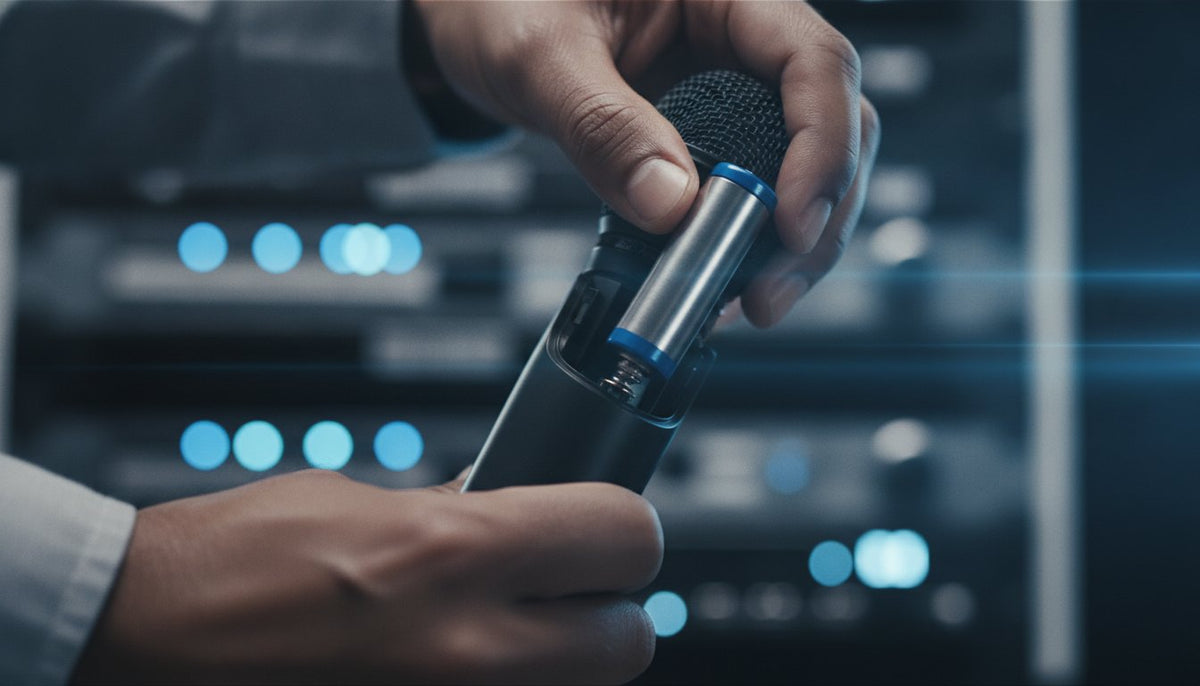
The 1.2-volt ceiling of traditional NiMH batteries is no longer sufficient for the rigorous demands of modern professional wireless systems. When a high-stakes live event depends on a wireless microphone, even a minor voltage sag can lead to catastrophic signal dropouts. This is why 1.5v lithium ion rechargeable batteries have transitioned from a niche alternative to the new industry standard. Unlike traditional rechargeables that lose power as they drain, these cells provide a constant, regulated output that keeps mission-critical gear operational until the very last milliamp is spent.
You've likely dealt with the frustration of low battery warnings appearing minutes after a fresh swap or the mounting expense of disposing of thousands of alkalines every year. We understand that reliability is the only metric that matters when the house lights go down. This guide demonstrates why our Pure Power Series 1.5V Lithium-ion technology is effectively replacing NiMH and alkaline formats in professional environments. We'll explore the technical advantages of constant voltage regulation, the efficiency of our custom rackmount charging solutions, and how standardizing your inventory can eliminate technical failures while reducing long-term operational costs.
Key Takeaways
- Understand how the internal buck converter in 1.5v lithium ion rechargeable batteries maintains a constant voltage output, preventing the signal dropouts common with NiMH cells.
- Discover why the Pure Power Series is engineered specifically for high-drain professional audio environments where reliability is a non-negotiable requirement.
- Learn the technical differences between consumer-grade USB-C charging and industrial rackmount infrastructure for enterprise-level battery management.
- Identify the specific "voltage cliff" discharge profile that ensures your mission-critical gear operates at peak performance until the cell is fully depleted.
- Evaluate the operational ROI of transitioning from disposable alkaline inventories to a standardized, high-capacity rechargeable ecosystem.
What Are 1.5V Lithium Ion Rechargeable Batteries?
Standard lithium-ion battery technology usually operates at a nominal 3.7 volts, which is far too high for devices designed for AA or AAA cells. To solve this, 1.5v lithium ion rechargeable batteries utilize a sophisticated internal circuit to bridge the gap between high-density lithium chemistry and the power requirements of professional electronics. These cells aren't just batteries; they're miniaturized power management systems housed within a standard battery casing. While some consumers refer to them as "rechargeable alkalines" due to their 1.5V output, this moniker is technically inaccurate. These batteries are far more advanced than primary alkaline cells, offering a steady discharge curve that single-use batteries can't match.
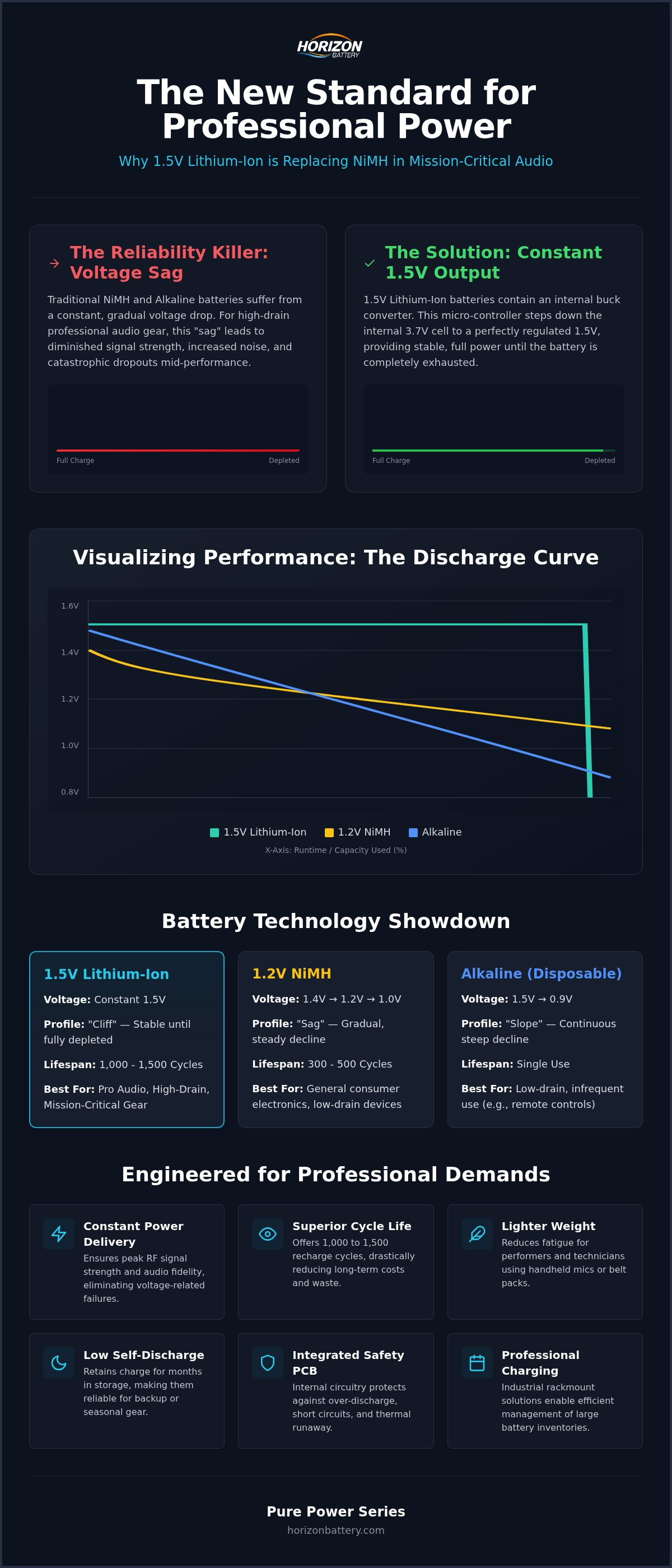
The primary difference between these and traditional 1.2V NiMH (Nickel Metal Hydride) batteries lies in the delivery of power. A NiMH battery starts at 1.4V when fresh but quickly drops to 1.2V and continues to slide as it depletes. In contrast, 1.5v lithium ion rechargeable batteries maintain a "flat" discharge profile. They stay at a precise 1.5V until the internal lithium core is nearly empty. At that point, the internal PCB cuts power to protect the cell. This ensures that sensitive equipment like wireless transmitters or digital recorders receives peak voltage for the entire duration of the battery's runtime.
The Internal Voltage Regulation Mechanism
The secret to this performance is the integrated buck converter located just beneath the positive terminal. This electronic component acts as a high-speed switch that steps down the internal 3.7V lithium-ion charge to a regulated 1.5V output. The buck converter serves as an integrated voltage regulator that maintains a precise 1.5V output regardless of the battery's remaining energy level. Beyond voltage control, the internal PCB provides essential safety layers. It monitors the cell in real-time to prevent over-discharge, short circuits, and thermal runaway, ensuring the battery remains stable even under high-drain conditions.
Key Advantages Over Traditional NiMH
For professional users, the physical and operational advantages are immediate. Lithium-ion chemistry is significantly lighter than the nickel-based alternatives found in NiMH batteries. In a belt pack or handheld microphone, this weight reduction reduces fatigue during long performances. Additionally, these cells are engineered for longevity, typically offering between 1,000 and 1,500 charge cycles before significant capacity loss occurs. This far exceeds the typical lifespan of standard rechargeables. Low self-discharge rates also mean these batteries retain their charge during storage, making them a reliable choice for emergency backup kits or seasonal event gear. The Pure Power Series specifically leverages these advantages to provide the stability required for mission-critical AV operations.
Voltage Stability: Constant 1.5V vs. The NiMH Sag
The performance of professional electronics depends entirely on the quality of the incoming voltage. While standard alkaline and NiMH batteries suffer from a gradual decline in power, 1.5v lithium ion rechargeable batteries utilize a "cliff" discharge profile. This means the battery maintains a consistent 1.5V output throughout nearly its entire runtime. Once the internal lithium cell reaches its depletion point, the power shuts off instantly. This behavior is fundamentally different from the sloping discharge seen in traditional cells, where voltage drops steadily as the battery is used.
In a professional environment, this stability is vital for maintaining RF signal strength. Wireless microphone transmitters are often designed to operate at peak efficiency with a full 1.5V supply. As voltage drops, the transmitter's ability to maintain a clean radio frequency signal diminishes, often leading to increased noise or total dropouts. High-quality audio preamps also benefit from this consistent power, as a lower voltage can raise the noise floor and degrade the signal-to-noise ratio. A recent review of 1.5V Li-ion batteries highlights how this technology outperforms traditional rechargeables in high-drain devices that require steady current.
Why Pro Audio Gear Rejects 1.2V NiMH
The primary conflict between NiMH cells and professional gear is the voltage calibration of battery telemetry systems. Most wireless transmitters are calibrated for the 1.5V nominal voltage of alkaline batteries. When you insert a NiMH battery with a nominal 1.2V, the device often displays a "low battery" warning immediately, even if the cell is fully charged. This creates unnecessary anxiety for technicians and leads to premature battery swaps. Beyond the display, the reduced voltage limits the RF transmission distance, making the system more susceptible to interference. To see this in action, you can read our detailed report on Voltage Stability: How Pure Power Series Protects Pro Audio.
Thermal Performance and Consistency
Voltage sag is the temporary drop in voltage that occurs when a battery is placed under a heavy load, and it's a primary cause of wireless mic dropouts during peak usage. The internal circuitry in 1.5v lithium ion rechargeable batteries manages this load by regulating the current and heat. While alkalines can become quite warm under high-drain conditions, Li-ion cells remain remarkably cool and consistent. This thermal management ensures that the internal components of your equipment aren't subjected to excessive heat. For organizations looking to standardize their inventory, our Pure Power Series provides the industrial-grade reliability needed for mission-critical applications.
The Pure Power Series: Engineered for Professional Performance
The Pure Power Series represents a fundamental shift in how professional organizations manage portable energy. While consumer-level 1.5v lithium ion rechargeable batteries often focus on the convenience of individual USB ports, the Pure Power Series is engineered for the high-density requirements of touring racks and broadcast studios. These cells are built to withstand the high-drain demands of digital wireless transmitters that can quickly deplete standard alkaline batteries. Beyond raw capacity, these batteries feature a "Slimline" design. This ensures they fit perfectly into the tight tolerances of professional battery sleds and transmitter compartments, which is a common failure point for oversized consumer alternatives.
Safety remains a priority in professional AV environments where equipment costs can reach thousands of dollars. Each cell includes integrated short-circuit and over-temperature protection. This prevents thermal runaway and ensures the battery shuts down safely if a fault is detected. This level of protection is essential when charging and deploying hundreds of cells simultaneously in high-pressure environments.
High-Capacity AA Solutions
In the 2026 professional landscape, capacity is measured by consistent performance under load. The Pure Power Series delivers energy within the common professional range of 2550 mWh to 3500 mWh, providing extended runtimes that outperform standard alkalines in high-draw digital transmitters. When compared to traditional single-use options, these cells maintain peak performance for the entire show rather than fading halfway through. For those managing large inventories, our Ansmann High Capacity Batteries: 2026 Professional Guide provides additional context on how these technologies integrate into a broader asset management strategy.
Durability and Industrial Build Quality
Touring and field production require gear that survives physical impact. The Pure Power Series utilizes a reinforced casing designed for impact resistance, protecting the sensitive internal electronics from drops and vibrations. Leak-proof construction is another critical feature. Unlike alkalines that can corrode and destroy expensive circuitry, these lithium cells are hermetically sealed. This industrial build quality is what separates professional tools from consumer toys. Deciding between different high-end options depends on your specific hardware needs, and you can explore the nuances in our comparison of Ansmann Technology vs. Pure Power Series. By standardizing your kit with 1.5v lithium ion rechargeable batteries, you ensure every piece of gear in your organization operates on a reliable, predictable power platform.
Industrial Charging Infrastructure and Asset Management
Managing a fleet of 1.5v lithium ion rechargeable batteries requires more than just a handful of USB cables. While integrated USB-C ports on individual cells are a convenient feature for consumer use, they're insufficient for enterprise environments. In a theater, church, or school setting, technicians often manage dozens or even hundreds of batteries simultaneously. Attempting to charge these cells individually using standard cables leads to cable management failures and increased physical wear on the battery ports. Professional operations require a centralized, high-density solution that integrates seamlessly into existing workflows.
Dedicated charging infrastructure also facilitates better asset management. High-quality 1.5v lithium ion rechargeable batteries are typically rated for 1,000 to 1,500 charge cycles, but reaching that lifespan requires consistent charging protocols. By using professional stations, organizations can track battery usage and rotate stock effectively. This ensures that no single set of batteries is overused while others sit idle, maximizing the return on investment for the entire inventory. Centralized charging also provides a clear visual indicator of readiness, allowing AV leads to confirm that every wireless mic is powered and ready before the house lights go down.
Custom Rackmount Charging Solutions
For organizations with permanent AV installations, custom rackmount chargers are the gold standard. These units allow you to integrate battery management directly into your equipment racks, keeping power sources close to the wireless receivers they support. Our multi-channel systems can handle 16, 32, or 48 cells in a single rack space, eliminating the clutter of desktop chargers. This high-density approach is essential for large-scale operations where space is at a premium. To find the right fit for your facility, consult our Enterprise Battery Charging Solutions: The 2026 Professional Buying Guide.
Charger and Battery Bundles for Organizations
Standardizing your charging protocol is just as important as the batteries themselves. Integrated bundles ensure that the charging circuitry is perfectly matched to the 1.5V Lithium-ion chemistry, preventing the overcharging or thermal issues that can occur with mismatched hardware. Purchasing batteries and chargers as a unified system reduces technical downtime and simplifies the onboarding process for new staff or volunteers. When every battery in the building uses the same charging platform, the risk of operator error vanishes. To streamline your power management, explore our professional charging solutions and find a bundle tailored to your organization's specific cell count and rack requirements.
Implementing a Professional Transition to 1.5V Lithium-Ion
Transitioning to a high-capacity rechargeable ecosystem is a strategic move that requires a methodical approach. It begins with a comprehensive audit of your current battery consumption. Count the number of wireless transmitters, in-ear monitors, and handheld devices in your inventory. Track how many alkaline batteries your team goes through in a typical month. Most organizations find that the volume of waste is significantly higher than they initially estimated. By switching to 1.5v lithium ion rechargeable batteries, you don't just replace a product; you implement a sustainable power cycle that meets modern institutional environmental goals.
Training your staff is the next critical step. While these cells are designed for industrial use, they require different handling than disposables. Ensure your team understands that these batteries shouldn't be mixed with old NiMH stock or charged in incompatible units. This procedural clarity prevents technical errors during live events and protects your investment in high-end hardware. A seasoned provider acts as a guide during this phase, ensuring that the integration of new technology doesn't disrupt established workflows.
Calculating Long-Term Savings
The financial argument for the Pure Power Series becomes clear when you look at a three-year cost projection. While the initial purchase price of lithium cells and charging infrastructure is higher than a bulk pack of alkalines, the math shifts rapidly. Since these cells are rated for 1,000 to 1,500 charge cycles, a single battery replaces over a thousand disposables. You also eliminate the hidden costs of emergency battery runs and the catastrophic expense of a show failure caused by a dying transmitter. For a deeper dive into the numbers, read our Switching to Rechargeable Batteries: 2026 Business Guide.
Best Practices for Battery Storage
To maximize the life of your 1.5v lithium ion rechargeable batteries, you must control their environment. Store cells in a cool, dry place away from direct sunlight to maintain their chemical stability. Using professional battery storage cases is essential; they keep terminals protected and prevent accidental shorting that can occur when loose batteries touch metal objects. Proper organization also helps your team distinguish between charged and depleted cells at a glance. We've detailed the specific steps for setting up your facility in our guide on How to Implement a Professional Battery Storage and Management System. Following these protocols ensures your power inventory remains reliable for years of service.
Standardizing Your Professional Power Infrastructure
Adopting 1.5v lithium ion rechargeable batteries is more than a simple battery swap; it's a commitment to operational reliability. By eliminating the voltage sag inherent in NiMH cells, you ensure that your wireless microphones and critical AV gear perform at their peak from the first sound check to the final curtain. Integrating the Pure Power Series into your workflow provides the constant 1.5V stability required for high-stakes environments. When paired with custom rackmount charging infrastructure, your organization gains a scalable, efficient system that reduces both environmental waste and long-term operational costs.
Horizon Battery has been a seasoned provider of professional-grade power solutions since 1998. We're proud to be a trusted resource for AV professionals across the US and Canada who demand precision and durability. Our Pure Power Series is specifically engineered to meet these rigorous industrial standards. To elevate your facility's performance and eliminate technical failures, shop the Pure Power Series and custom charging bundles at Horizon Battery. We look forward to helping you secure a more reliable and sustainable power platform for your next production.
Frequently Asked Questions
Can I use a standard NiMH charger for 1.5V lithium ion batteries?
You cannot use a standard NiMH charger for 1.5v lithium ion rechargeable batteries because the charging algorithms are fundamentally different. NiMH chargers detect specific voltage peaks, whereas lithium cells require constant current/constant voltage protocols managed by internal circuitry. Using the wrong charger can damage the internal buck converter or fail to charge the cell entirely. Always use a dedicated charger designed for 1.5V lithium chemistry.
How long do 1.5V lithium ion rechargeable batteries last compared to alkaline?
A single 1.5V lithium ion battery can replace over 1,000 disposable alkaline batteries throughout its operational lifespan. While a high-quality alkaline cell is discarded after one use, the Pure Power Series is rated for 1,000 to 1,500 charge cycles. This longevity significantly reduces long-term operational costs and environmental waste. For high-drain professional equipment, the runtime of a single charge often exceeds that of a standard alkaline cell.
Are 1.5V lithium batteries safe for wireless microphones and pro audio gear?
Yes, these batteries are specifically engineered for the high-drain requirements of professional wireless microphones and audio gear. Traditional 1.2V NiMH batteries often trigger false low battery warnings or cause RF signal instability. Because the Pure Power Series maintains a constant 1.5V output, it ensures that transmitters operate at maximum RF power and that audio preamps maintain a low noise floor. This makes them a reliable choice for mission-critical events.
What happens to the voltage when a 1.5V lithium battery is almost empty?
Unlike alkaline batteries that slowly dim or lose signal, 1.5V lithium cells maintain full power until they are nearly depleted. When the internal lithium core reaches its minimum safe threshold, the integrated circuit board instantly cuts the power. This creates a voltage cliff rather than a slow sag. This mechanism protects the battery from over-discharge and ensures your equipment doesn't exhibit erratic behavior or distorted audio as the charge ends.
Do 1.5V lithium ion batteries have a 'memory effect' like older rechargeables?
No, 1.5v lithium ion rechargeable batteries do not suffer from the memory effect that plagued older nickel-cadmium or some early NiMH technologies. You can recharge these cells at any point in their discharge cycle without reducing their total capacity. This flexibility is ideal for professional environments where batteries are often topped off between performances. There is no need to fully deplete the battery before placing it back on a charger.
How many times can the Pure Power Series batteries be recharged?
The Pure Power Series batteries are engineered to handle between 1,000 and 1,500 full charge cycles before experiencing a significant drop in capacity. This rating assumes the batteries are used and stored according to professional standards. For an organization using these batteries twice a week, a single set could theoretically remain in service for over a decade. This durability makes them a cornerstone of industrial asset management for theaters and broadcast houses.
Why are these batteries lighter than standard AA rechargeables?
For professional organizations managing multiple wireless channels, a dedicated charging station is vastly superior to individual USB-C cables. While USB-C is convenient for individual users, managing dozens of separate cables in a production environment is inefficient and prone to failure. Dedicated rackmount chargers provide a centralized management system, better thermal control, and a clear visual status for every cell. This standardized approach is essential for large-scale enterprise reliability.