
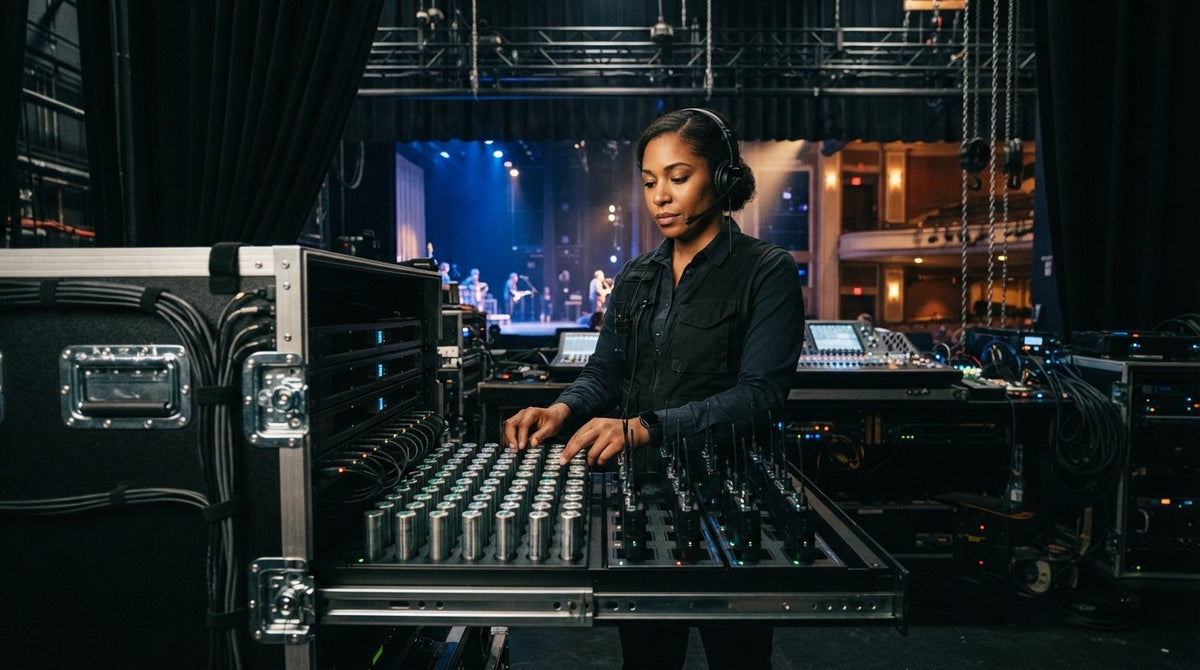
Did you know that a high-volume production like Cirque du Soleil once spent over $50,000 every year on disposable alkaline batteries before switching to a professional rechargeable ecosystem? It's a staggering figure that highlights the hidden drain on theater budgets and the environmental cost of traditional power. Most technical directors agree that managing thousands of disposables is a logistical burden that often leads to avoidable audio failures. Whether it's a sudden voltage sag during a lead vocal or the clutter of low-quality chargers in the wings, the risks to your production's integrity are real.
Implementing turnkey rechargeable battery systems for theaters provides a permanent solution to these backstage headaches. This 2026 guide will show you how to transition to a professional, rack-mounted infrastructure that guarantees wireless mic reliability for every performance. You'll learn about the latest 1.5V regulated lithium-ion technology, the benefits of centralized charging drawers, and the specific workflow strategies used by the world's leading touring companies to achieve zero battery-related dropouts while realizing significant long-term budget savings.
Key Takeaways
- Eliminate premature low-battery warnings by using 1.5V constant voltage technology designed specifically for high-drain digital wireless transmitters.
- Streamline your backstage workflow by centralizing power management with custom rackmount chargers that fit directly into standard 19-inch equipment racks.
- Apply the "2.5x Rule" to accurately size your cell inventory and ensure a fresh set of batteries is always ready for every microphone and IEM pack.
- Learn how to deploy turnkey rechargeable battery systems for theaters that provide a professional, sustainable alternative to single-use alkaline waste.
- Select the ideal battery chemistry for your production by comparing the physical fit and discharge profiles of high-capacity NiMH and lithium-ion cells.
The Case for Turnkey Rechargeable Battery Systems in Modern Theater
Historically, theater companies viewed batteries as expendable supplies, much like gaff tape or stage makeup. This perspective is changing. Modern venues now treat power as a critical infrastructure asset. A transition to turnkey rechargeable battery systems for theaters represents a fundamental shift from constant procurement to long-term operational stability. Verified data from large-scale operations like Cirque du Soleil show that shifting away from disposables can save over $50,000 annually. This isn't just about the budget; it's about reclaiming the hundreds of hours tech crews spend sorting, testing, and disposing of thousands of alkaline cells every season.
The environmental impact is equally significant. Adopting a professional system reduces battery landfill waste by 99% by volume. In an era where venues face increasing pressure to meet sustainability goals, moving away from single-use cells is the most effective way to eliminate a massive stream of toxic e-waste. True turnkey solutions integrate high-performance hardware with a seamless backstage workflow, ensuring that sustainability doesn't come at the cost of performance.
Eliminating the Logistics of Disposable Batteries
Managing a high-channel wireless show requires military-grade organization. Turnkey systems replace the chaos of half-empty alkaline boxes with standardized, high-capacity cells and dedicated storage. This streamlines the pre-show checklist. Technicians no longer need to guess which batteries are fresh or spend time labeling "good" versus "used" cells. By centralizing power management into a single, rack-mounted location, you reduce the physical storage footprint and ensure every microphone kit has access to the same reliable power source. It's a methodical approach that eliminates the guesswork from backstage prep.
Critical Power Reliability for Wireless Audio
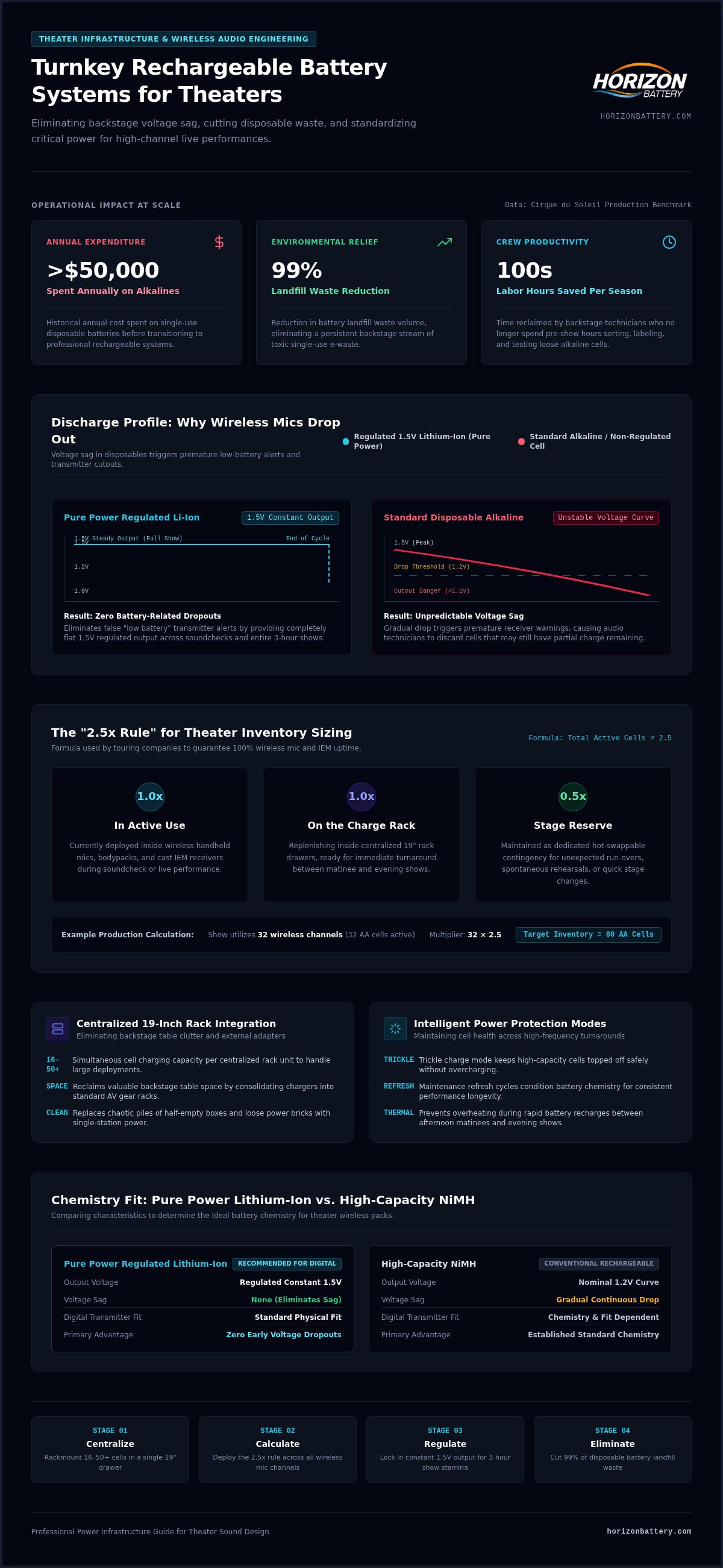
Wireless mic dropouts often stem from voltage sag rather than total battery failure. Standard alkaline and older rechargeable battery chemistries often experience a gradual voltage drop that can trigger false "low battery" alerts on digital transmitters. This is why professional-grade solutions like the Pure Power Series are essential. They provide a constant 1.5V output throughout the entire discharge cycle. This predictability builds trust with sound mixers. They can focus on the performance, knowing the RF signal won't fluctuate or cut out due to unstable power. Implementing turnkey rechargeable battery systems for theaters ensures that every transmitter, from the lead vocal to the backstage comms, operates at peak performance from the first curtain to the final bow.
Essential Components of a Professional Turnkey Battery System
A professional turnkey system is more than just a collection of batteries and chargers. It's a cohesive ecosystem designed for the rigors of live performance. While consumer chargers often clutter backstage workspaces, turnkey rechargeable battery systems for theaters consolidate power into a single, reliable station. This approach ensures every component, from the cell chemistry to the power distribution unit, works in harmony to prevent technical failures. It's about creating a predictable environment where power is never a variable.
Custom Rackmount Chargers for Backstage Efficiency
Space is at a premium in any AV rack. By integrating enterprise battery charging solutions directly into your 19-inch equipment racks, you reclaim valuable table space and eliminate cable clutter. These high-density units can charge between 16 and 50+ cells simultaneously, providing enough capacity for even the largest wireless microphone deployments. Beyond mere charging, these intelligent systems utilize "trickle charge" and "refresh" modes. These functions maintain cell health and ensure that high-capacity units remain at peak performance without overheating during rapid turnarounds between matinee and evening performances.
High-Capacity AA Cells and Dedicated Storage
For long-running shows, capacity is the primary metric for success. High-capacity AA cells provide the stamina needed for three-hour performances plus soundchecks. However, high capacity is only useful if the inventory is managed correctly. Implementing a professional Battery Storage system allows technicians to physically separate "Ready" inventory from "Depleted" cells. This physical separation is the first line of defense against accidental transmitter shutdowns.
The effectiveness of this structured approach is well-documented. A Broadway Green Alliance rechargeable battery case study regarding the production of Wicked highlights how a disciplined rotation and charging cycle reduced waste and improved reliability. Using color-coded caddies or labeled drawers helps large theater departments avoid accidental swaps during high-pressure intermissions. It's a simple yet effective way to track assets across multiple departments.
Finally, a turnkey system requires standardized power distribution. Using professional-grade PDUs and high-quality power cables ensures that your charging station receives clean, surge-protected electricity. This protects your investment in high-performance hardware. If you're looking to streamline your facility, you can explore specialized charger and battery bundles designed for professional audio environments.
Pure Power Lithium-Ion vs. NiMH: Choosing Your Theater’s Chemistry
Selecting the correct cell chemistry is the most technical decision when implementing turnkey rechargeable battery systems for theaters. For years, Nickel Metal Hydride (NiMH) was the only viable alternative to alkaline. While NiMH remains a durable and cost-effective choice for secondary gear, modern digital wireless systems often perform better with the advanced characteristics of Lithium-ion. The choice between these two chemistries impacts everything from signal stability to the physical comfort of your performers.
Voltage Stability for Wireless Microphones
The primary challenge with traditional NiMH cells is their 1.2V nominal output. As these batteries discharge, their voltage slopes downward. Many professional digital transmitters are calibrated for 1.5V alkaline cells and may trigger "low battery" warnings or shut down prematurely when voltage sags below 1.1V, even if the cell still has significant energy remaining. The Pure Power Series solves this by utilizing an internal Battery Management System (BMS) to provide a constant 1.5V output until the cell is fully depleted. This flat discharge curve prevents frequency shifts and keeps the noise floor low throughout the entire performance.
Physical compatibility is another critical factor. Professional bodypacks from manufacturers like Shure or Sennheiser often have extremely tight battery compartments. Standard consumer rechargeables can be slightly oversized, leading to jammed gear. To avoid this, technicians should look for precision-cased cells, such as the Ansmann slimline range, which are engineered to match standard AA dimensions exactly. Weight also plays a role in musical theater. Lithium cells are approximately 30% lighter than NiMH, which reduces the physical burden on actors wearing multiple bodypacks for microphones and in-ear monitors.
Cycle Life and Long-Term ROI
While the initial investment in Lithium-ion is higher, the long-term return on investment is superior for high-volume venues. High-performance Lithium cells, like the Pure Power Series, are rated for up to 1,500 recharge cycles. In contrast, professional NiMH cells typically offer around 1,000 cycles. When you calculate the cost per show, both chemistries reach a break-even point against alkaline disposables within the first few months of a production. A theater running eight shows a week can expect several seasons of reliable service from a single turnkey system before cells require replacement.
Managing these high-performance cells requires strict adherence to safety protocols. It's vital to follow EPA guidance on used lithium-ion batteries regarding proper handling and end-of-life procedures. Because Lithium-ion and NiMH require different charging algorithms, your turnkey infrastructure must include dedicated chargers for each chemistry. Attempting to charge Lithium cells on a NiMH dock can cause permanent damage, which is why integrated rackmount solutions are the safest way to manage a hybrid inventory of both cell types.
How to Size Your Theater’s Battery Infrastructure
Sizing turnkey rechargeable battery systems for theaters requires a methodical audit of every active transmitter on site. This process involves more than just counting wireless microphones. You must also account for in-ear monitors (IEMs), backstage communication headsets, and even portable test equipment. A common mistake is sizing the system for the current show only. To build a future-proof infrastructure, you should plan for peak production requirements and potential expansion. Scalable rackmount solutions allow you to add charging modules as your channel count grows.
Calculating Cell Count for Multi-Performance Runs
The "2.5x Rule" is the industry standard for determining your total cell inventory. This formula ensures you have three distinct sets of batteries available at all times: Set A is in active use on stage, Set B is in the rackmount charger undergoing replenishment, and Set C is fully charged in standby storage. This rotation is vital for double-show days where the turnaround time between a matinee and an evening performance is limited. If your production uses 20 dual-AA bodypacks, you'll need 40 active cells, meaning your total inventory should be at least 100 to 120 cells to handle rehearsals and soundchecks safely.
The ideal theater battery inventory maintains a 2.5-to-1 or 3-to-1 cell ratio for every active transmitter slot to ensure continuous operation without downtime. Your charging capacity must also match your turnaround window. If your cells require three hours to reach full capacity, but you only have two hours between shows, you need enough charging bays to handle two full sets of batteries simultaneously. This prevents the "logistical bottleneck" that often leads to technicians reaching for expensive alkaline backups.
Managing Charging Rotations and Asset Tracking
Maintaining a large fleet of cells requires a "First-In, First-Out" (FIFO) rotation strategy. This ensures that all batteries in your inventory experience even wear and reach their rated cycle life at the same time. Without a structured rotation, some cells may sit idle while others are overused, leading to inconsistent performance across your microphone kits. Implementing annual testing protocols is also essential. By using intelligent chargers to measure internal resistance and capacity, you can identify and retire underperforming cells before they fail during a performance.
There is significant value in switching to rechargeable batteries for business because it simplifies asset management. Instead of tracking thousands of individual disposables, your team manages a fixed number of high-performance assets. This shift reduces the administrative burden of constant procurement and simplifies backstage logistics. To ensure your facility is ready for the upcoming season, you can configure your custom rackmount charging station to meet your specific channel requirements.
Implementing Horizon Battery Solutions for Your Production
Transitioning from a procurement model based on disposables to a professional infrastructure requires a partner with deep industry roots. Horizon Battery has operated since 1998, providing energy solutions to over 50,000 theaters, educational institutions, and professional touring productions. This long-standing expertise allows for the development of turnkey rechargeable battery systems for theaters that address the specific electrical and physical demands of high-density wireless environments. By moving away from consumer-grade hardware, technical directors can establish a permanent backstage power station that scales with their production needs.
Custom Bundles and Scalable Kits
Every venue has unique requirements based on its channel count and performance schedule. Starter kits are often ideal for small black box theaters with limited wireless needs, while enterprise systems support large venues running dozens of transmitters simultaneously. Selecting pre-configured Charger / Battery Bundles is the most efficient way to ensure hardware compatibility from day one. These bundles typically include Ansmann high capacity batteries paired with dedicated rackmount hardware. This ensures that every cell in your inventory is matched to a charger designed for its specific chemistry and discharge profile.
Integration and Technical Support
Professional integration means more than just plugging in a device. It involves mounting Custom Rackmount Chargers directly into standard 19-inch equipment racks to centralize power management. This setup keeps the backstage area organized and protects the charging hardware from the hazards of a busy production environment. Consulting with a specialist can help you design a custom rack layout that optimizes airflow and accessibility. This is especially important for productions utilizing a hybrid of Pure Power Series lithium cells and high-capacity NiMH batteries, as each requires its own managed charging bay.
To maximize the lifespan of your investment, implement a routine maintenance schedule. This includes regular testing of cell capacity and cleaning of charger contacts. Working with a 25-year industry veteran provides access to technical support that understands the nuances of professional audio gear. The next step is a shift in mindset from buying expendables to managing assets. By contacting a specialist for a national infrastructure quote, you can begin the process of eliminating alkaline waste and guaranteeing wireless reliability for every performance.
Modernizing Your Theater’s Power Infrastructure
Transitioning to professional power management is an operational investment that pays dividends in both technical reliability and long-term budget savings. By selecting advanced chemistries like the 1.5V Pure Power Series, you eliminate the voltage sag issues that often plague modern digital wireless systems. Implementing a structured "2.5x Rule" for your inventory ensures that your crew always has fresh, conditioned cells ready for the next act without the chaos of managing thousands of disposable units.
Horizon Battery has served as a trusted resource for professional audio environments since 1998. Our Custom Rackmount Chargers and high-performance bundles provide the security you need to focus on the performance rather than the logistics of battery procurement. When you deploy turnkey rechargeable battery systems for theaters, you are choosing a path of technical excellence and environmental responsibility. This shift streamlines your backstage workflow and guarantees that your wireless microphones remain stable from the first rehearsal to the final curtain call.
Ready to upgrade your production’s energy strategy? Build your custom turnkey theater battery system at Horizon Battery today. Your facility deserves the steady reliability of a professional-grade power solution.
Frequently Asked Questions
How long do rechargeable batteries last in a wireless microphone?
The runtime depends on the battery capacity and the power draw of your transmitter. High-capacity AA cells typically provide between 6 and 10 hours of continuous use. It is important to note that digital wireless systems often have higher current demands than older analog gear. Utilizing 1.5V constant voltage cells ensures that your devices operate at peak performance without the premature shutdowns caused by voltage sag.
Do rechargeable batteries fit in all wireless microphone brands?
Most professional transmitters accept rechargeable cells, but physical tolerances vary between manufacturers. Some consumer-grade rechargeables are slightly larger than standard alkaline batteries, which can lead to jammed compartments. Horizon Battery provides specialized slimline cells designed specifically for tight gear slots. You should always verify the internal dimensions of your bodypacks to ensure a smooth fit and prevent damage to internal retaining clips during fast swaps.
What is the difference between consumer chargers and professional rackmount chargers?
Consumer chargers are designed for low-volume home use and often lack the thermal management required for production environments. In contrast, turnkey rechargeable battery systems for theaters utilize custom rackmount chargers that integrate directly into 19-inch equipment racks. These professional units offer high-density charging for up to 50 cells simultaneously. They also include intelligent microprocessors that manage trickle-charge and refresh modes to maximize the lifespan of your cell inventory.
Can I mix different battery brands in a turnkey system?
Mixing different battery brands or chemistries is not recommended for professional audio applications. Different manufacturers use varied internal components that result in inconsistent discharge rates and charging requirements. To maintain a predictable backstage workflow, it's best to standardize your entire fleet on a single high-performance series. This consistency ensures that every microphone and in-ear monitor in your production delivers the same reliable runtime during every performance.
How much money can a theater save by switching to rechargeable batteries?
Venues that implement turnkey rechargeable battery systems for theaters typically see a reduction in battery-related expenditures of 80% to 90% within the first year. High-volume productions that previously spent thousands on disposable alkalines can reach a break-even point in just a few months. Beyond the direct cost of the cells, you also save significant labor hours by eliminating the need to constantly procure, sort, and test thousands of single-use batteries.
Is it safe to leave batteries in rackmount chargers overnight?
It is safe to leave batteries in professional rackmount chargers if the hardware includes intelligent charging circuitry. These systems feature automatic shut-off and float-charge modes that prevent overcharging once a cell reaches full capacity. This capability allows technicians to load depleted cells after an evening performance and have a fresh set ready for the next morning's rehearsal. High-quality chargers also include temperature sensors to prevent the "oven effect" that degrades battery health.
What happens if a battery fails during a performance?
A battery failure during a show results in an immediate signal dropout. To prevent this, theaters should use cells like the Pure Power Series that provide a flat 1.5V discharge curve. This technology eliminates the false "low battery" warnings common with standard rechargeables. Additionally, following the "3-to-1" inventory rule ensures that a fully charged backup set is always waiting in the wings for an immediate swap if a transmitter is left on accidentally.
How often should a theater replace their rechargeable battery fleet?
Most professional theaters replace their cell inventory every two to four years, depending on their performance schedule. High-performance cells are rated for 1,000 to 1,500 recharge cycles before their capacity begins to significantly diminish. You can extend this lifespan by performing annual capacity testing and using chargers with refresh modes. Horizon Battery has helped venues manage these lifecycles since 1998, ensuring that technical directors know exactly when to cycle in fresh inventory.